In the realm of industrial automation and precise object detection, DC capacitive proximity sensors stand as a cornerstone technology. Unlike their inductive counterparts that detect only metals, capacitive sensors boast the unique ability to detect a wide array of materials—metals, plastics, wood, liquids, and even granular substances—by sensing changes in capacitance. This versatility makes them indispensable in diverse applications, from packaging and food processing to level control and material handling.
The fundamental operating principle hinges on the concept of capacitance. A capacitive proximity sensor essentially functions as an open capacitor. Its active face comprises two concentric metal electrodes (often forming the oscillator circuit) embedded in an insulating material. When a DC voltage is applied, an electrostatic field is generated around this sensing face. In the absence of a target, the oscillator remains inactive. As a target object approaches the sensing field, it alters the dielectric constant of the surrounding space. This change modifies the capacitance of the system. Once the capacitance reaches a predetermined threshold, the oscillator begins to oscillate. This oscillation is then processed by the subsequent trigger and switching circuits, ultimately causing the sensor's solid-state output (typically an NPN or PNP transistor) to change state—switching ON or OFF. The point at which this occurs is defined as the rated operating distance (Sn).
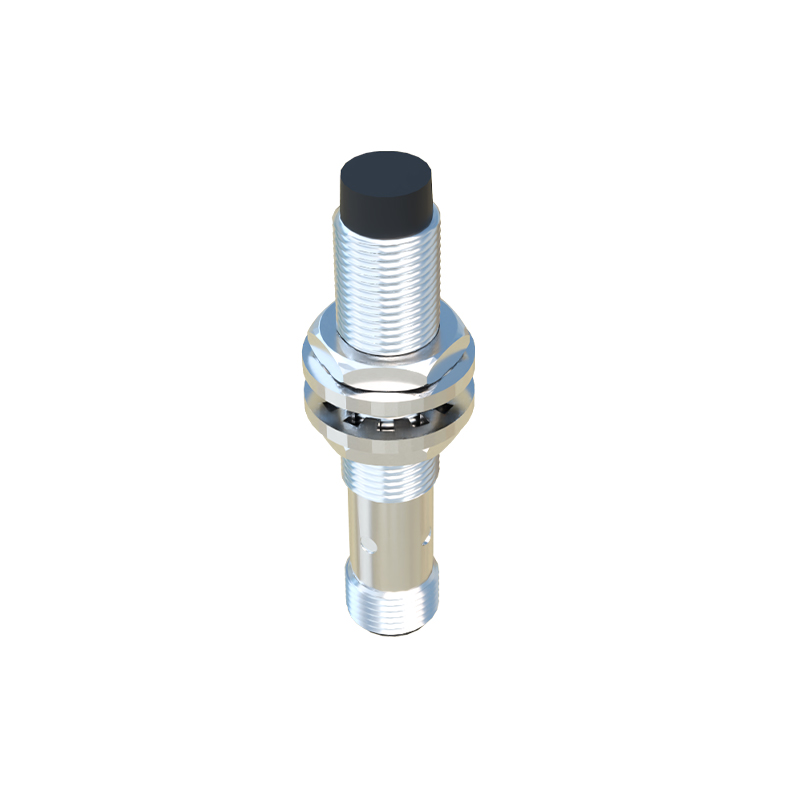
Key performance characteristics define their utility. The sensing range, though generally shorter than inductive sensors for metals, is adjustable via a sensitivity potentiometer to compensate for different target materials and environmental conditions. Factors like the target's size, material dielectric constant, and installation environment significantly influence the effective sensing distance. For instance, detecting a water-filled bottle requires a different sensitivity setting than detecting a dry wooden block. Most DC capacitive sensors feature a hysteresis range, a critical feature that prevents output chatter when a target is at the exact switching point, ensuring stable operation. Standard housing materials like PBT or PTFE offer robust resistance to chemicals and physical abrasion. Furthermore, many models come with IP67 or higher ingress protection ratings, making them suitable for washdown environments in food and pharmaceutical industries.
The "DC" designation indicates these sensors are powered by direct current, commonly 10-30V DC. The output configuration is crucial for integration. The two-wire DC variant connects similarly to a mechanical switch but requires a minimum load current to operate. The more prevalent three-wire DC types come in NPN (sinking) and PNP (sourcing) outputs. NPN outputs switch the negative (0V) line to the load, common in Asian and European designs, while PNP outputs switch the positive voltage line, often preferred in North America. Correct wiring to the PLC input module is paramount.
Selecting the appropriate sensor demands careful consideration of the application parameters. First, identify the target material and its expected dielectric constant. For low-dielectric materials like plastics or glass, a sensor with high sensitivity and a reduced nominal range is necessary. Second, assess the environmental conditions: temperature extremes, potential for condensation, exposure to dust, or cleaning fluids. Third, determine the required electrical interface: operating voltage, output type (NPN/PNP), and connection method (pre-wired cable or quick-disconnect). For level detection, especially for non-conductive liquids or powders, cylindrical sensors with threaded barrels (e.g., M18, M30) are typical. For detecting thin materials like paper or film, flat-pack or rectangular sensors provide a larger sensing field.
Installation and shielding are vital for reliable performance. The sensor's electrostatic field can be influenced by surrounding conductors. Maintaining a free space around the sensing face—typically one to two times the sensor's diameter—is recommended to avoid false triggers from the mounting bracket or tank wall. Many sensors incorporate a shielded design, where the field is focused forward, allowing flush mounting in metal. Unshielded designs offer a longer range but require non-metallic surroundings. Regular maintenance involves cleaning the sensing face from accumulated residue, which can act as a permanent target and desensitize the sensor.
In conclusion, DC capacitive proximity sensors offer a flexible and reliable solution for non-contact detection challenges involving diverse materials. Their operation, based on subtle capacitive changes, enables applications impossible for other sensor types. A thorough understanding of their principles, coupled with a meticulous selection process based on target properties and environmental factors, ensures optimal performance and longevity in demanding industrial settings. As automation evolves towards greater material variety and process complexity, the role of these sensors will only become more pronounced.