In the dynamic and demanding world of industrial automation, conveyor systems form the arterial network of material handling. Ensuring their reliable, efficient, and safe operation is paramount. At the heart of this reliability lies a critical component: the proximity sensor switch. These non-contact detection devices are indispensable for monitoring, controlling, and safeguarding conveyor operations across diverse industries, from packaging and automotive to food processing and mining.
Unlike mechanical limit switches that require physical contact, proximity sensors detect the presence or absence of a target object without any touching. This fundamental characteristic eliminates mechanical wear, reduces maintenance needs, and significantly enhances operational longevity. For conveyor systems, this translates to fewer downtime incidents and higher overall equipment effectiveness (OEE).
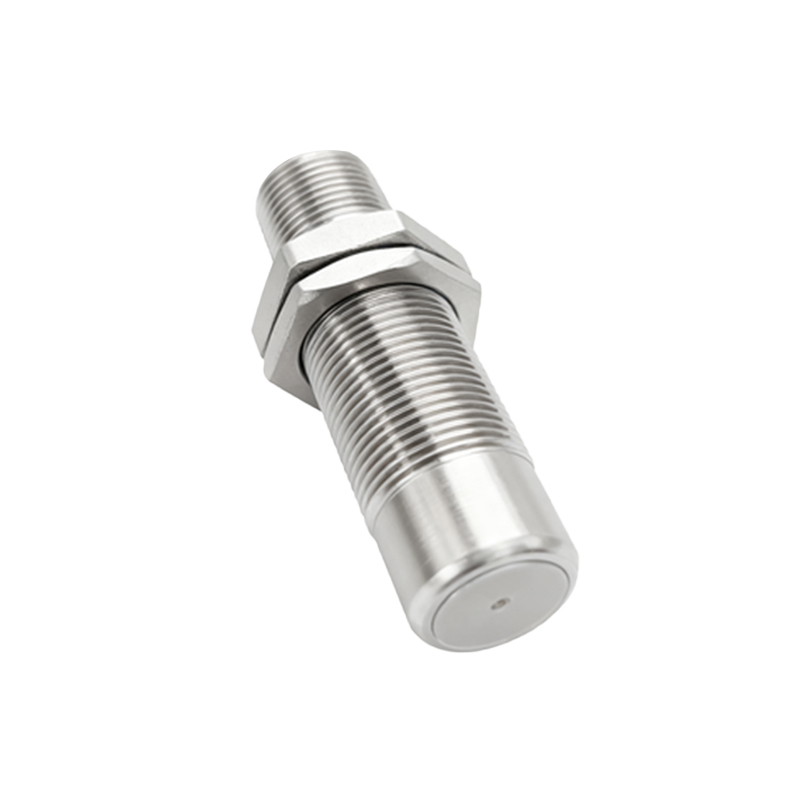
Several types of proximity sensors are commonly deployed in conveyor applications, each with distinct operating principles and optimal use cases. Inductive proximity sensors are the workhorses for detecting metallic objects. They generate an electromagnetic field and react to eddy current losses induced in a metal target. Ideal for detecting metal pallets, machine parts, or cans on a line, they are robust, resistant to dirt and moisture (with appropriate IP ratings), and offer high switching frequencies. Capacitive proximity sensors, on the other hand, can detect both metallic and non-metallic materials—plastic, wood, glass, liquids, and granular substances. They sense changes in capacitance caused by the target entering their electrostatic field. This makes them perfect for applications like detecting filled boxes, monitoring bulk material levels in hoppers feeding a conveyor, or ensuring the presence of liquid in bottles.
For longer-range detection or where physical mounting constraints exist, photoelectric sensors are often the solution. These sensors use a light beam (visible red, infrared, or laser) and can be configured in through-beam, retro-reflective, or diffuse (proximity) modes. They excel at detecting objects of virtually any material, color, or surface finish, and are crucial for tasks like precise positioning, counting, and break-of-beam safety curtains. Ultrasonic sensors use sound waves to measure distance or detect presence, functioning well in environments with dust, smoke, or vapors that might obscure photoelectric beams, making them suitable for harsh industrial settings.
The integration of proximity switches into conveyor control logic enables a multitude of critical functions. The most basic is object detection for process initiation: a sensor detects a product arriving at a workstation, triggering a robotic arm to pick it up or a printer to label it. They are essential for accurate counting and sorting operations, where each break of a sensor beam increments a counter or diverts a product to the correct lane based on programmed sequences. In automated storage and retrieval systems (AS/RS), proximity sensors provide precise positioning feedback for pallet shuttles and lifts, ensuring accurate load placement and retrieval.
Safety is a non-negotiable aspect of conveyor operation. Proximity sensors play a vital role here as well. They can be used as part of interlock systems to ensure guarding is in place before machine start-up. Safety-rated versions (e.g., compliant with IEC 61496) are used to create protective fields around hazardous areas, immediately stopping the conveyor if a person or obstruction is detected. Furthermore, sensors monitor for belt misalignment, slippage, or blockages, preventing costly damage and potential safety hazards.
Selecting the right proximity sensor for a conveyor application requires careful consideration of several parameters. The sensing distance, or rated operating distance (Sn), must be chosen with a safety margin, considering target material, size, and environmental conditions. The sensor's housing material (e.g., stainless steel for washdown areas, nickel-plated brass for general industry) and Ingress Protection (IP) rating must withstand the operational environment, which may involve exposure to coolants, oils, dust, or high-pressure cleaning. Output type is another key decision: PNP (sourcing) or NPN (sinking) transistor outputs are standard for PLC integration, while some applications may require analog outputs for distance measurement or relay contacts for high-current loads. Finally, the physical form factor—barrel-style, rectangular, or ring-shaped—must suit the mounting location and space constraints.
Proper installation and commissioning are crucial for optimal performance. Sensors must be mounted securely to avoid vibration-induced false triggers. Engineers must account for the "dead band" area around the sensing face where detection is not possible. For inductive sensors, different metals (steel, aluminum, copper) have correction factors that reduce the effective sensing range. Alignment is critical for photoelectric and through-beam sensors. Regular maintenance, though minimal, should include periodic cleaning of the sensing face to remove debris, dust, or buildup that could impair functionality, and verification of the sensor's output under normal operating conditions.
The future of proximity sensing in conveyor systems is leaning towards increased intelligence and connectivity. Sensors with integrated IO-Link capability are gaining traction. This