Reed proximity sensors, also known as magnetic reed switches or magnetically operated proximity sensors, represent a fundamental and highly reliable technology in the field of industrial automation and control. Their operation is elegantly simple, based on the interaction between an external magnetic field and a sealed reed switch. This article delves into the working principle, key characteristics, diverse applications, and critical factors for selecting the right reed sensor for your application.
At the heart of a reed proximity sensor lies the reed switch itself. This switch consists of two ferromagnetic, nickel-iron reed contacts hermetically sealed within a glass capsule filled with an inert gas, such as nitrogen. This sealing protects the contacts from dust, oxidation, and corrosion, ensuring long-term reliability. In its normal state (without an external magnetic field), these reed contacts are separated. When a permanent magnet or an electromagnet approaches the sensor within a specified operating distance, the magnetic field causes the two reed contacts to magnetize. The opposite magnetic poles induced on the contacts create an attractive force, pulling them together to make physical and electrical contact, thus closing the circuit. When the magnet is removed, the contacts' inherent spring force returns them to their open position. This non-contact, magnetically actuated switching is the core of its operation.
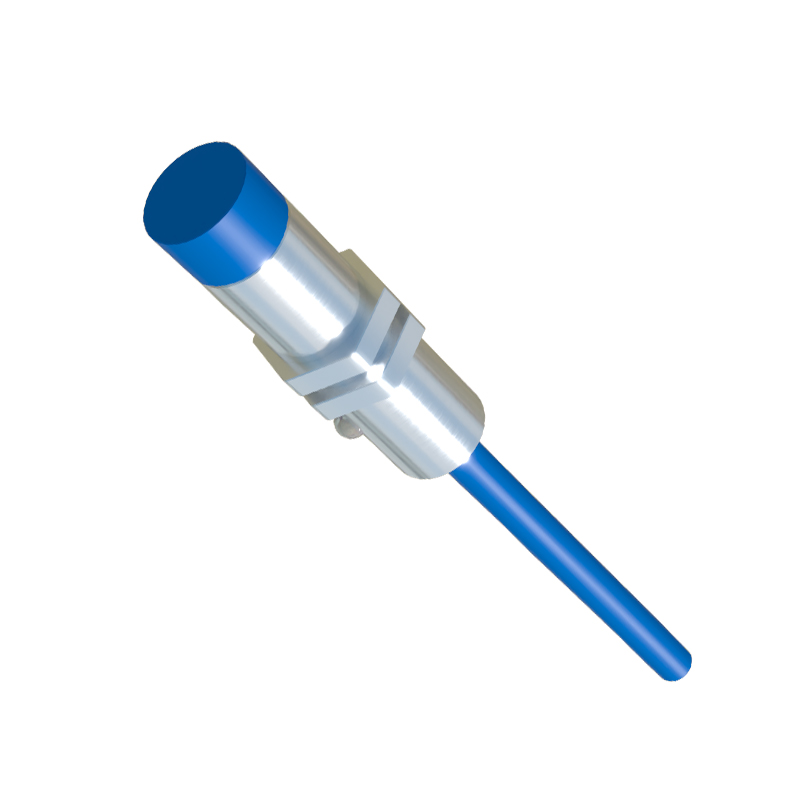
The defining characteristics of reed sensors contribute to their widespread use. First and foremost is their exceptional reliability and long operational life, often rated for hundreds of millions of switching cycles, due to the sealed, wear-free operation. They consume virtually no power in their passive state, making them ideal for battery-powered or low-energy applications. They are capable of switching both low-level signals (in dry circuit applications) and higher currents, depending on the contact rating. Furthermore, they are immune to environmental factors like water, oil (provided the housing is rated accordingly), and non-ferrous contaminants. Their output is typically a simple binary signal—either open or closed—which interfaces easily with PLCs, relays, and controllers.
Applications for reed proximity sensors are vast and span numerous industries. A classic example is in security systems, where they are used on doors and windows to detect opening or closing. In the automotive sector, they are found in gearbox position sensing, brake fluid level detection, and seatbelt buckle sensors. Industrial automation heavily relies on them for position sensing of cylinders (using a magnet embedded in the piston), detecting the open/closed status of valves and clamps, and in conveyor systems for part detection or counting. They are also prevalent in consumer appliances like washing machines (lid safety switches) and in medical equipment for detecting the presence of drawers or covers.
Selecting the appropriate reed sensor requires careful consideration of several parameters. The sensing distance is paramount; it defines how close the magnet must be to actuate the switch. This distance is influenced by the magnet's strength, size, and orientation. The electrical load the switch must handle—voltage, current (AC or DC), and whether it is resistive or inductive—determines the required contact rating. Switching frequency matters for high-speed applications. Housing material and protection rating (IP or NEMA) are critical for the operating environment, whether it involves washdown conditions, high temperatures, or explosive atmospheres. Finally, the form factor (tubular, rectangular, with or without leads) must suit the mechanical constraints of the installation.
While solid-state alternatives like Hall effect or inductive proximity sensors offer advantages in speed and precise distance sensing, reed sensors maintain a strong position due to their simplicity, galvanic isolation, robustness against voltage spikes, and cost-effectiveness for many standard applications. Their operation is straightforward, requiring no complex electronics internally, which can be a significant benefit in electrically noisy environments.
In conclusion, the magnetic reed proximity sensor remains an indispensable component in the engineer's toolkit. Its robust, sealed design, coupled with reliable magnetic actuation, provides a trusted solution for countless position and presence detection tasks. By understanding its operating principles and carefully matching its specifications—sensing distance, electrical ratings, and environmental protection—to the application requirements, design engineers can leverage this timeless technology to build reliable, efficient, and cost-effective control systems across a diverse range of industries.