Proximity sensors are fundamental components in modern industrial automation, enabling non-contact detection of objects within a specified range without physical touch. These devices are crucial for enhancing efficiency, safety, and reliability in countless applications, from assembly lines and robotic systems to automotive manufacturing and packaging machinery. Understanding their core operating principles is essential for engineers and technicians working with automated systems.
At its essence, a proximity sensor detects the presence or absence of an object (often called the target) within its sensing field. The key distinction from limit switches or mechanical sensors is the complete lack of physical contact. This non-contact operation eliminates mechanical wear, reduces maintenance needs, and allows for high-speed detection. Proximity sensors are primarily categorized by their underlying technology, with inductive, capacitive, ultrasonic, and photoelectric being the most prevalent types in industrial settings.
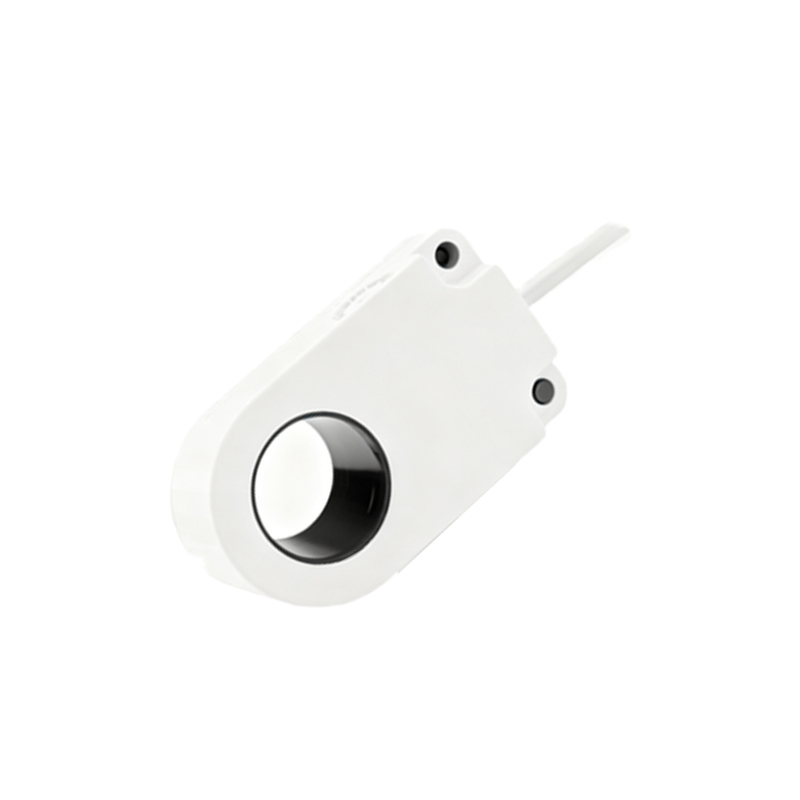
Inductive proximity sensors are the workhorses for detecting metallic objects. They operate on the principle of electromagnetic induction. The sensor contains a coil wound around a ferrite core, which is part of an oscillator circuit. When an alternating current flows through this coil, it generates an oscillating electromagnetic field at the sensor's active face. When a conductive metal target enters this field, eddy currents are induced on the target's surface. These eddy currents draw energy from the sensor's oscillator, causing a reduction in the oscillation amplitude. An internal evaluation circuit monitors this amplitude change. Once the amplitude drop exceeds a predefined threshold (set by the sensing distance), the circuit triggers a switch, changing the sensor's output state—typically from "off" to "on." The effective sensing range depends on the target's material; ferrous metals like iron and steel are detected at the nominal range, while non-ferrous metals like aluminum or copper have a reduced sensing distance. Inductive sensors are ideal for harsh environments, resistant to dust, dirt, and moisture, and are commonly used for position sensing of metal parts, gear tooth detection, and as end-of-travel limit switches.
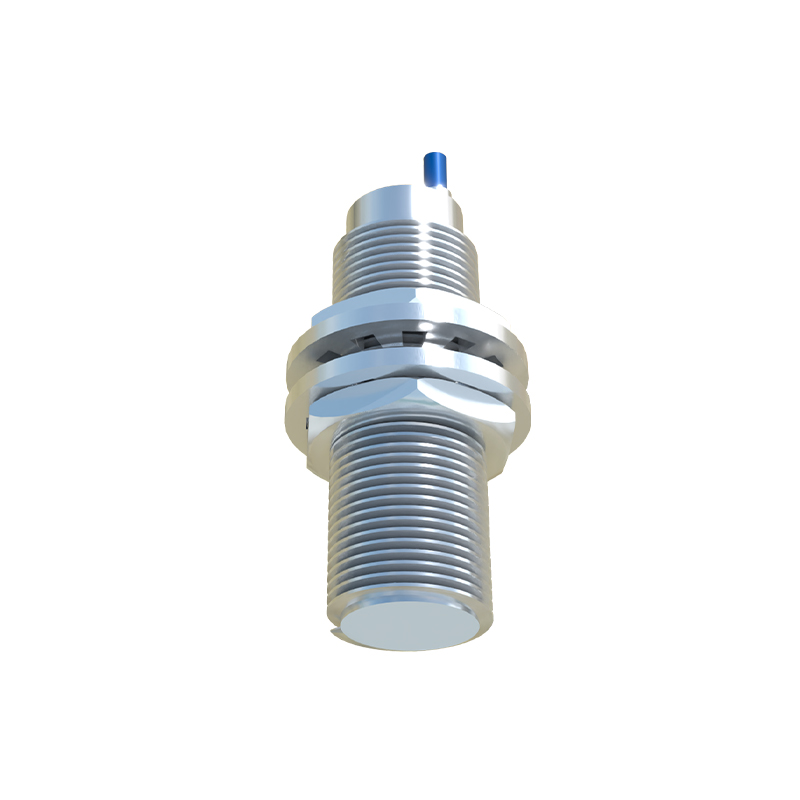
Capacitive proximity sensors, in contrast, can detect both metallic and non-metallic materials, including liquids, plastics, wood, and glass. They function based on the principle of capacitance change. The sensor's active face acts as one plate of a capacitor, with the target object acting as the other plate, and the air gap as the dielectric. The sensor generates an electrostatic field. When any material with a dielectric constant different from air enters this field, it alters the capacitance of the system. An internal circuit measures this capacitance change. When the change reaches a sufficient level, the output switches. These sensors often feature a sensitivity adjustment potentiometer to compensate for different target materials or to ignore background objects. This makes them perfect for applications like liquid level detection in tanks, presence detection of plastic or glass bottles on a conveyor, or monitoring powder levels in hoppers.
Ultrasonic proximity sensors use sound waves beyond the human hearing range (typically 40-400 kHz). They consist of a transmitter that emits ultrasonic pulses and a receiver that listens for the echo. The sensor measures the time interval between pulse emission and echo reception (time-of-flight principle). If an object is present within the set range, the sound wave reflects back sooner, and the sensor processes this signal to determine the object's presence or even its precise distance. These sensors are excellent for detecting objects regardless of color, transparency, or material, and they work well in environments with airborne particulates like dust or smoke. Common uses include pallet detection, loop control in winding machines, and distance measurement.
Photoelectric sensors operate by emitting a beam of light (visible, infrared, or laser) and detecting changes in the received light. They come in three main configurations: through-beam (separate emitter and receiver), retro-reflective (emitter and receiver in one housing, using a reflector), and diffuse (emitter and receiver in one housing, detecting light reflected directly from the target). An object is detected when it interrupts the beam (in through-beam and retro-reflective modes) or when it reflects sufficient light back to the receiver (diffuse mode). Photoelectric sensors offer very long sensing ranges and are highly versatile for detecting small objects, transparent materials, and are used extensively in packaging, material handling, and security systems.
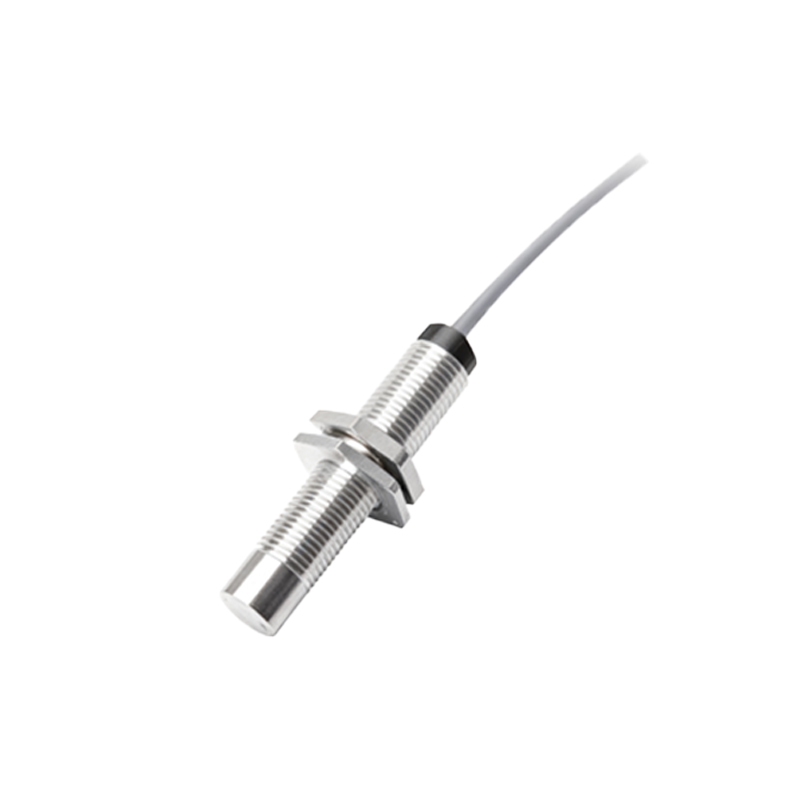
The output from these sensors is typically a discrete on/off signal. Common output types include NPN (sinking), PNP (sourcing) for DC sensors, and relay or solid-state outputs for AC/DC models. Two-wire AC/DC sensors are also common, simplifying wiring. Key selection parameters include sensing distance, target material, operating voltage, output type, housing style (cylindrical or rectangular), and environmental protection rating (IP67/IP69K for washdown areas).
In application, proper installation is critical. Engineers must consider factors like mounting, lateral distance between sensors to prevent mutual interference (especially