In the realm of industrial automation, proximity switch sensors are indispensable components, providing non-contact detection of metallic and, in some cases, non-metallic objects. Their reliability is paramount for ensuring continuous production, safety, and quality control. Among the myriad factors influencing sensor performance and longevity, environmental temperature stands as one of the most critical and often challenging variables to manage. This article delves into the intricate relationship between proximity sensors and their operating temperature, outlining key considerations for selection, installation, and maintenance.
Proximity sensors, whether inductive, capacitive, or magnetic, are electronic devices whose internal components—oscillators, amplifiers, and output circuits—have defined thermal operating ranges. Typically, standard industrial proximity switches are rated for an ambient temperature range of -25°C to +70°C (-13°F to +158°F). Specialized models can extend these limits, with high-temperature variants operating up to +120°C or even +150°C, and low-temperature versions functioning reliably down to -40°C. Exceeding these specified ranges can lead to a cascade of performance issues.
The primary effects of excessive temperature are on the sensor's electrical characteristics. High ambient temperatures can cause increased leakage current in semiconductor components, leading to potential false triggering or failure to trigger. The sensing distance, a key specification, may decrease as temperature rises due to changes in the properties of the oscillator coil and associated electronics. Conversely, extremely low temperatures can increase the viscosity of internal potting compounds, affect capacitor values, and cause embrittlement of housing materials, potentially leading to mechanical failure. Furthermore, the lifespan of electronic components is exponentially related to operating temperature; the Arrhenius equation models how a 10°C increase in temperature can approximately halve the expected service life of many electronic parts.
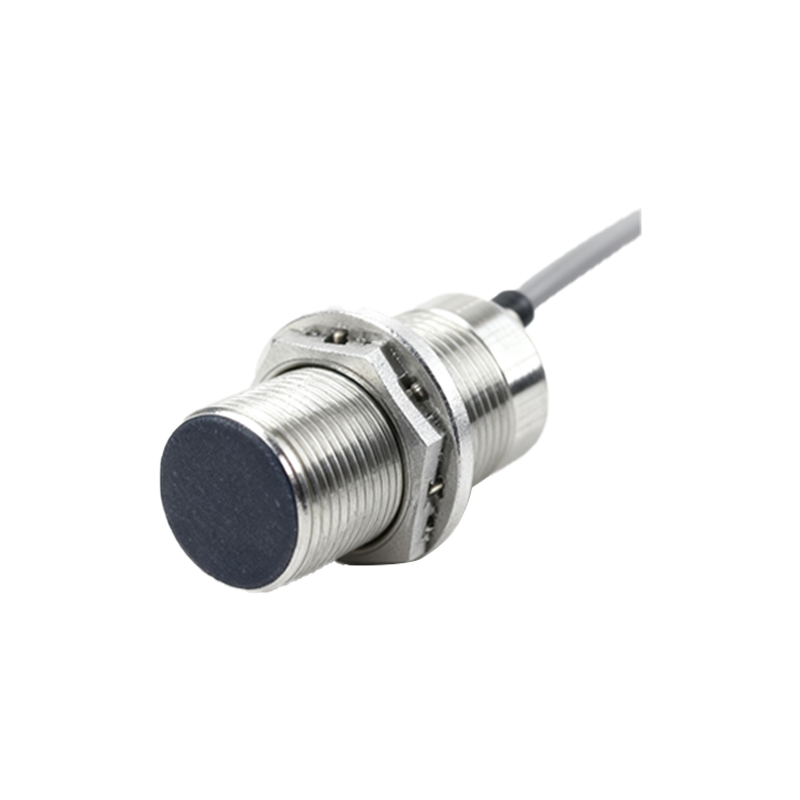
Selecting the right sensor for the thermal environment is the first line of defense. Engineers must carefully review the manufacturer's datasheet, paying close attention to the "ambient temperature" specification, which refers to the temperature of the air surrounding the sensor body. It is crucial to distinguish this from the temperature of the target object itself, which can be significantly higher in applications like welding, die-casting, or near furnaces. For such hot-target applications, sensors with a high "target temperature" rating or specialized heat shields are necessary. The sensor's housing material also plays a role; stainless steel housings generally offer better heat resistance than plastic (PBT) versions.
Installation practices are equally vital. Even a correctly specified sensor can fail if installed improperly in a thermally challenging location. Key strategies include:
Maximizing Distance: Installing the sensor as far as reasonably possible from intense heat sources like motors, ovens, or steam lines.
Promoting Airflow: Avoiding enclosures or locations with stagnant air. Natural or forced convection can significantly aid in cooling.
Considering Thermal Mass: Mounting sensors on substantial metal brackets can act as a heat sink, drawing thermal energy away from the sensitive electronics.
Protecting from Radiant Heat: Using simple metal baffles or shields to block direct line-of-sight radiant heat from hot processes or objects.
Managing Cable Temperature: Ensuring the connected cable is also rated for the ambient temperature, as high heat can degrade insulation and conductor integrity.
For environments with extreme thermal cycling—rapid and repeated changes between hot and cold—additional considerations come into play. Thermal expansion and contraction can stress mechanical seals, potentially breaking the Ingress Protection (IP) rating and allowing moisture or contaminants inside. Sensors designed for such cyclic duty often feature robust sealing technologies and materials with similar coefficients of thermal expansion.
Regular monitoring and predictive maintenance are the final pillars of managing temperature effects. Using infrared thermometers or thermal imaging cameras during routine inspections can identify sensors operating near or above their rated limits before a failure occurs. Monitoring the "operating margin" or the stability of the sensing distance over time can also serve as an early indicator of thermal stress.
In conclusion, environmental temperature is not merely a line-item specification but a dynamic force that profoundly impacts the functionality and durability of proximity switch sensors. A systematic approach encompassing informed product selection, thoughtful installation engineering, and proactive maintenance is essential to harness the full potential of these devices in the demanding conditions of modern industry. By respecting thermal limits and implementing mitigation strategies, engineers can ensure robust sensing performance, minimize downtime, and achieve optimal return on investment in automation systems.