In the realm of industrial automation and electrical engineering, proximity sensors are indispensable components for detecting the presence or absence of objects without physical contact. Among the key specifications that define their operation, the concepts of Normally Open (NO) and Normally Closed (NC) configurations stand out as fundamental principles. Grasping these terms is crucial for engineers and technicians to ensure proper system integration, safety, and functionality. This article delves into the intricacies of NO and NC in proximity sensors, explaining their mechanisms, applications, and best practices.
A proximity sensor typically consists of a sensing element, an oscillator, and an output circuit. It works by generating an electromagnetic field or beam; when an object enters this field, it alters the sensor's state, triggering an output signal. The terms Normally Open and Normally Closed refer to the default electrical state of the sensor's output contacts when no target object is within the sensing range. In a Normally Open configuration, the output circuit remains open or non-conductive under normal conditions—meaning no current flows through it. When an object is detected, the circuit closes, allowing current to pass and sending a signal to the control system. Conversely, in a Normally Closed setup, the output circuit is closed by default, permitting current flow. Upon detection of an object, the circuit opens, interrupting the current and signaling the event.
The choice between NO and NC depends largely on the application's safety and operational requirements. Normally Open sensors are often preferred in scenarios where a "fail-safe" design is essential. For instance, in safety interlocks on machinery doors, an NO sensor ensures that if the sensor fails or loses power, the circuit remains open, preventing the machine from operating and thereby protecting personnel. This aligns with fail-safe principles, as any fault defaults to a safe state. On the other hand, Normally Closed sensors are commonly used in applications where continuous monitoring is critical. In conveyor systems, an NC sensor might be employed to detect product presence; if the sensor malfunctions or the object is missing, the circuit opens, alerting operators to a potential issue. This can help prevent downtime or damage by providing immediate feedback.
From a technical perspective, the distinction between NO and NC also influences wiring and control logic. When integrating a proximity sensor into a programmable logic controller (PLC) or relay system, engineers must account for the default state to avoid misinterpretation of signals. For example, with an NO sensor, the input to the PLC will be low (or off) when no object is detected, and high (or on) upon detection. With an NC sensor, the opposite occurs: the input is high normally and goes low when triggered. This requires careful programming to ensure that the control system responds appropriately, such as activating alarms or stopping motors based on the sensor's state. Misconfiguration can lead to operational errors or safety hazards, underscoring the importance of thorough documentation and testing during installation.
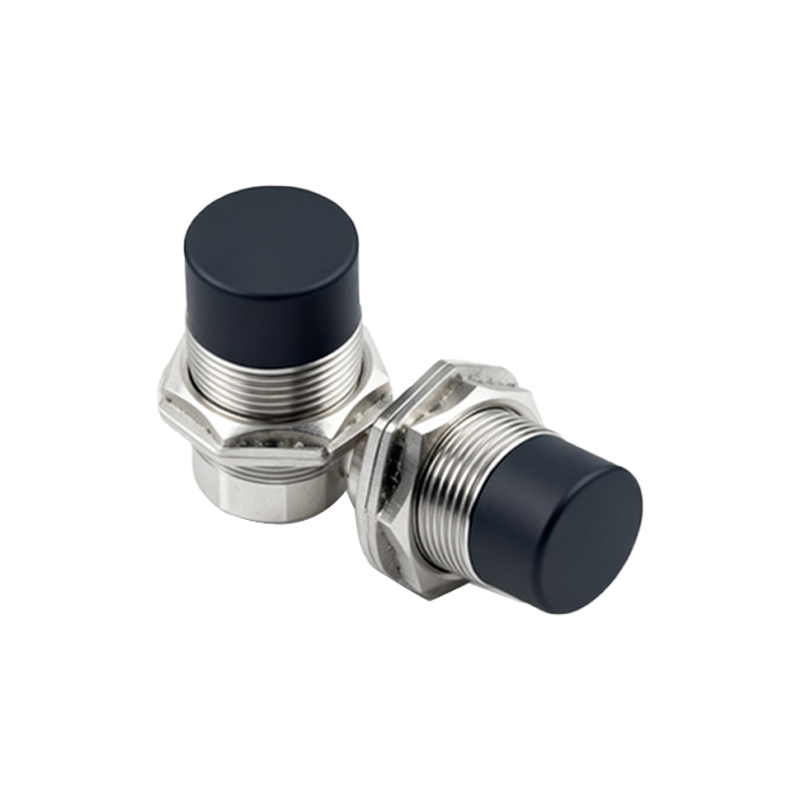
In practice, many modern proximity sensors offer configurable outputs, allowing users to switch between NO and NC modes via software or hardware settings. This flexibility enhances adaptability across diverse industrial environments, from automotive assembly lines to packaging machinery. However, it also demands a deeper understanding of the underlying principles to avoid confusion. Engineers should consult datasheets and manufacturer guidelines to verify the default configuration and adjust as needed. Additionally, environmental factors like temperature, humidity, and electromagnetic interference can affect sensor performance, so regular maintenance and calibration are recommended to sustain reliability.
Beyond basic functionality, the selection of NO versus NC ties into broader system design considerations. For safety-critical applications, standards such as IEC 60947-5-2 or ISO 13849 may dictate specific requirements for sensor configurations to ensure compliance with risk assessments. In redundant systems, a combination of NO and NC sensors might be used to provide dual-channel monitoring, enhancing fault tolerance. For example, in elevator door controls, both types could be employed to verify that doors are fully closed before movement, reducing the likelihood of accidents.
Ultimately, mastering Normally Open and Normally Closed concepts in proximity sensors empowers professionals to optimize automation processes. By aligning sensor choices with operational goals—whether prioritizing safety, efficiency, or reliability—engineers can build robust systems that minimize downtime and maximize productivity. As technology evolves, with trends toward Industry 4.0 and smart manufacturing, a solid grasp of these fundamentals remains essential for innovation and troubleshooting in the electrical engineering field.