In the realm of industrial automation and machine safety, the reliability and precision of sensing components are paramount. The 2920528Z proximity sensor represents a critical piece of this technological puzzle, engineered to deliver consistent, non-contact detection in demanding environments. This article delves into the technical specifications, operational principles, and typical applications of this sensor, providing a detailed guide for engineers and system integrators.
Proximity sensors, fundamentally, are devices that detect the presence or absence of an object without physical contact. The 2920528Z model is typically an inductive proximity sensor, designed to detect metallic targets. Its operation is based on the principle of electromagnetic induction. The sensor's oscillator circuit generates a high-frequency electromagnetic field that radiates from its active face. When a conductive metal object enters this field, eddy currents are induced on the surface of the target. This causes a change in the oscillation amplitude or frequency within the sensor's circuit. An integrated evaluation circuit detects this change and triggers a solid-state output switch, signaling the object's presence.
The "2920528Z" designation is a specific part number that encodes key characteristics such as sensing range, housing style, electrical output type, and connection method. While exact specifications can vary slightly by manufacturer, a sensor with this identifier commonly features a cylindrical, threaded metal housing (e.g., M18 or M30 size), offering robust mechanical strength and environmental protection, typically rated at IP67 or higher. This ensures resistance to dust ingress and temporary immersion in water, making it suitable for harsh factory floors, machining centers, and outdoor applications.
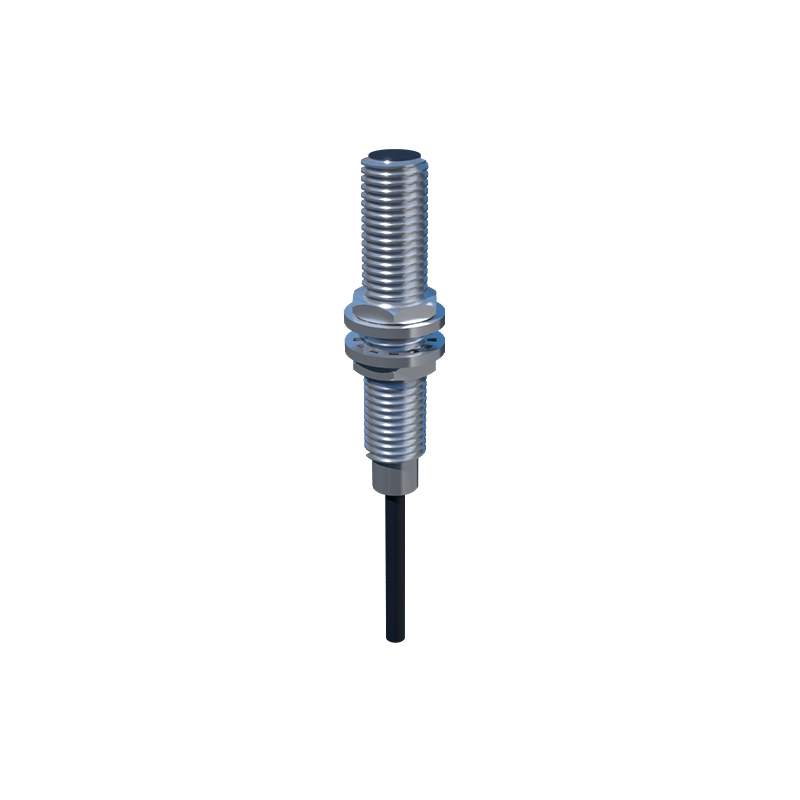
The electrical output is a crucial parameter. The 2920528Z is often available in both PNP (sourcing) and NPN (sinking) transistor configurations, with a 3-wire DC connection. The operating voltage range is generally 10-30V DC, compatible with standard industrial control voltages. The output current rating, often around 200mA, is sufficient to directly drive relays, PLC inputs, or indicator lamps. Its switching frequency, a measure of how quickly it can detect objects in succession, is typically in the hundreds of Hertz, enabling high-speed counting or positioning tasks.
Key performance metrics include the nominal sensing distance (Sn). For an M18 inductive sensor, this is commonly 5mm or 8mm. It is vital to note that this rated distance is defined for a standard target (usually mild steel). Factors like target material, size, and shape can affect the actual sensing range. For instance, sensing distance reduces for non-ferrous metals like aluminum or copper. The sensor also features a built-in hysteresis, a small difference between the switch-on and switch-off points, which prevents output chatter when a target is at the edge of the detection zone.
Installation and environmental considerations are critical for optimal performance. The sensor must be mounted securely, with adequate clearance from surrounding metal objects (as specified in the datasheet) to prevent false triggering. While inductive sensors are immune to dust, oil, and non-metallic contaminants, extreme temperatures, strong magnetic fields, or welding spatter can affect performance. Selecting a sensor with appropriate housing material (e.g., stainless steel) and temperature rating is essential for specific use cases.
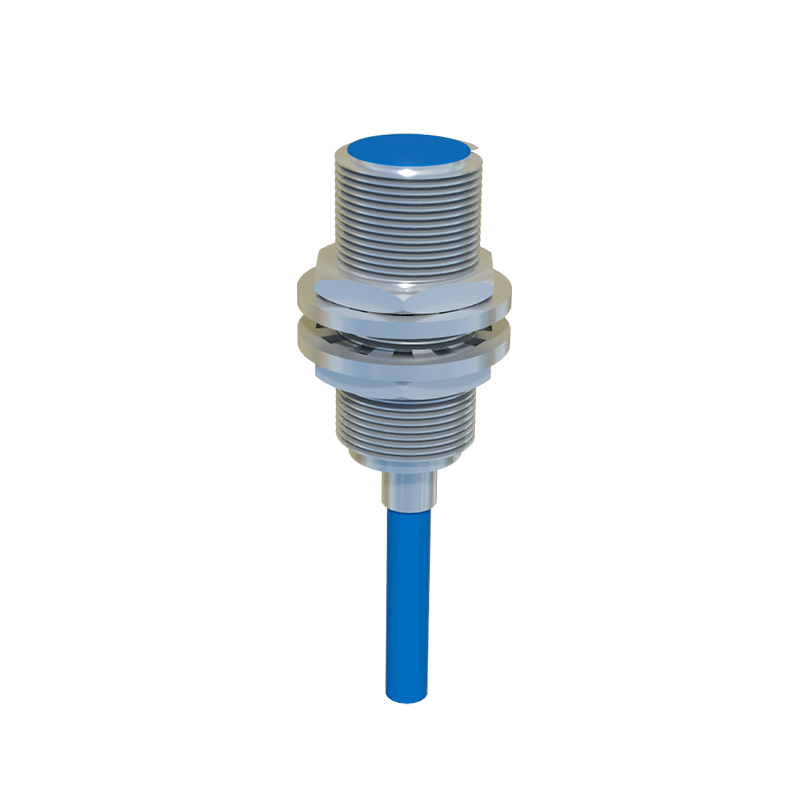
The applications for the 2920528Z proximity sensor are vast within factory automation. It is extensively used for end-of-travel detection on pneumatic cylinders, where a metal flag on the piston rod actuates the sensor. It serves in material handling for detecting metal parts on conveyors, in packaging machinery for counting, in machine tools for tool positioning or workpiece detection, and in robotic cells for verifying the presence of a gripper or a part. Its robustness also makes it ideal for safety interlocks on machine guards, ensuring a door is closed before operation commences.
Troubleshooting typically involves checking the power supply, verifying the wiring according to the datasheet (brown wire to +V, blue wire to 0V, black wire as the switched output), and ensuring the target is within the specified range and material. Using a simple multimeter to check for voltage at the output pin when a target is presented is a standard diagnostic step.
In summary, the 2920528Z proximity sensor is a versatile, rugged, and highly reliable component foundational to modern industrial control systems. Understanding its electrical characteristics, sensing behavior, and installation requirements allows engineers to design more efficient, safe, and maintainable automated systems. Always consult the manufacturer's specific technical datasheet for the exact 2920528Z variant to ensure correct selection and integration for your application.