Eddy current proximity sensors represent a cornerstone technology in modern industrial automation and condition monitoring systems. Operating on a fundamental principle of electromagnetism, these non-contact sensors provide reliable detection and precise measurement of conductive targets, even in the harshest operational environments. Unlike inductive sensors that require ferromagnetic materials, eddy current sensors respond to all electrically conductive materials, including aluminum, copper, and brass, making them exceptionally versatile.
The core operating principle is elegantly straightforward. The sensor contains a coil energized by a high-frequency alternating current. This current generates an oscillating magnetic field that radiates from the sensor's active face. When a conductive target enters this field, it induces circular electrical currents—known as eddy currents—within the target material. These eddy currents, in turn, generate their own opposing magnetic field, which interacts with the sensor's original field. This interaction alters the impedance of the sensor's coil. The integrated electronics within the sensor housing meticulously measure this change in impedance, converting it into a usable output signal, typically a switching signal or a proportional analog voltage/current corresponding to the distance to the target.
This technology confers several distinct advantages. First and foremost is its capability for true non-contact measurement, eliminating mechanical wear and tear on both the sensor and the target. It offers high resolution and repeatability, capable of detecting sub-micron displacements in precision applications. The sensors are largely immune to common industrial interferences such as dust, oil, coolant, and non-conductive contaminants, as these substances do not affect the magnetic field. They can operate effectively across extreme temperature ranges and are often housed in robust, sealed enclosures rated for IP67 or higher, ensuring longevity in demanding settings like metal machining, forging, and automotive assembly lines.
Key application areas are diverse. In manufacturing, they are indispensable for precise position feedback in CNC machines, robotic end-effector alignment, and vibration monitoring on motor shafts and bearings. They serve as critical components in automated assembly for part presence verification, counting, and sorting of metallic components. In the realm of condition monitoring, they are the preferred choice for measuring shaft runout, axial thrust, and detecting cracks in rotating machinery like turbines and compressors, enabling predictive maintenance strategies. Furthermore, their ability to measure through certain non-conductive materials allows for unique setups, such as monitoring the thickness of conductive coatings or the position of a metal part inside a plastic housing.
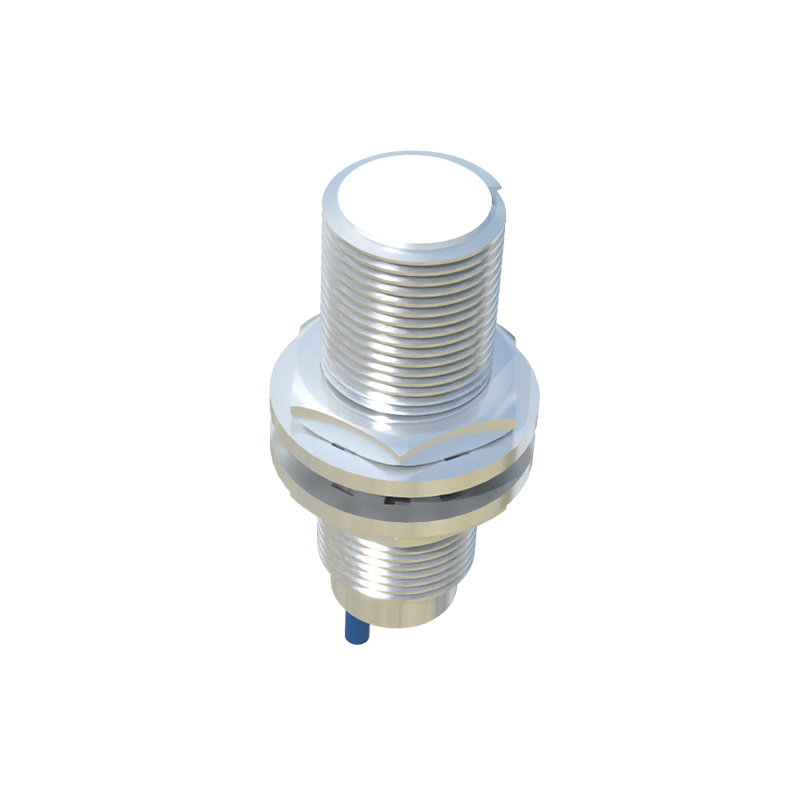
Selecting the appropriate eddy current proximity sensor requires careful consideration of several parameters. The target material is paramount; different conductivities and permeabilities affect the sensing distance. Manufacturers provide correction factors for non-ferrous steels. The nominal sensing distance (Sn) is specified for a standard mild steel target and must be derated for other materials. The required resolution and linearity over the measurement range dictate the sensor's grade, with precision models offering superior performance for metrology tasks. Output type is another critical choice: a digital PNP/NPN switch for simple presence detection, or an analog output (0-10V, 4-20mA) for continuous distance measurement. Environmental factors such as ambient temperature, potential for strong magnetic fields, and the need for intrinsically safe certifications for hazardous areas must also be evaluated.
Installation and commissioning are generally straightforward but demand attention to detail. Ensuring a stable mechanical mount is crucial to avoid measurement drift. The sensor must be positioned so that only the intended target material influences its field; adjacent conductive structures or other sensors can cause interference and require adequate spacing. Regular calibration checks against a known reference are recommended for high-precision applications to maintain accuracy over time.
In conclusion, eddy current proximity sensors offer a unique blend of robustness, precision, and material versatility. Their non-contact nature and resilience make them a superior solution for countless industrial sensing challenges involving conductive objects. As automation systems strive for greater speed, accuracy, and reliability, the role of these electromagnetic workhorses will only continue to expand, providing the essential data needed for intelligent control and maintenance in the evolving Industrial IoT landscape.