In the rapidly evolving landscape of new energy technologies—encompassing solar power, wind energy, electric vehicles (EVs), and advanced energy storage systems—the demand for precise, reliable, and durable sensing solutions has never been greater. Among these critical components, proximity sensors play an indispensable yet often understated role. This article delves into what proximity sensors are, their fundamental operating principles, and their vital applications within the new energy sector.
At its core, a proximity sensor is a non-contact device designed to detect the presence or absence of an object within a specified range without any physical contact. It achieves this by emitting an electromagnetic field or a beam of electromagnetic radiation (such as infrared light) and then monitoring for changes in the field or return signal. The primary advantage of this non-contact operation is the elimination of mechanical wear, leading to enhanced longevity, reliability, and the ability to detect fragile or fast-moving objects.
Several types of proximity sensors are prevalent in industrial and energy applications, each with distinct characteristics:
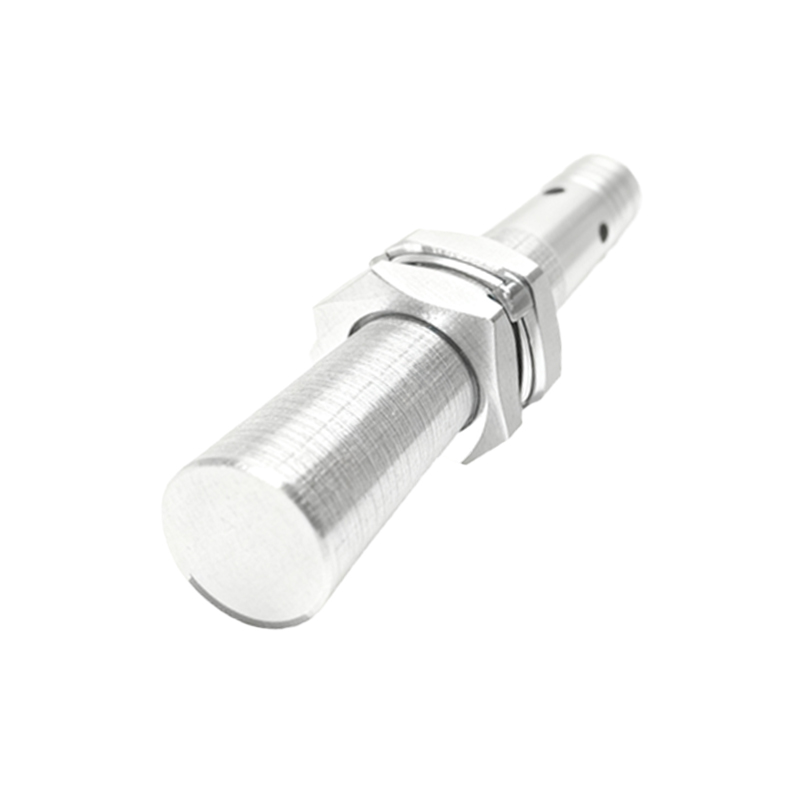
1. Inductive Proximity Sensors: These sensors detect metallic objects (typically ferrous metals like iron and steel) by generating an oscillating electromagnetic field. When a metal object enters this field, it induces eddy currents within the object, causing a change in the sensor's oscillation amplitude. This change triggers the sensor's output switch. They are highly robust, resistant to environmental contaminants like dust and oil, and are ideal for detecting the position of metal components in machinery.
2. Capacitive Proximity Sensors: Capable of detecting both metallic and non-metallic materials (liquids, plastics, wood, granules), these sensors function by measuring changes in capacitance. The sensor and the target act as two plates of a capacitor. As the target approaches, the capacitance increases, and once it reaches a threshold, the sensor activates. This makes them perfect for level detection of liquids or powders in tanks, common in energy storage and processing.
3. Ultrasonic Proximity Sensors: These sensors emit high-frequency sound waves and evaluate the echo received back. By calculating the time interval between sending the signal and receiving the echo, they can determine the distance to an object. They are effective for detecting objects of various materials, shapes, and colors, and are used in applications like wind turbine blade clearance monitoring or liquid level sensing in solar thermal systems.
4. Photoelectric Sensors: Utilizing a light transmitter (often LED) and a receiver, these sensors detect objects based on the interruption or reflection of a light beam. They offer long sensing ranges and can detect virtually any material. In new energy, they are crucial for precise positioning in solar panel manufacturing lines or detecting objects on EV assembly conveyors.
The integration of proximity sensors is pivotal to the efficiency, safety, and automation of new energy systems:
Electric Vehicle Manufacturing and Operation: Inductive sensors are ubiquitous on EV production lines, ensuring precise positioning of chassis components, battery modules, and motors. Within the vehicle itself, sensors monitor brake pad wear, gear position in transmissions, and the status of charging port doors. Capacitive sensors can be used for touch-sensitive controls on dashboards.
Wind Power Generation: Proximity sensors are critical for condition monitoring and safety. Inductive sensors monitor the pitch angle of turbine blades, ensuring optimal angle for wind capture. They also detect the rotational speed of the gearbox and generator shafts. Sensors are used in hydraulic systems for blade braking and in yaw drives to ensure the nacelle is correctly oriented into the wind.
Solar Energy Systems: In photovoltaic panel manufacturing, sensors ensure precise alignment and handling of silicon wafers and glass panels. In concentrated solar power (CSP) plants, ultrasonic or photoelectric sensors assist in tracking system alignment, ensuring mirrors precisely focus sunlight onto receivers. Capacitive sensors can monitor coolant or thermal fluid levels in storage tanks.
Battery Energy Storage Systems (BESS): Safety is paramount in BESS installations. Proximity sensors can be employed for door interlock detection on battery cabinets, ensuring they are securely closed before operation. They can also monitor the position of circuit breakers and disconnects within power conversion systems.
When selecting a proximity sensor for a new energy application, engineers must consider several key parameters: the sensing range, the nature of the target material, the required output type (e.g., NPN/PNP, analog, IO-Link), environmental conditions (temperature, humidity, potential exposure to chemicals or weather), and the required housing material (often stainless steel or nickel-plated brass for corrosion resistance).
Looking ahead, the role of proximity sensors will continue to expand with trends like Industry 4.0 and the Industrial Internet of Things (IIoT). Modern sensors with digital communication protocols (like IO-Link) not only provide switch signals but also transmit valuable diagnostic