In industrial automation and control systems, proximity sensors are indispensable components for detecting the presence or absence of objects without physical contact. Among various wiring configurations, the 2-wire (2C) proximity sensor is widely adopted due to its simplicity and cost-effectiveness, requiring only two wires for both power supply and signal transmission. This article delves into the principles, challenges, and practical implementation of code for interfacing with 2-wire proximity sensors, tailored for engineers and developers in the electrical and automation fields.
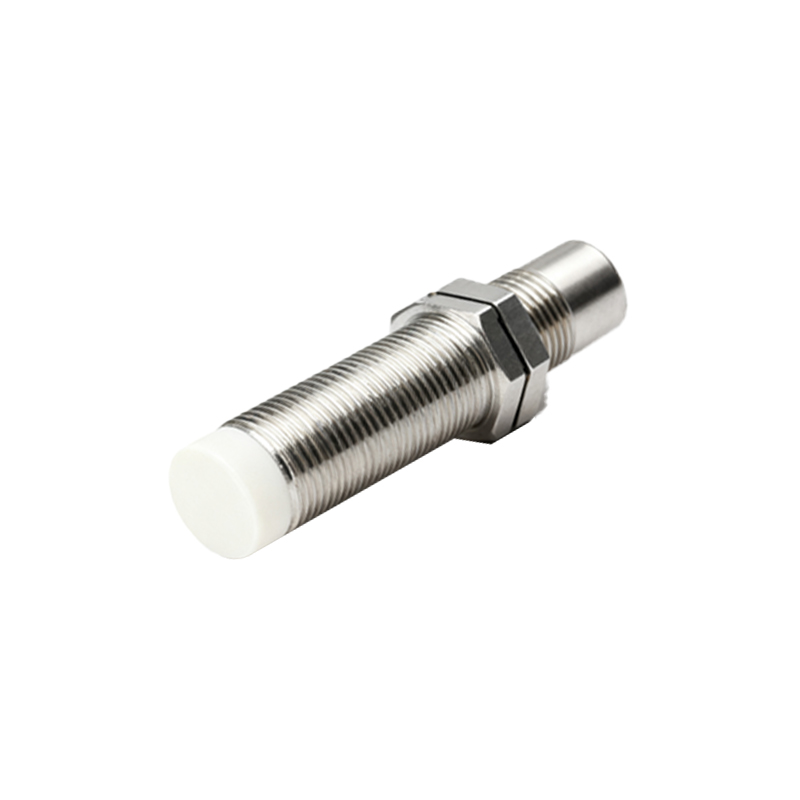
A 2-wire proximity sensor operates by modulating its internal current draw to indicate detection states. Typically, it draws a low quiescent current (e.g., 1-2 mA) when no target is present and a higher current (e.g., 5-20 mA, depending on the model) when a target is detected. This current change must be interpreted by a controller, such as a PLC (Programmable Logic Controller) or microcontroller, to determine the sensor's output state. Unlike 3-wire or 4-wire sensors that provide separate power and signal lines, the 2-wire variant combines these functions, necessitating careful design to avoid false triggers and ensure reliable operation.
Key challenges in interfacing with 2-wire proximity sensors include voltage drop issues, noise immunity, and compatibility with input modules. Since the sensor shares the same wires for power and signal, any resistance in the circuit can cause a voltage drop that might affect performance. Additionally, industrial environments often contain electromagnetic interference (EMI) that can distort the current signal. To address these, engineers must implement robust code that includes debouncing, filtering, and calibration routines.
For code implementation, consider a microcontroller-based system using an analog or digital input to read the sensor state. Here’s a basic example in pseudocode, adaptable to languages like C or structured text for PLCs:
1. Initialization: Set up the input pin and configure parameters such as sample rate and threshold values. For analog reading, define a threshold current (converted to voltage via a shunt resistor) to distinguish between ON and OFF states. For digital input, ensure the module is compatible with 2-wire sensors (often labeled as "PNP/NPN" or "sourcing/sinking").
``
#define THRESHOLD_VOLTAGE 2.5 // Example threshold in volts
#define SHUNT_RESISTOR 100 // Ohms
pinMode(SENSOR_PIN, INPUT);
`
2. Reading and Debouncing: Continuously sample the sensor input to avoid transient noise. Implement a moving average filter or a simple debounce algorithm.
`
int sampleCount = 10;
float totalVoltage = 0;
for (int i = 0; i< sampleCount; i++) {
totalVoltage += analogRead(SENSOR_PIN) CONVERSION_FACTOR;
delay(1);
}
float averageVoltage = totalVoltage / sampleCount;
`
3. State Determination: Compare the averaged reading to the threshold to determine if the sensor detects an object.
`
bool objectDetected = false;
if (averageVoltage > THRESHOLD_VOLTAGE) {
objectDetected = true; // Higher current indicates detection
} else {
objectDetected = false; // Low current indicates no target
}
`
4. Output and Diagnostics: Trigger actions based on the detection state and include diagnostic features, such as checking for open circuits or short circuits by monitoring extreme voltage values.
`
if (objectDetected) {
activateOutput(); // e.g., turn on a relay or LED
}
if (averageVoltage< MIN_VOLTAGE) {
logError("Open circuit suspected");
}
``
Best practices for 2-wire sensor code include:
- Calibration: Regularly calibrate the threshold based on sensor specifications and environmental conditions to maintain accuracy.
- Isolation: Use optocouplers or isolation amplifiers in noisy environments to protect the controller from voltage spikes.
- Testing: Simulate various scenarios, such as rapid target movement or power fluctuations, to validate code robustness.
In summary, interfacing with 2-wire proximity sensors requires a nuanced understanding of their operation and potential pitfalls. By implementing careful coding strategies—such as filtering, debouncing, and diagnostics—engineers can ensure reliable sensor performance in diverse industrial applications. As automation evolves, mastering these fundamentals remains crucial for efficient system design and maintenance.