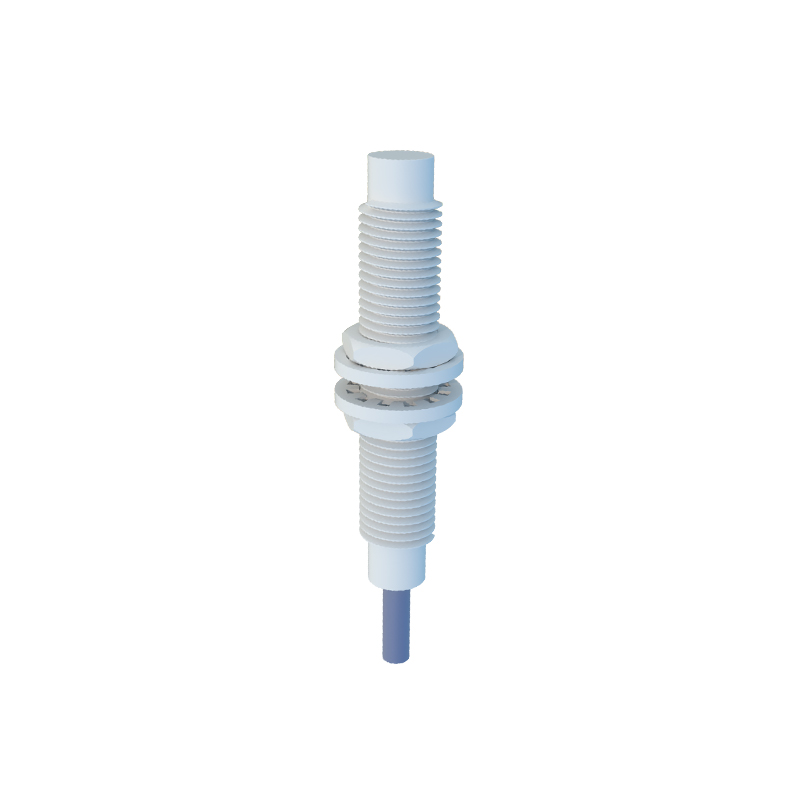
In the world of industrial automation and precise control, the need for reliable, non-contact detection is paramount. Among the various technologies available, Hall effect proximity sensors stand out for their durability, accuracy, and versatility. Unlike mechanical limit switches or optical sensors, these devices operate without physical touch and are largely immune to environmental contaminants like dust, oil, or moisture. Their core principle hinges on a fundamental electromagnetic phenomenon, offering a robust solution for countless applications.
The operational heart of a Hall effect sensor is the Hall element, a thin semiconductor material. The underlying principle, discovered by Edwin Hall in 1879, is straightforward yet powerful. When a current flows through this conductor and it is exposed to a magnetic field perpendicular to the current flow, a voltage difference, known as the Hall voltage, is generated across the conductor. This voltage is directly proportional to the strength of the applied magnetic field. A Hall effect proximity sensor integrates this element with signal conditioning electronics. In its simplest form, the sensor detects the presence or absence of a magnetic field, typically from a permanent magnet attached to the target object. As the magnet approaches the sensor's face, the magnetic field strength increases, causing the Hall voltage to rise. The integrated circuitry processes this signal, triggering a clean, digital output switch—often an NPN or PNP transistor—that can interface directly with programmable logic controllers (PLCs), counters, or other control systems.
This technology confers several distinct advantages. First and foremost is their exceptional longevity. With no moving parts to wear out and no physical contact required, Hall sensors offer virtually infinite mechanical life. They are highly resistant to shock, vibration, and harsh environmental conditions, making them ideal for demanding settings like automotive manufacturing, metalworking, and heavy machinery. Their switching frequency is very high, allowing them to detect rapidly moving objects, such as gear teeth or fan blades, with precision. Furthermore, they are polarity-sensitive, meaning they can distinguish between north and south magnetic poles, enabling more complex positional sensing.
The applications for Hall effect proximity sensors are vast and varied. In the automotive industry, they are ubiquitous, used for detecting crankshaft and camshaft position, measuring wheel speed for anti-lock braking systems (ABS), and sensing seatbelt engagement. In industrial automation, they are employed for end-of-travel detection on linear actuators, counting products on conveyors, verifying the position of robotic arms, and monitoring rotational speed. Consumer electronics also utilize miniature Hall sensors for features like laptop lid closure detection (sleep/wake function) and smartphone flip cover detection. Their ability to function reliably in the presence of contaminants makes them superior to optical sensors in dirty or oily environments, such as machine tooling or agricultural equipment.
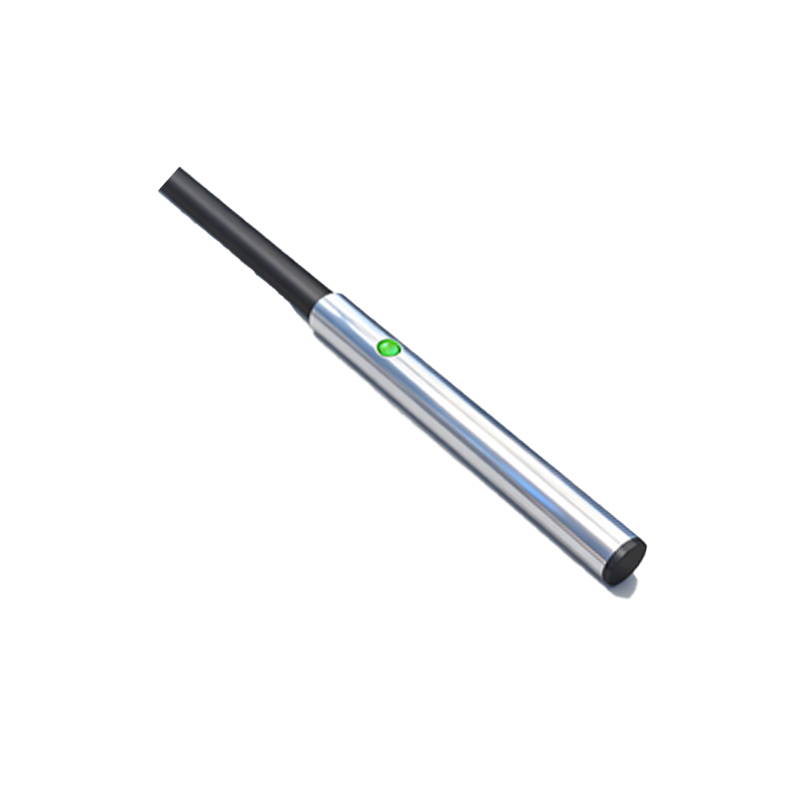
Selecting the right Hall effect sensor requires careful consideration of several key parameters. The sensing distance, or switch point, is critical and must be matched to the application, taking into account the strength of the target magnet. The type of output (digital or analog, NPN sinking or PNP sourcing) must be compatible with the control system's input card. Housing material is another factor; stainless steel bodies offer superior corrosion resistance for washdown environments, while nickel-plated brass or plastic housings may suffice for less demanding areas. Engineers must also consider the operating voltage range, temperature tolerance, and whether a unipolar (activated by one pole) or bipolar (activated by either pole) sensor is needed. Proper installation is equally important; sensors should be mounted securely to minimize vibration effects, and the magnetic target's approach path should be consistent to ensure repeatable switching.
In conclusion, Hall effect proximity sensors represent a mature, reliable, and highly effective sensing technology. Their foundation in a simple physical principle translates into complex and critical functionality across modern engineering. By understanding their working mechanism, recognizing their strengths in non-contact, durable operation, and carefully matching their specifications to the task at hand, designers and maintenance personnel can leverage these sensors to enhance system reliability, safety, and efficiency. As automation continues to advance, the role of the robust and precise Hall effect proximity sensor remains firmly secured.