In the world of industrial automation, robotics, and smart devices, proximity sensors are the silent sentinels. They detect the presence or absence of an object without physical contact, enabling countless automated processes. While specifications like sensing range, output type, and housing material are often discussed, one critical physical dimension frequently overlooked is the sensor's diameter. This parameter is not merely a mechanical detail; it is a fundamental factor influencing installation, performance, and application suitability. Choosing the correct proximity sensor diameter is a balancing act between spatial constraints, detection requirements, and sensing field characteristics.
The diameter of a cylindrical inductive or capacitive proximity sensor directly correlates with its size and, to a significant extent, its sensing capabilities. Generally, a larger diameter allows for the incorporation of a larger coil (in inductive sensors) or larger electrodes (in capacitive sensors). This typically translates to a longer nominal sensing distance. For instance, an M30 sensor (30mm diameter) will almost always have a substantially longer range than an M8 sensor (8mm diameter) of the same technology and family. Therefore, the first consideration is the required operating distance. If an application needs to detect an object from 15mm away, an M5 or M8 sensor will be insufficient; an M18 or M30 sensor becomes necessary.
However, the quest for longer range cannot overshadow the paramount importance of physical fit. This is the most practical constraint. The sensor must physically fit into the allocated space within the machine or assembly. In compact machinery, robotic grippers, or tightly spaced fixtures, a large-diameter sensor is simply not an option. Using an M12 sensor instead of an M18 can be the difference between a successful integration and a complete redesign of a component. Engineers must carefully review mechanical drawings, considering not just the sensor body but also the necessary clearance around it for mounting tools and wiring connectors.
Beyond size and range, the diameter influences the shape and size of the sensor's magnetic or electrostatic field. A sensor with a larger diameter generally produces a wider sensing field. This can be advantageous for detecting misaligned or larger targets, providing a margin of error in positioning. Conversely, a smaller-diameter sensor has a more focused, narrower field. This precision is crucial in applications requiring high positional accuracy, such as detecting specific teeth on a gear, verifying the position of a small component on an assembly line, or in environments with many metallic objects in close proximity where a wider field might cause unwanted triggering from adjacent machinery.
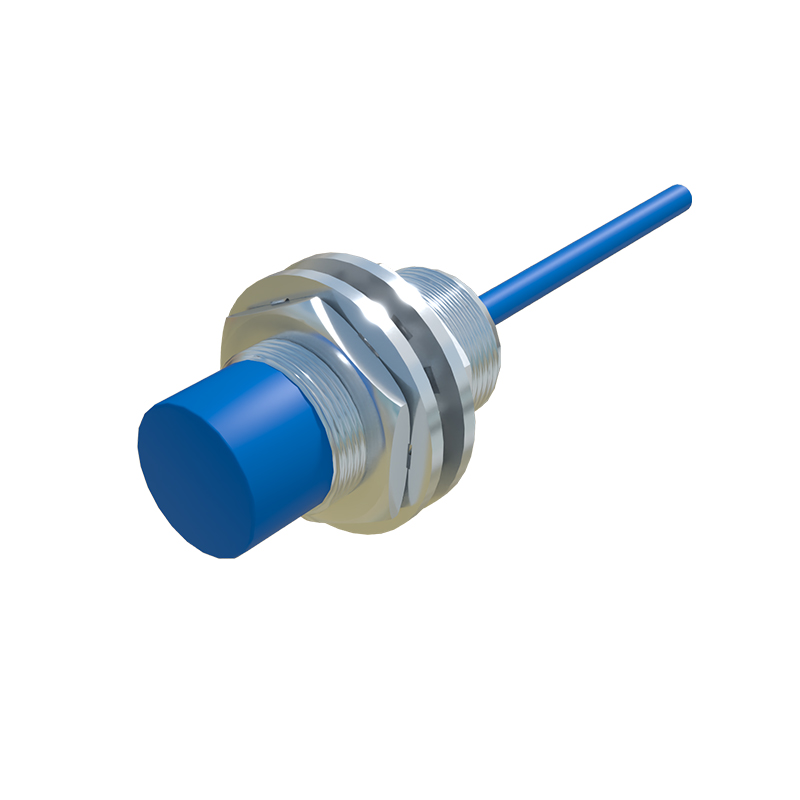
The choice of diameter also has implications for switching frequency and target size requirements. Smaller sensors often have faster response times and can handle higher switching frequencies because the active element is smaller. This makes them ideal for high-speed counting or detection on fast-moving production lines. Regarding the target, a fundamental rule is that the target object's size must be appropriate for the sensor. For a standard inductive sensor, the ideal target is a square of ferrous metal with a side length equal to the sensor's diameter or the sensing distance (whichever is larger). A tiny target might not be reliably detected by a large-diameter sensor, as it doesn't sufficiently interact with the broad sensing field.
Installation is another practical aspect dictated by diameter. Larger sensors (e.g., M30) often require more substantial mounting brackets and more space for wiring. They commonly feature robust connectors or generous cable entries. Smaller sensors (e.g., M5, M8) may have integrated, fixed cables due to space limitations. The mounting hole tolerance is also specified relative to the diameter; drilling an imprecise hole can easily damage a small, delicate sensor or affect the performance of a larger one by misaligning it.
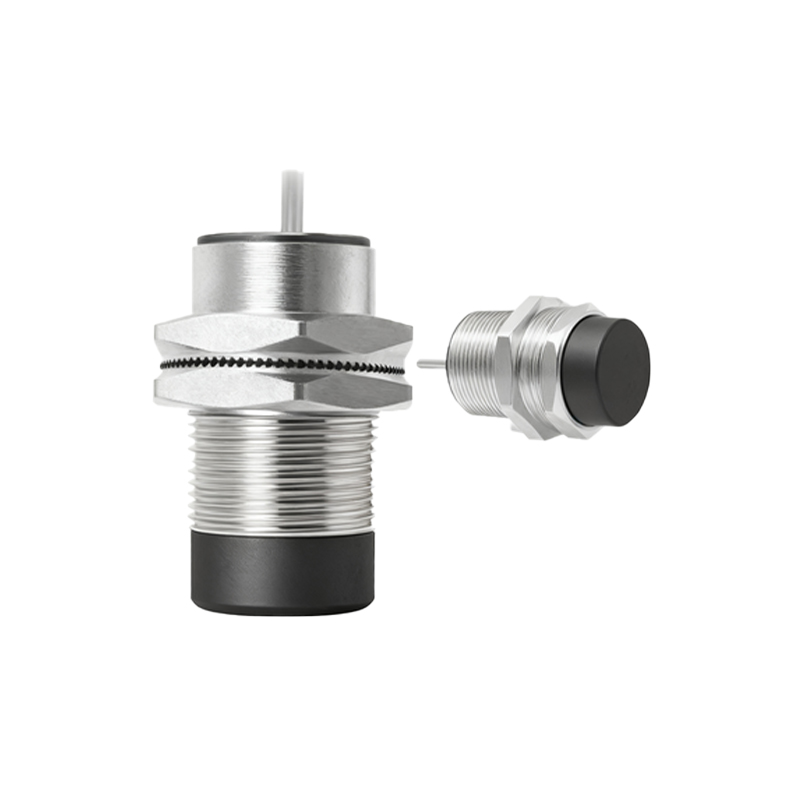
Finally, the ecosystem of accessories is diameter-dependent. Protective shields, mounting nuts, lock washers, and specific types of connectorized cabling are all sized to match standard sensor diameters like M5, M8, M12, M18, M30, and M40. Selecting a less common diameter might lead to challenges in sourcing these accessories, increasing maintenance time and cost.
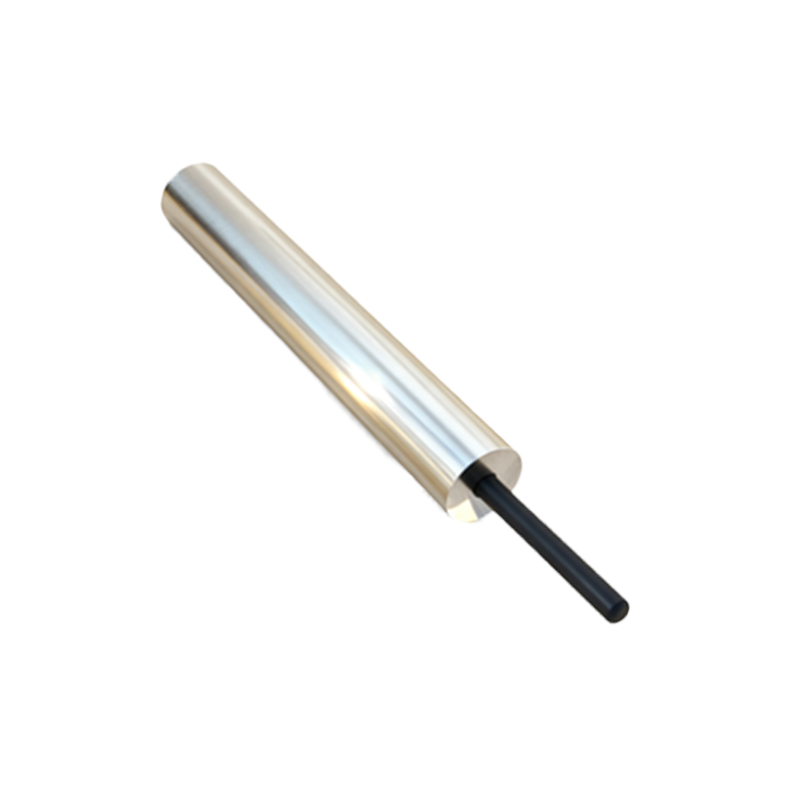
In conclusion, specifying the proximity sensor diameter is a critical engineering decision. It begins with the application's fundamental needs: the required sensing distance and the available physical space. These primary factors then lead to considerations of field shape for precision, switching speed for performance, and target compatibility for reliability. There is no universal "best" diameter. An M8 sensor is perfect for a cramped robotic wrist, while an M30 sensor is indispensable for detecting large pallets from a safe distance on a conveyor. By systematically evaluating these diameter-related factors, designers and engineers can ensure optimal sensor performance, seamless integration, and long-term reliability in any automated system.