Proximity switch liquid level sensors are critical components in modern industrial automation and process control systems. These sensors provide reliable, non-contact detection of liquid levels in tanks, reservoirs, and pipelines across various industries, including oil and gas, chemical processing, water treatment, and manufacturing. Understanding the operational principles of these devices is essential for engineers and technicians involved in system design, maintenance, and optimization.
At its core, a proximity switch used for liquid level sensing operates by detecting the presence or absence of a target—typically a float, a metallic flag, or the liquid interface itself—without physical contact. The most common technologies employed are inductive, capacitive, and ultrasonic proximity sensors, each suited to specific applications based on the liquid's properties and environmental conditions.
Inductive proximity sensors are widely used for detecting conductive liquids or metallic floats. They generate an oscillating electromagnetic field from a coil fed by an alternating current. When a conductive target enters this field, eddy currents are induced on the target's surface, causing a change in the oscillation amplitude or frequency. This change is detected by the sensor's internal circuitry, which triggers a switching action—typically opening or closing a relay or sending a signal to a programmable logic controller (PLC). For liquid level applications, an inductive sensor is often paired with a float containing a permanent magnet or a metallic component. As the liquid level rises or falls, the float moves accordingly, bringing the target into or out of the sensor's detection range. These sensors are highly reliable in harsh environments with presence of vapors, foam, or varying pressures, but are limited to use with conductive media or metallic targets.
Capacitive proximity sensors, on the other hand, can detect both conductive and non-conductive liquids, including water, oils, chemicals, and granular materials. They function by generating an electrostatic field between two electrodes: one active electrode (the sensor face) and one reference (usually the sensor housing or ground). When a material enters this field, it alters the dielectric constant between the electrodes, changing the capacitance. The sensor's electronics monitor this capacitance change and activate an output when a preset threshold is reached. In liquid level sensing, capacitive sensors can be installed directly on the exterior of a non-metallic tank wall to detect the liquid inside, eliminating the need for internal components. They are also used with floats or as direct immersion probes. Their sensitivity can be adjusted to ignore tank walls and respond only to the liquid, making them versatile for various container materials. However, they can be affected by material buildup on the probe or changes in liquid composition that alter dielectric properties.
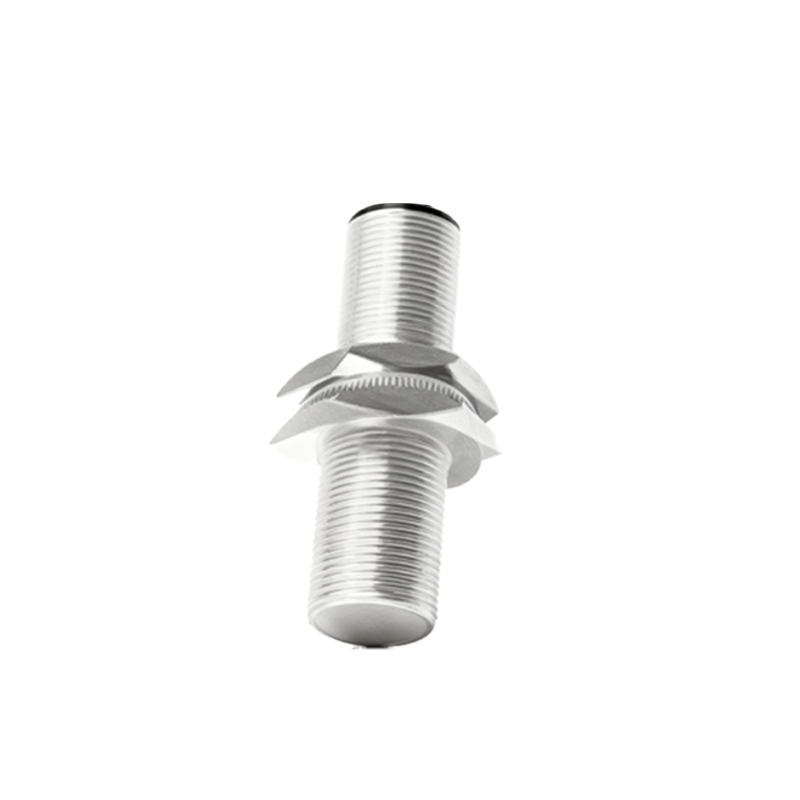
Ultrasonic proximity sensors offer another non-contact method, particularly useful for aggressive or sterile liquids where sensor contact is undesirable. They emit high-frequency sound pulses toward the liquid surface and measure the time delay of the reflected echo. The time-of-flight calculation determines the distance to the surface, enabling continuous level monitoring or point-level switching. While not always classified as traditional "proximity switches," ultrasonic level switches use this principle to provide a discrete output when the level reaches a set point. They are effective for opaque, turbulent, or foamy liquids where optical methods might fail, but performance can be degraded by temperature variations, heavy vapors, or surface disturbances.
The integration of proximity switches into liquid level control systems involves careful selection based on factors such as liquid conductivity, dielectric constant, temperature, pressure, corrosion potential, and required switching accuracy. For instance, in a fuel storage tank, an inductive sensor with a magnetic float might be chosen for its durability and insensitivity to fuel vapors. In a food processing vat containing non-conductive liquid, a capacitive sensor could be selected for its ability to sense through a glass or plastic wall, maintaining hygiene.
Installation and calibration are critical for optimal performance. Sensors must be positioned to avoid false triggers from turbulence, bubbles, or structural vibrations. Shielded versions of inductive sensors are used in tight spaces to prevent interference from adjacent metal. Capacitive sensors often require calibration on-site to account for the specific container and medium. Many modern sensors feature built-in diagnostics, LED status indicators, and adjustable sensing ranges, simplifying setup and maintenance.
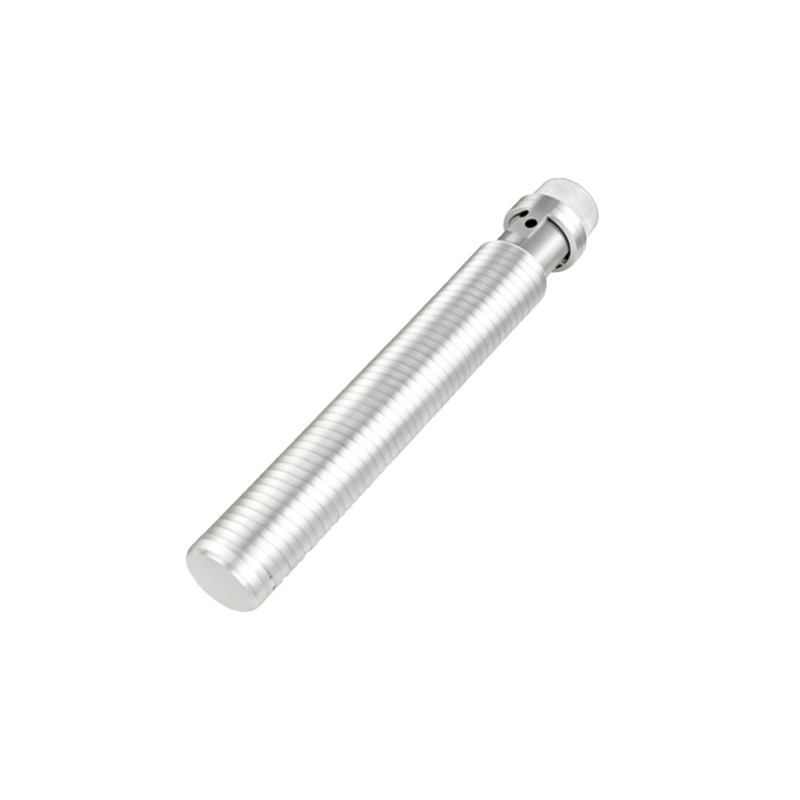
Advancements in sensor technology have led to the development of hybrid and intelligent devices. Some proximity switches now incorporate IO-Link communication, enabling digital parameter setting, real-time monitoring, and integration with Industrial Internet of Things (IIoT) platforms. This allows for predictive maintenance, as trends in switching frequency or signal strength can indicate issues like float wear, coating buildup, or changing liquid properties before a failure occurs.
In summary, proximity switch liquid level sensors provide a robust, maintenance-friendly solution for point-level detection in diverse industrial settings. Their non-contact operation ensures long service life and reliability, while the variety of sensing principles allows engineers to match the technology to the application's specific demands. Proper understanding