In the realm of industrial automation, the reliability and precision of sensing technology form the backbone of efficient operations. Among the myriad of components, proximity sensors play a pivotal role in non-contact detection, and the GX-112MKA model stands out as a robust solution for demanding applications. This article delves into the technical specifications, operational principles, and practical implementation of the GX-112MKA inductive proximity sensor, providing engineers and system integrators with essential insights.
The GX-112MKA is a cylindrical, shielded inductive proximity sensor designed for the detection of metallic objects. Its core operating principle is based on electromagnetic induction. The sensor generates a high-frequency oscillating electromagnetic field from its active face. When a ferrous or non-ferrous metal target enters this field, eddy currents are induced within the target, causing a change in the oscillation amplitude. This change is detected by the sensor's internal circuitry, which subsequently triggers a solid-state switching output. This non-contact method ensures no physical wear on the sensor, leading to exceptional longevity and maintenance-free operation in harsh industrial environments.
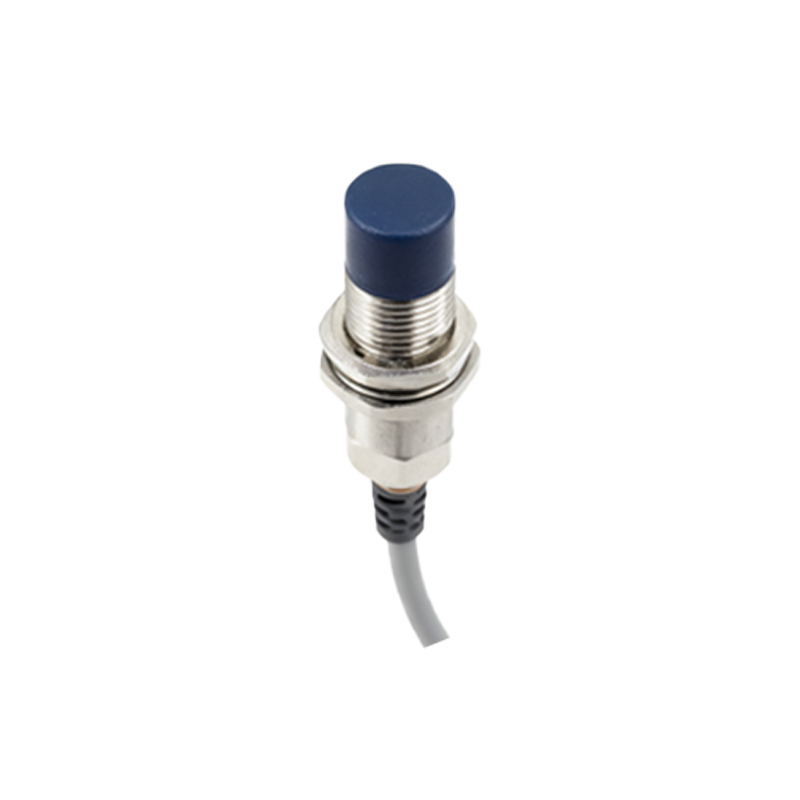
Key technical specifications define the GX-112MKA's performance envelope. Typically, it offers a standard sensing range, often up to several millimeters, precise enough for positioning and counting tasks. The sensor features a DC three-wire configuration (brown for positive supply, blue for common/negative, and black for the output signal) with both NPN (sinking) and PNP (sourcing) output variants, ensuring compatibility with a wide range of PLCs (Programmable Logic Controllers) and control systems. Its housing is constructed from nickel-plated brass or stainless steel, providing high resistance to corrosion, oils, and coolants. Furthermore, it boasts an IP67 or higher ingress protection rating, making it fully dust-tight and capable of withstanding temporary immersion in water, which is crucial for washdown areas in food processing or automotive plants.
Installation and wiring of the GX-112MKA are straightforward but require attention to detail for optimal performance. Being a shielded (flush-mountable) type, it can be installed flush with a metal mounting bracket without affecting its sensing characteristics, a significant advantage in space-constrained applications. Engineers must ensure proper alignment with the target and maintain the specified nominal sensing distance, accounting for factors like target material, size, and temperature. The sensor's LED status indicator provides immediate visual feedback for diagnostics. For integration, it is critical to connect the correct wire to the appropriate DC power supply (commonly 10-30V DC) and load, while ensuring the load current does not exceed the sensor's rated switching capacity.
The application spectrum for the GX-112MKA is vast. It is extensively used in machine automation for tasks such as end-position detection on cylinders, part presence verification on conveyor lines, and rotary speed monitoring. In material handling systems, it ensures precise pallet positioning. Within robotic cells, it aids in safe tool changing and workpiece detection. Its rugged design also makes it suitable for heavy machinery and outdoor equipment where vibration and shock resistance are paramount.
When selecting a sensor like the GX-112MKA for a project, engineers should consider several factors beyond the basic specs. The switching frequency defines how quickly the sensor can detect objects in high-speed applications. Temperature stability is vital for processes involving extreme heat or cold. Additionally, understanding the difference between its rated operating distance and the practical, real-world sensing distance—which can be influenced by the target's material composition and shape—is essential for avoiding false triggers or missed detections. Regular functional testing, while maintenance is minimal, is recommended as part of a preventive maintenance schedule to ensure continuous system uptime.
In conclusion, the GX-112MKA proximity sensor exemplifies the engineering excellence required for modern industrial control. Its durable construction, reliable inductive sensing technology, and environmental resilience make it a versatile and trustworthy component. By thoroughly understanding its parameters and correctly applying it within a control system, automation professionals can significantly enhance the reliability, safety, and efficiency of their automated processes, from simple machinery to complex automated production lines.