Proximity sensors are fundamental components in countless modern systems, silently and reliably detecting the presence or absence of objects without physical contact. Their operation hinges on the precise measurement of a signal change triggered by a target's approach. Understanding this signal measurement process reveals the sophistication behind these ubiquitous devices.
At its core, a proximity sensor consists of an oscillator circuit that generates a high-frequency electromagnetic field or a beam of light from its active surface. In the absence of a target, this field or beam remains in a steady state, and the sensor's output signal—often a simple DC voltage or a digital on/off state—remains unchanged. This is the baseline or "normal" condition. When a target object enters the sensor's effective detection range, it interacts with this emitted field. The nature of this interaction depends on the sensor type.
Inductive proximity sensors, used for detecting metals, rely on electromagnetic induction. The oscillator generates a high-frequency alternating magnetic field. When a conductive metal target enters this field, eddy currents are induced on the metal's surface. These currents draw energy from the oscillator, causing a measurable drop in its oscillation amplitude. An internal evaluation circuit continuously monitors this amplitude. Once the amplitude reduction surpasses a predefined threshold, the circuit triggers a state change in the sensor's output switch, signaling the target's presence. The signal measured here is the change in the energy of the oscillating circuit.
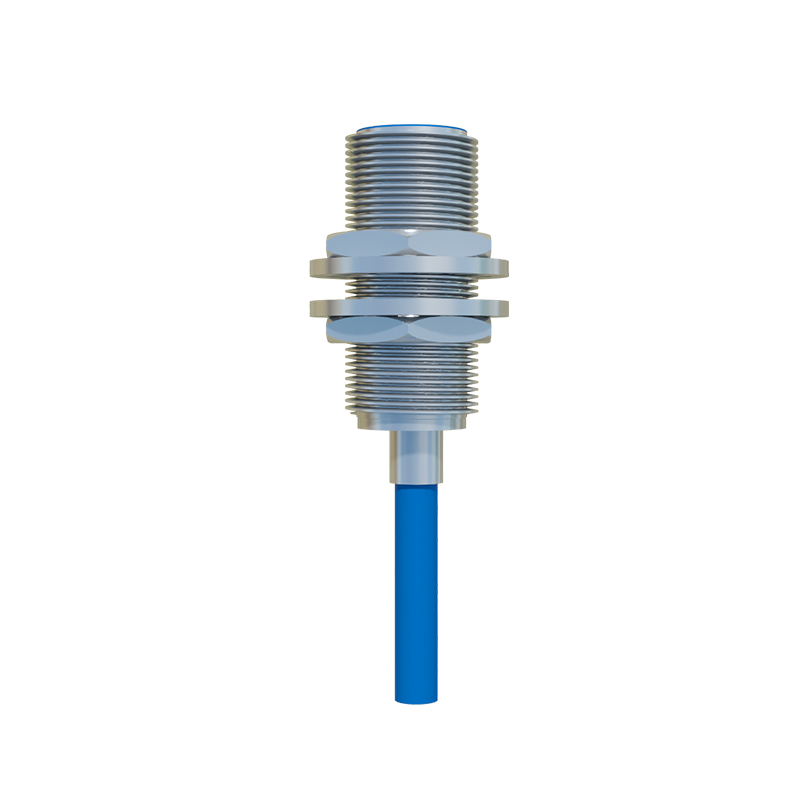
Capacitive proximity sensors operate on a different principle, capable of detecting both metallic and non-metallic materials like plastics, liquids, or wood. They function by generating an electrostatic field. The sensor itself acts as one plate of a capacitor, with the target acting (or grounding) as the other. As a target approaches, the capacitance between the sensor face and the target increases. This change in capacitance alters the characteristics of the internal oscillator's circuit, typically affecting its frequency or amplitude. The sensor's circuitry is tuned to detect this specific change. When the shift exceeds the set sensitivity level, the output signal switches. The measured signal is the variation in capacitance.
Photoelectric sensors use light, usually infrared or laser, to detect objects. The emitter sends out a modulated light beam. In a through-beam setup, the receiver directly measures the intensity of the incoming light. An object interrupting the beam causes a drastic drop in the received light signal. In a reflective model, the sensor measures the light reflected back from the target. The key signal here is the intensity or the time-of-flight of the light pulse. Advanced versions measure the phase shift or the time delay between the emitted and received light pulses to calculate distance precisely, a method known as time-of-flight measurement.
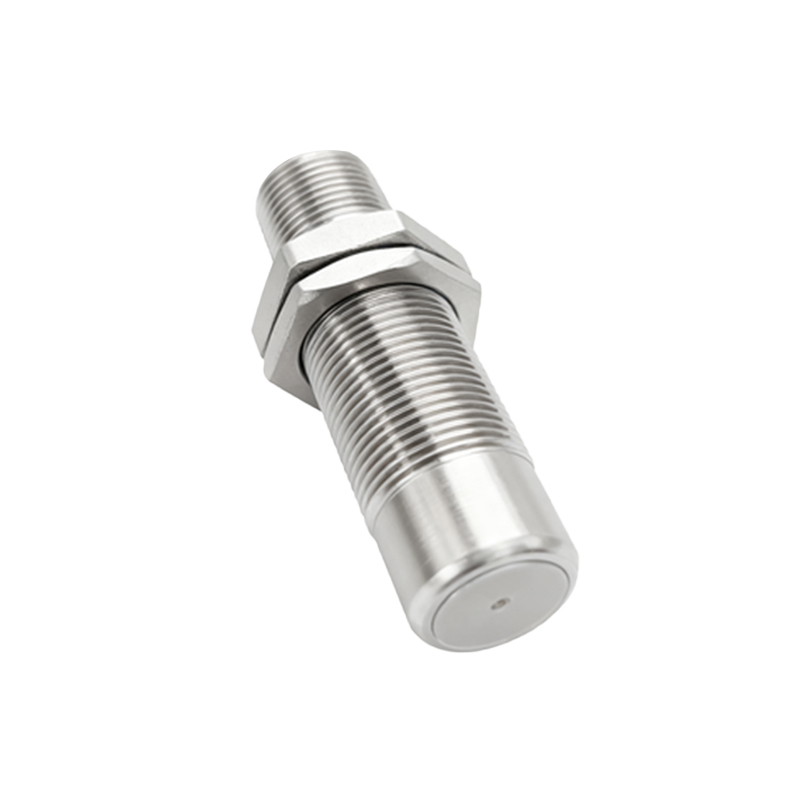
The process of "measuring the signal" is therefore a continuous comparison. The sensor's internal electronics are not merely detecting any signal; they are analyzing a specific parameter (amplitude, capacitance, light intensity, time delay) against a stable reference point. Hysteresis is a critical feature built into this evaluation. It prevents rapid, chattering output switches when a target is at the very edge of the detection range by requiring a slightly different threshold to turn the sensor on versus off. This ensures clean, definitive output signals.
The output signal itself is the final result of this measurement. Common outputs include a simple two-state digital signal (NPN or PNP transistor switching 0V or supply voltage), a proportional analog voltage (e.g., 0-10V representing distance), or a current loop signal (4-20mA). These outputs are the actionable data sent to controllers like PLCs, robots, or microprocessors.
Applications are vast and critical. In automotive assembly, inductive sensors measure the position of metal components like pistons or camshafts with extreme reliability. In packaging lines, photoelectric sensors measure and count bottles without contact. Capacitive sensors in liquid processing plants measure material levels through container walls. In consumer electronics, miniature infrared proximity sensors measure the presence of a user's face to turn off a smartphone screen during a call.
The accuracy of signal measurement defines the sensor's performance. Factors like target material, size, temperature, and environmental interference (like electrical noise or ambient light) can affect the signal. Modern sensors incorporate shielding, temperature compensation, and advanced filtering algorithms to ensure the measured signal reflects only the target's presence, guaranteeing stable and repeatable operation in demanding industrial and commercial environments. This relentless focus on precise signal measurement is what makes proximity sensors indispensable for automation, safety, and innovation.