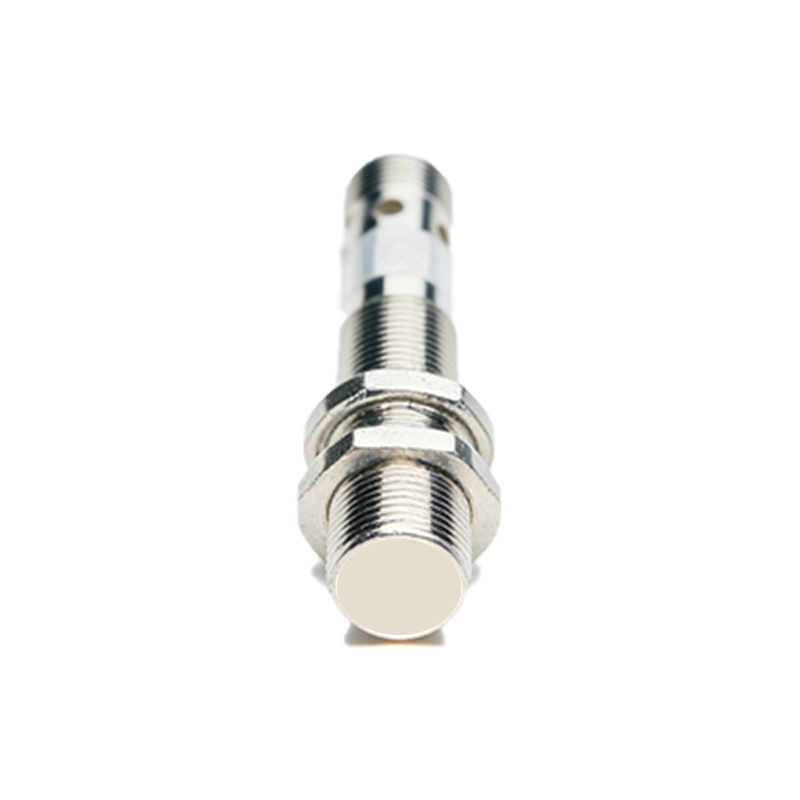
Flush-mountable proximity sensors, often referred to as non-flush or shielded sensors, represent a critical category in industrial automation. These sensors are designed to be installed flush with the mounting surface, allowing them to be embedded directly into metal structures or fixtures without any protrusion. This design characteristic is their defining feature and primary advantage in numerous demanding applications.
The core operational principle of these sensors typically involves an electromagnetic field. Most flush-mount sensors are inductive, generating a high-frequency oscillating electromagnetic field from their active face. When a metallic target enters this sensing field, eddy currents are induced in the target, causing a change in the oscillation amplitude. The sensor's internal circuitry detects this change and triggers a solid-state switching output. Because the sensor's coil is surrounded by a ferrite core and a metal shield (usually stainless steel) at the sensing face, the electromagnetic field is focused axially in front of the sensor. This shielding prevents the field from spreading laterally, which is precisely what allows for flush installation without the sensor detecting the surrounding metal mounting material—a phenomenon known as "side sensing" or "shielding effect."
Examining detailed images and diagrams of flush-mountable sensors reveals several key visual and functional components. The housing is typically cylindrical, made of robust materials like nickel-plated brass or stainless steel (e.g., V2A, V4A grades), and features a smooth, flat active face. Internally, an LED status indicator is almost always visible, providing immediate feedback on power and output state. Connection is standardized via an integral cable or a connector variant (e.g., M8, M12). Comparative images between flush and non-flush (unshielded) sensors clearly show the physical difference: the non-flush type has an exposed sensing coil that extends beyond its housing, requiring a clearance zone free of metal around it for proper operation.
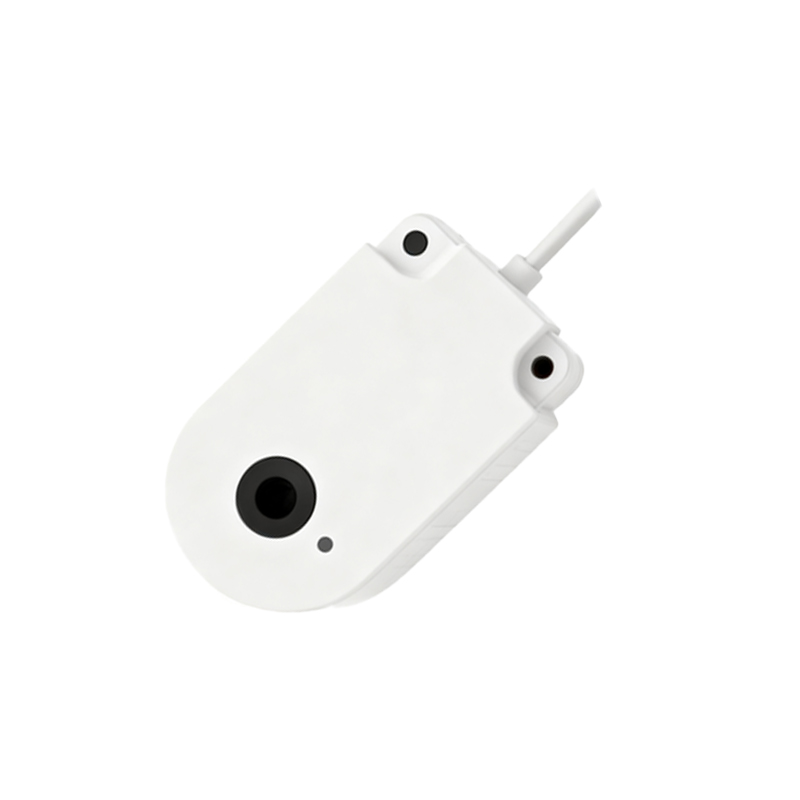
The application scope for flush-mount proximity sensors is vast. They are indispensable in tight spaces where protrusion is not permissible, such as in robotic grippers, tool changers, linear actuator position feedback, and within hydraulic cylinders. Their ability to withstand mechanical stress and their resistance to physical damage due to the shielded face makes them ideal for harsh environments. Furthermore, they are commonly used for detecting the presence or absence of metal parts on conveyors, in assembly jigs, and for end-position sensing in metal machine frames. When selecting a sensor, key parameters visible in datasheet graphics include the sensing distance (Sn), which is typically shorter for a flush sensor compared to an equivalent non-flush type, the housing diameter (e.g., M8, M12, M18, M30), the output type (PNP/NPN, NO/NC), and the supply voltage range.
Installation is straightforward but requires precision. Images often depict the sensor threaded into a prepared hole in a metal bracket or machine wall. A critical specification shown in cutaway diagrams is the required "mounting recess" or clearance behind the sensor to accommodate the rear part of the housing and the connection. Proper installation ensures optimal performance and prevents false triggers. Despite their shielded design, it is still generally advised to maintain a small gap between multiple flush-mounted sensors to avoid mutual interference.
In summary, flush-mountable proximity sensors are engineered for reliability and space efficiency in metal-sensing environments. Visual aids, from product photographs to technical cross-sectional drawings, are invaluable for understanding their construction, differentiating them from other types, and ensuring correct selection and installation. Their robust, low-profile design continues to solve complex detection challenges across manufacturing, packaging, and automotive industries, proving that sometimes, the most effective solution is one that fits seamlessly into the application.