Capacitive proximity sensors are indispensable components in modern industrial automation, offering non-contact detection of a wide range of materials. Unlike their inductive counterparts, which only sense metals, capacitive sensors can detect solids, liquids, granules, and even powders. This versatility stems from their operating principle: they generate an electrostatic field and react to changes in capacitance caused by the presence of a target object. When an object enters this field, it alters the dielectric constant, triggering the sensor's output switch.
The core of a capacitive sensor is its oscillator circuit, electrode, and detection circuit. The electrode, often the sensor's face, forms one plate of a capacitor, with the target object acting as the other. The internal oscillator generates a signal that remains stable until a target enters the sensing field. The detection circuit monitors the oscillator's amplitude. Upon detecting a sufficient change—indicating the presence of a target—it signals the output device (like a solid-state switch or relay) to change state. This allows for seamless integration into control systems for tasks such as level detection, material handling, and object counting.
Key advantages of capacitive sensors include their ability to sense non-metallic materials and their effectiveness through non-metallic container walls. For instance, they can reliably detect the level of water, oil, adhesive, or plastic pellets inside a glass or plastic tank without direct contact, preventing contamination and wear. Their sensitivity is often adjustable via a potentiometer, allowing engineers to fine-tune the sensing range and ignore interfering materials like container walls. This makes them ideal for challenging environments where other sensor types fail.
When selecting a capacitive proximity sensor, several critical parameters must be considered. The sensing distance, typically ranging from a few millimeters to several centimeters, is a primary specification. It is influenced by the target material's dielectric constant; materials with higher constants (like water) are detected at greater distances than those with lower constants (like plastics). The sensor's housing material (often PTFE, PBT, or stainless steel) must be chosen based on the application's environmental conditions, including exposure to chemicals, temperature extremes, and washdown requirements. Output types (PNP/NPN, NO/NC) and electrical connections (pre-wired or quick-disconnect) should match the control system's specifications.
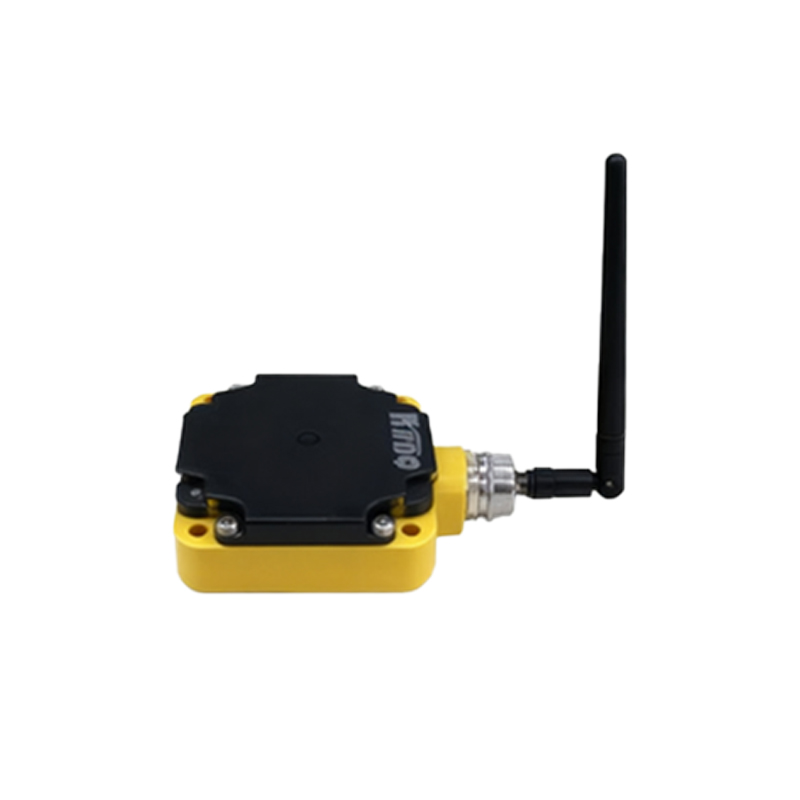
Installation and calibration are straightforward but crucial for optimal performance. Sensors should be mounted securely, avoiding physical contact with the target. It is essential to maintain a clearance zone around the active sensing face to prevent false triggers from surrounding structures—a practice known as "shielding." During calibration, the sensitivity adjustment is used to set the detection threshold. A common method involves bringing the target material to the desired detection point and adjusting the potentiometer until the output indicator activates. Regular maintenance involves checking for buildup of dust or material on the sensor face, as this can degrade performance by effectively changing the dielectric constant at the electrode.
In practical applications, capacitive sensors excel in liquid level control in food and beverage processing, bulk material monitoring in silos, and detection of transparent films or glass bottles in packaging lines. Their robustness and reliability reduce downtime and improve process efficiency. As Industry 4.0 advances, smart capacitive sensors with IO-Link communication are gaining traction, offering diagnostic data, parameterization via software, and easier integration into networked industrial ecosystems.

Despite their robustness, challenges like extreme environmental conditions or highly conductive targets can cause interference. For conductive materials, the sensing distance increases significantly, which may require recalibration. In high-humidity environments, condensation on the sensor face can lead to false readings; selecting sensors with appropriate IP ratings (e.g., IP67 or IP69K) mitigates this. Understanding these nuances ensures long-term reliability.
In conclusion, capacitive proximity sensors are vital for enhancing automation flexibility and efficiency. Their unique ability to interact with diverse materials through non-contact means makes them a superior choice for complex industrial tasks. By carefully considering application requirements—material properties, environmental factors, and system integration—engineers can leverage these sensors to build more responsive, reliable, and intelligent automated systems.