In the realm of industrial automation and machinery, the reliability and precision of sensing components are non-negotiable. Among these critical devices, the M25 proximity switch sensor stands out as a fundamental and versatile solution for non-contact object detection. Characterized by its robust cylindrical housing with a standard 25mm diameter, this sensor type is engineered to deliver consistent performance in demanding environments. Its primary function is to detect the presence or absence of metallic objects—typically ferrous metals like steel and iron—without any physical contact, thereby eliminating mechanical wear and enabling high-speed operation.
The operational principle of an inductive M25 proximity sensor is based on electromagnetic induction. The sensor generates an oscillating electromagnetic field from its active face. When a metallic target enters this field, eddy currents are induced within the target, causing a change in the oscillation amplitude. This change is detected by the sensor's internal circuitry, which subsequently triggers a solid-state switching output. This output signal can be used to control machinery, count parts, signal positioning, or initiate safety interlocks. The typical sensing range for a standard M25 inductive sensor varies but is often around 8mm to 15mm, depending on the specific model and target material.
Key specifications define the M25 sensor's application suitability. Operating voltage is a critical parameter, with common models designed for DC (10-30V DC) or AC/DC (20-250V AC/DC) supplies. The output configuration is another vital aspect, available in normally open (NO), normally closed (NC), or switching modes, with transistor (NPN or PNP) or relay outputs. Environmental protection is paramount; most industrial-grade M25 sensors boast high Ingress Protection (IP) ratings, such as IP67 or IP68, ensuring resistance to dust, oils, coolants, and temporary immersion. Temperature ranges, short-circuit and overload protection, and switching frequency (often up to several hundred Hz) are also crucial selection criteria.
The advantages of implementing M25 proximity sensors are substantial. Their non-contact nature ensures a long operational life with minimal maintenance. They are immune to surface conditions like dirt, moisture, or oil films that might plague optical or mechanical switches. The robust metal or high-grade plastic housing provides excellent mechanical strength and resistance to vibration. Furthermore, their simple two-wire, three-wire, or four-wire connection systems facilitate easy integration into control panels and Programmable Logic Controller (PLC) input modules.
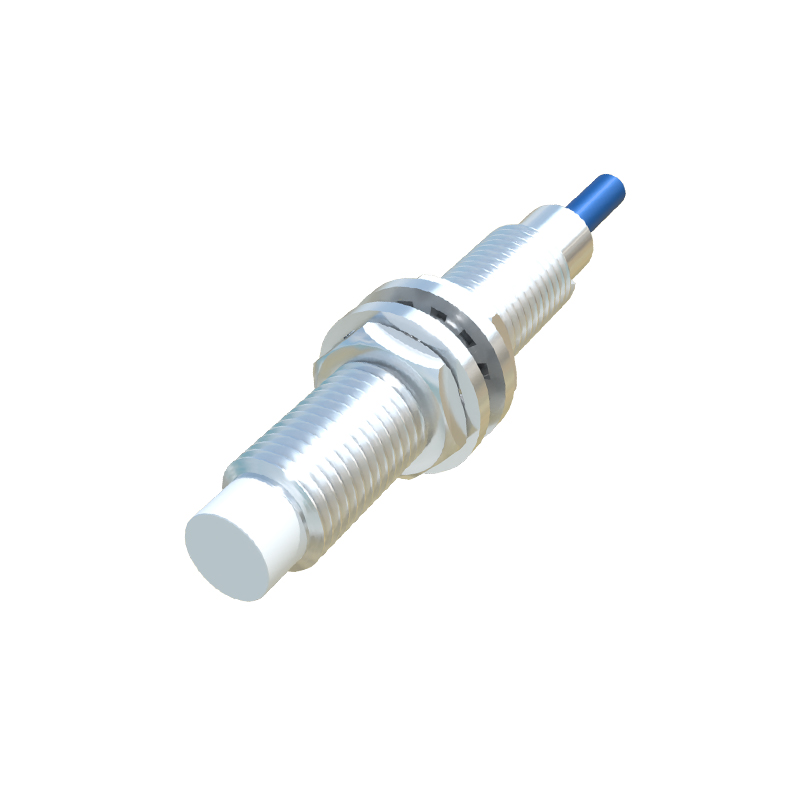
Typical applications span across virtually every industrial sector. In automotive manufacturing, M25 sensors are deployed on assembly lines for robotic positioning and part verification. In material handling, they monitor pallet positions on conveyors. In metalworking and CNC machinery, they serve as tool position and workpiece detection sensors. Packaging machines utilize them for precise fill-level control and product counting. Their reliability also makes them suitable for safety-related functions, such as detecting guard door positions.
Installation and wiring require attention to detail for optimal performance. Proper mounting, often in a threaded barrel style, must consider the recommended clearance around the sensor to avoid interference from adjacent metal structures. Wiring should follow the manufacturer's diagram precisely, paying close attention to polarity for DC models (brown wire to positive, blue wire to negative). The load (e.g., a PLC input, relay coil, or indicator lamp) must be connected in series with the output wire (usually black). Regular maintenance, though minimal, involves periodic checks for physical damage, accumulation of metallic debris on the sensing face, and verification of the output signal under normal operating conditions.
When selecting an M25 proximity sensor, engineers must carefully evaluate the application requirements against the sensor's specifications. Key considerations include the target material (steel, aluminum, brass), required sensing distance, environmental conditions (temperature, chemicals), electrical characteristics (voltage, output type), and required housing material (nickel-plated brass, stainless steel, or PBT plastic). Choosing a sensor with a slightly longer rated sensing range than the minimum application requirement is a standard practice to account for installation tolerances and long-term stability.
In conclusion, the M25 proximity switch sensor is an indispensable workhorse in modern industrial control systems. Its combination of rugged construction, reliable non-contact sensing, and straightforward integration makes it a preferred choice for engineers designing automated equipment. By understanding its operating principles, specifications, and application guidelines, maintenance personnel and system designers can ensure these sensors contribute to enhanced productivity, improved safety, and reduced downtime in industrial operations. As automation continues to evolve, the fundamental role of robust and reliable components like the M25 proximity sensor remains firmly established.