In the rapidly evolving landscape of industrial automation and smart technology, the integration of wireless communication with precision measurement tools has unlocked unprecedented levels of efficiency and flexibility. Among these innovations, Bluetooth-enabled laser distance sensors stand out as a transformative force. These devices combine the accuracy of laser-based measurement with the convenience of wireless data transmission, creating a powerful tool for a wide array of applications, from construction and logistics to manufacturing and quality control.
At its core, a Bluetooth laser distance sensor operates on the principle of time-of-flight or phase-shift measurement. A laser diode emits a focused beam of light towards a target. The sensor then precisely calculates the time it takes for the reflected light to return to a detector. This time interval, when coupled with the known speed of light, yields an extremely accurate distance measurement. The integration of Bluetooth Low Energy (BLE) technology is what elevates this basic functionality. BLE provides a robust, low-power wireless link that allows the sensor to transmit measurement data in real-time to a host device, such as a smartphone, tablet, laptop, or a centralized industrial control system.
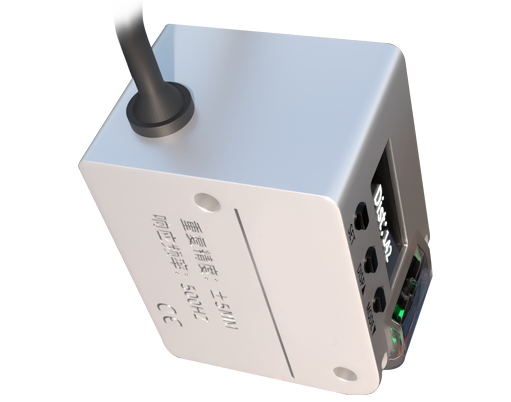
The advantages of incorporating Bluetooth connectivity are manifold. First and foremost is the elimination of cumbersome cables. In complex or hazardous environments, wired connections can be a significant tripping hazard, a source of signal interference, and a limitation on sensor placement and mobility. A Bluetooth sensor can be easily mounted in hard-to-reach areas or carried by an operator, streaming data seamlessly without physical constraints. This enhances operational safety and allows for more dynamic measurement scenarios.
Secondly, the ease of data integration and management is vastly improved. Measurement readings can be instantly logged into specialized mobile applications or cloud-based platforms. These apps often provide advanced functionalities like area and volume calculations, continuous tracking, data visualization, and the ability to generate reports or share findings with team members instantly. This streamlines workflows, reduces manual transcription errors, and accelerates decision-making processes. For inventory management in warehouses, for instance, a worker can quickly scan rack heights and aisle widths, with data populating inventory databases automatically.
Furthermore, the power efficiency of BLE ensures that these sensors can operate for extended periods on standard batteries, making them ideal for portable and field-use applications. Their compact and often ruggedized designs allow them to withstand the rigors of industrial environments, including dust, moisture, and minor impacts, as defined by various IP (Ingress Protection) ratings.
The applications are diverse and impactful. In construction and civil engineering, professionals use these sensors for quick site surveys, verifying room dimensions, checking alignments, and calculating material requirements. In manufacturing, they are deployed for non-contact inspection of parts, verifying tolerances, and positioning components on assembly lines. In logistics, they optimize storage space by accurately measuring pallet sizes and container volumes. Even in emerging fields like robotics and autonomous guided vehicles (AGVs), Bluetooth laser sensors provide essential spatial awareness and navigation data.
When selecting a Bluetooth laser distance sensor, key specifications to consider include measurement range, accuracy, measurement speed, Bluetooth protocol version (for range and data rate), battery life, environmental durability, and the capabilities of the companion software. The choice between a handheld pistol-grip model for general-purpose use and a compact modular sensor for fixed OEM integration depends entirely on the specific use case.
Looking ahead, the convergence of Bluetooth laser sensors with the Internet of Things (IoT) and Industry 4.0 frameworks promises even greater intelligence. Sensors will not only collect data but also perform edge computing, communicate with other smart devices in a network, and trigger automated actions based on predefined parameters. This will further blur the line between measurement and control, driving towards fully autonomous, data-driven operational environments.
In conclusion, Bluetooth laser distance sensors represent a significant leap forward in measurement technology. By marrying pinpoint accuracy with the freedom of wireless connectivity, they empower professionals across industries to work smarter, faster, and with greater confidence. As wireless standards advance and sensor intelligence grows, their role as a critical enabler of digital transformation and operational excellence is set to expand even further.