Proximity sensors are indispensable components in modern industrial automation, renowned for their non-contact detection capabilities, high-speed response, and durability. However, like any technology, they possess inherent limitations and disadvantages that engineers and system designers must carefully consider during selection and implementation. A thorough understanding of these drawbacks is crucial for ensuring reliable system performance, optimizing cost, and preventing operational failures.
One of the primary disadvantages of proximity sensors is their limited sensing range. Unlike photoelectric sensors that can detect objects over several meters, most inductive or capacitive proximity sensors have a very short effective range, typically from a few millimeters to about 60 millimeters for standard models. This necessitates precise mechanical positioning and mounting, increasing installation complexity and cost. Special long-range models exist but are significantly more expensive and may have reduced performance stability. This range limitation restricts their use in applications requiring detection of objects at a distance.
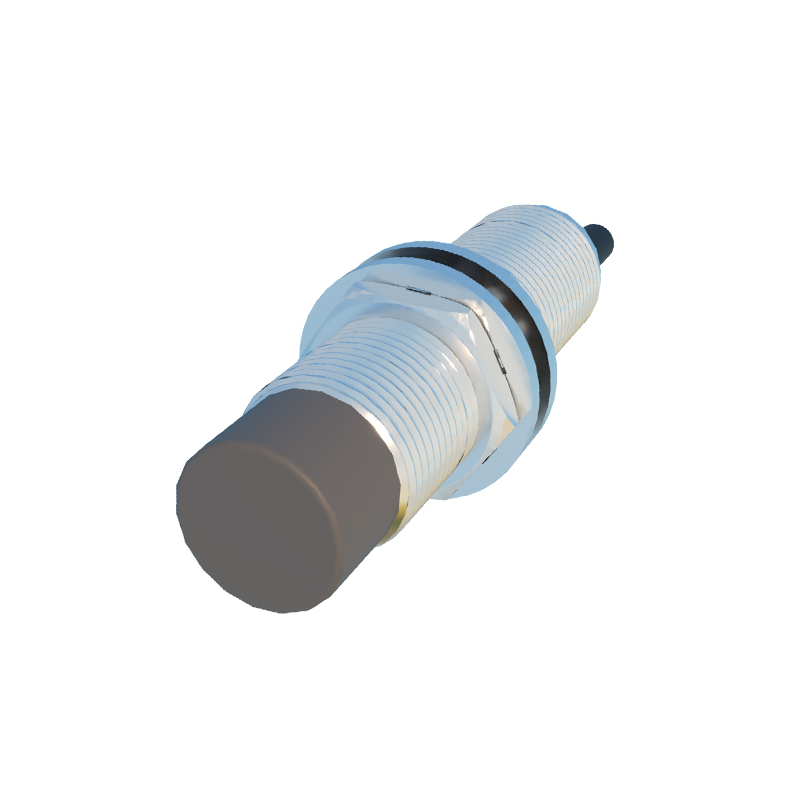
Environmental interference poses another significant challenge. Inductive sensors, used for detecting metals, are susceptible to interference from strong electromagnetic fields generated by nearby motors, welding equipment, or power lines. This can cause false triggering or failure to detect. Capacitive sensors, which detect a wider variety of materials based on dielectric constant, are notoriously sensitive to environmental changes such as humidity, dust, temperature fluctuations, and the presence of contaminants like oil or coolant on the sensor face. These factors can alter the sensing field and lead to unreliable operation, requiring frequent recalibration or shielding.
Material dependency is a critical limitation. Inductive proximity sensors only detect metallic objects, with their sensing distance varying significantly based on the target metal's properties. For instance, the sensing range for mild steel (the standard reference) is much longer than for non-ferrous metals like aluminum, copper, or stainless steel. This requires derating the nominal sensing distance, complicating design. Capacitive sensors, while more versatile, have varying sensitivity to different materials and can be triggered unintentionally by background objects or even changes in the material's moisture content.
Physical constraints and mounting requirements are often overlooked disadvantages. The sensor's sensing field is not a precise point but a three-dimensional field emanating from the active face. This can lead to side-sensing or shadowing effects, where an object approaching from the side is detected before one directly in front, or where one object shields another. Furthermore, most standard sensors require flush mounting in metal to avoid interference from the surrounding metal itself. Non-flush mountable sensors offer greater range but require a specific clearance of non-metallic material around them, adding to mechanical design constraints.
Temperature sensitivity affects performance and longevity. While industrial sensors are rated for specific temperature ranges (e.g., -25°C to 70°C), operating at extreme ends of this range can reduce the sensing distance, increase response time, and ultimately shorten the component's lifespan. In high-temperature environments near furnaces or ovens, special high-temperature models are required, which are costly and may have reduced specifications.
Cost considerations extend beyond the unit price. While basic proximity sensors are relatively inexpensive, the total cost of ownership includes mounting hardware, wiring, protective housings for harsh environments, and potential costs from downtime due to sensor failure. High-precision, specialized sensors for food-grade, washdown, or explosive atmospheres (ATEX/IECEx) command a substantial price premium. Additionally, their simple digital (on/off) output provides no analog information about distance or speed, unlike some laser or ultrasonic sensors. For applications requiring such data, a more expensive analog-output proximity sensor or a different technology altogether is necessary.
Finally, the issue of mutual interference when multiple sensors are mounted in close proximity is a common design pitfall. The oscillating magnetic or electric fields of adjacent sensors can couple, causing them to inhibit each other's operation or oscillate erratically. Manufacturers specify minimum separating distances, which can be several times the sensor's diameter, potentially limiting packaging density in compact machinery.
In conclusion, while proximity sensors offer robust and reliable operation for countless detection tasks, their disadvantages—limited range, environmental sensitivity, material dependency, physical constraints, temperature effects, and cost considerations—must be rigorously evaluated. Successful implementation is not merely about selecting a sensor but involves a holistic system design approach that accounts for the target object, the operating environment, mounting mechanics, and necessary diagnostics to mitigate these inherent limitations. Engineers must weigh these factors against the advantages to choose the most appropriate sensing technology for each specific application.