In the rapidly evolving landscape of industrial automation and smart electronics, semiconductor proximity sensors have become indispensable components. As an electrical engineer specifying components for a new design or a maintenance project, one of the most frequent and critical questions is: "How much do these sensors cost?" The answer, unsurprisingly, is not a single figure but a spectrum influenced by a complex matrix of technical specifications, application requirements, and market dynamics. This guide delves into the key factors determining semiconductor proximity sensor pricing, providing a realistic cost framework for engineering professionals.
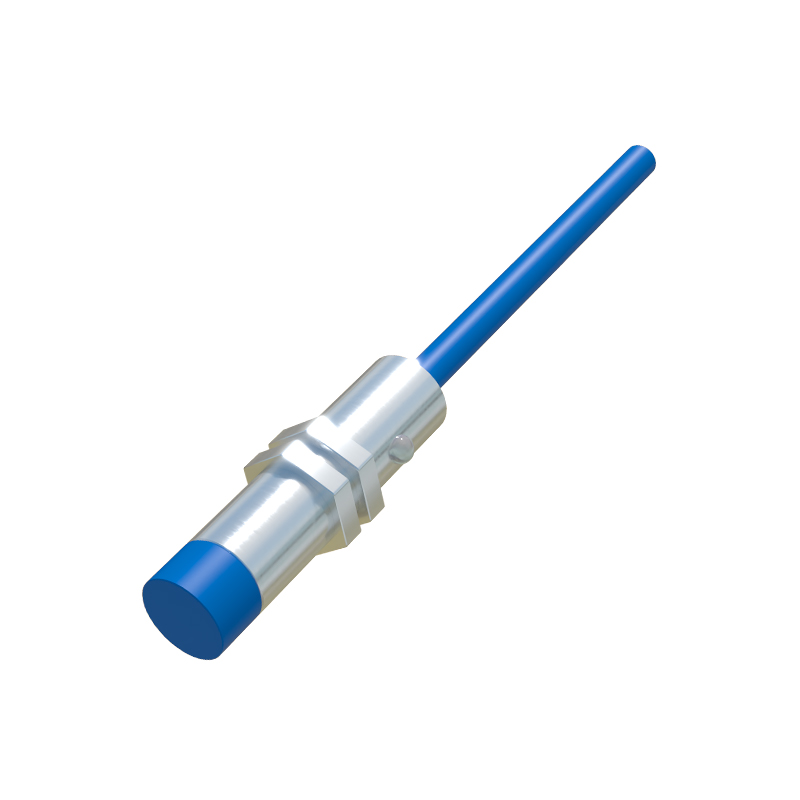
The core price determinant is the underlying sensing technology. Inductive proximity sensors, which detect metallic objects, are generally the most cost-effective, with prices for standard models starting as low as $15 to $30 USD per unit for basic tubular designs in moderate volumes. Capacitive sensors, capable of detecting both metallic and non-metallic materials like plastics or liquids, typically command a 20% to 40% premium over their inductive counterparts, with entry-level prices ranging from $20 to $50. For applications requiring precise position detection of small components or in challenging environments, photoelectric sensors (which include through-beam, retro-reflective, and diffuse types) represent the next tier. Basic diffuse photoelectric sensors can be found in the $25 to $60 range, while more specialized models with focused beams or background suppression can easily cost $75 to $150 or more.
Beyond the basic technology, performance specifications drastically affect the price. Sensing range is a primary factor; a sensor with a 2mm range will be significantly less expensive than one rated for 20mm. The required precision and repeatability also play a major role. A sensor with a tolerance of ±0.1% will carry a higher price tag than one with ±5%. Output configuration is another simple yet impactful cost driver. Sensors with basic NPN or PNP transistor outputs are standard. Integrating analog outputs (4-20mA, 0-10V), IO-Link digital communication, or short-circuit protection circuits adds complexity and cost, potentially increasing the unit price by 30% to 100%.
The physical build and environmental ratings are non-negotiable cost drivers for harsh industrial settings. A standard plastic-housed sensor for a clean factory environment is relatively inexpensive. However, engineers requiring sensors with stainless steel housings, high IP ratings (e.g., IP67, IP69K for washdown), extreme temperature tolerance (-25°C to 70°C+), or resistance to specific chemicals will see prices escalate accordingly. A ruggedized inductive sensor for a food processing plant or a mining operation can cost between $80 and $200. The form factor also matters; miniature sensors for space-constrained applications often have a higher cost per unit due to precise manufacturing requirements.
Volume is the universal lever in component pricing. For prototyping or small-batch repairs, purchasing single units from distributors will incur the highest per-unit cost, often at list price. For production runs, OEMs and large integrators negotiate directly with manufacturers like Omron, Sick, Pepperl+Fuchs, or Banner Engineering. For annual volumes in the thousands, discounts of 20-40% off list price are common. For very high volumes (tens of thousands), costs can be driven down to a fraction of the single-unit price. It is always advisable to request formal quotes for projected volumes rather than relying on web prices.
As of the current market, here is a generalized price bracket for standard-range, industrial-grade semiconductor proximity sensors in low to medium volume (1-100 units):
Basic Inductive Sensor (12-24VDC, 5mm range, PNP): $18 - $45
Basic Capacitive Sensor (12-24VDC, 8mm range): $25 - $65
Diffuse Photoelectric Sensor (1m range): $30 - $80
Ultrasonic Sensor (Medium Range): $50 - $150
High-Performance / Ruggedized Sensor (Stainless Steel, IP69K): $70 - $250+
When budgeting, engineers must consider the total cost of ownership, not just the unit price. This includes integration time, wiring, mounting hardware, potential costs for interface modules, and long-term reliability. A marginally more expensive sensor from a reputable brand with a longer mean time between failures (MTBF) can prevent costly production downtime. Furthermore, the global semiconductor supply chain fluctuations can lead to lead time extensions and price volatility, making strategic sourcing and supplier relationships crucial.
In conclusion, while a basic semiconductor proximity sensor can be acquired for under $50, the true cost for an industrial application typically falls between $50 and $150 per unit when factoring in necessary performance and durability. The most cost-effective strategy is to precisely define the