In the realm of industrial automation and machinery, the reliability and precision of sensing components are paramount. Among the myriad of options available, the BH5E proximity switch sensor stands out as a robust and versatile solution for a wide range of applications. This article delves into the technical specifications, operational principles, and practical considerations for integrating the BH5E into electrical systems, providing a detailed overview for industry professionals.
The BH5E is a non-contact inductive proximity sensor, designed to detect the presence of metallic objects without physical interaction. This fundamental characteristic eliminates mechanical wear and tear, significantly enhancing the sensor's operational lifespan and reliability in demanding industrial environments. The "BH5E" designation typically refers to a specific model series, often characterized by a cylindrical housing, a standard sensing range (commonly up to 5mm for ferrous metals), and a threaded body (e.g., M12 or M18) for easy installation.
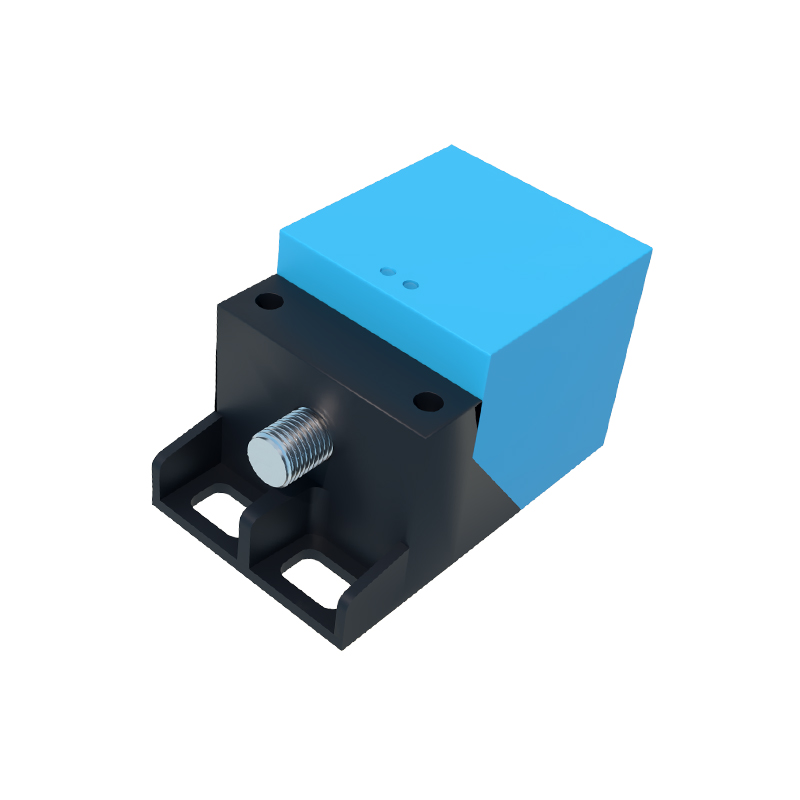
At its core, the BH5E operates on the principle of electromagnetic induction. The sensor head contains an oscillator circuit that generates a high-frequency electromagnetic field. When a metallic target enters this field, eddy currents are induced on the target's surface. This process dampens the oscillation amplitude within the sensor. An integrated evaluation circuit detects this change and triggers a switching signal. The output is typically a solid-state switch, often in a PNP (sourcing) or NPN (sinking) configuration, compatible with standard programmable logic controllers (PLCs) and relay modules. Key electrical specifications usually include a operating voltage range of 10-30V DC, with short-circuit and reverse polarity protection being standard features for safeguarding connected circuits.
One of the primary advantages of the BH5E series is its environmental resilience. These sensors are frequently rated with a high Ingress Protection (IP) rating, such as IP67, making them resistant to dust ingress and capable of withstanding temporary immersion in water. This makes them ideal for use in washdown areas, outdoor applications, or any setting exposed to coolants, oils, and particulates. Furthermore, they are inherently immune to ambient light and can operate effectively in the presence of non-metallic contaminants, unlike optical sensors.
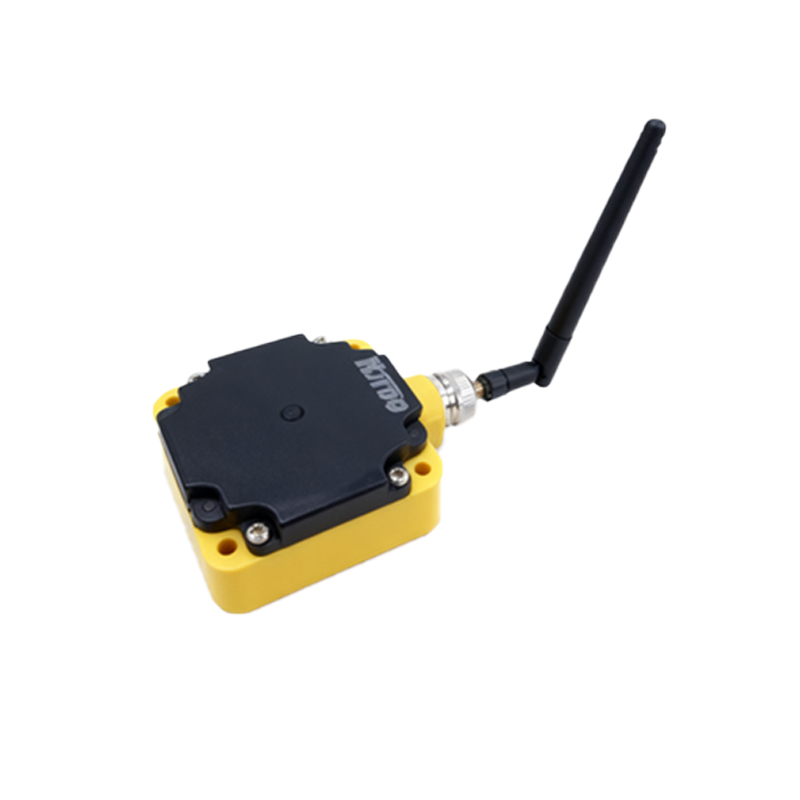
When selecting and installing a BH5E sensor, several critical factors must be considered. First, the sensing distance, or "rated operating distance," is specified for standard mild steel. For other metals like stainless steel, aluminum, or copper, a reduction factor must be applied, as these materials induce eddy currents less effectively. The installation geometry is also crucial; sensors should be mounted with adequate clearance from surrounding metal structures (flush or non-flush mounting conditions) to prevent false triggering. The choice between shielded (flush-mountable) and unshielded versions depends on the installation environment. Wiring must adhere to the manufacturer's guidelines, paying close attention to the brown (V+), blue (V-), and black (output) wire conventions, and ensuring proper grounding to minimize electrical noise interference.
Typical applications for the BH5E proximity sensor are extensive. They are commonly employed for position detection in automated assembly lines, such as verifying the presence of a metal part on a conveyor, counting metallic objects, or serving as end-of-travel limit switches on actuators and cylinders. In packaging machinery, they detect the position of metallic components. In CNC machines, they are used for tool positioning and pallet changeover verification. Their robustness also makes them suitable for harsh sectors like material handling, automotive manufacturing, and primary metal industries.
Maintenance of the BH5E is generally minimal due to its non-contact nature. However, periodic checks are recommended. Engineers should routinely inspect the sensor face for accumulated metallic debris or heavy contamination that could potentially reduce the effective sensing range. Verifying the mechanical integrity of the housing and cable connection is also good practice. Troubleshooting usually involves a multimeter to check for supply voltage at the sensor terminals and to see if the output signal toggles state when a target is presented. Inconsistent operation can sometimes be traced to electrical noise, incorrect sensor type for the target material, or physical misalignment.
In conclusion, the BH5E proximity switch sensor represents a mature, reliable, and highly adaptable technology in the electrical engineer's toolkit. Its simple yet effective inductive sensing principle, combined with rugged construction and straightforward integration, ensures its continued prevalence in modern industrial control systems. By understanding its operational parameters, installation requirements, and application boundaries, engineers can leverage the BH5E to create more reliable, efficient, and maintenance-friendly automated solutions. As technology evolves, the core benefits of durability, cost-effectiveness, and precision offered by sensors like the BH5E remain fundamentally valuable across countless industrial sectors.