In the realm of industrial automation, robotics, and consumer electronics, infrared (IR) proximity sensors are ubiquitous. Their ability to detect the presence, absence, or distance of an object without physical contact makes them invaluable. A common question among design engineers and system integrators is: "Are infrared proximity sensors immune to interference?" The straightforward answer is no. While robust, they are susceptible to various environmental and operational interferences that must be carefully managed for reliable performance.
The fundamental operating principle of an active IR proximity sensor involves an IR emitter (typically an LED) and an IR receiver (a photodiode or phototransistor). The emitter projects a beam of infrared light. When an object enters its field of view, part of this light is reflected back to the receiver. The sensor's electronics then process this signal to determine proximity. This very principle exposes its vulnerability. Any unintended IR radiation reaching the receiver can be misinterpreted as a valid signal.
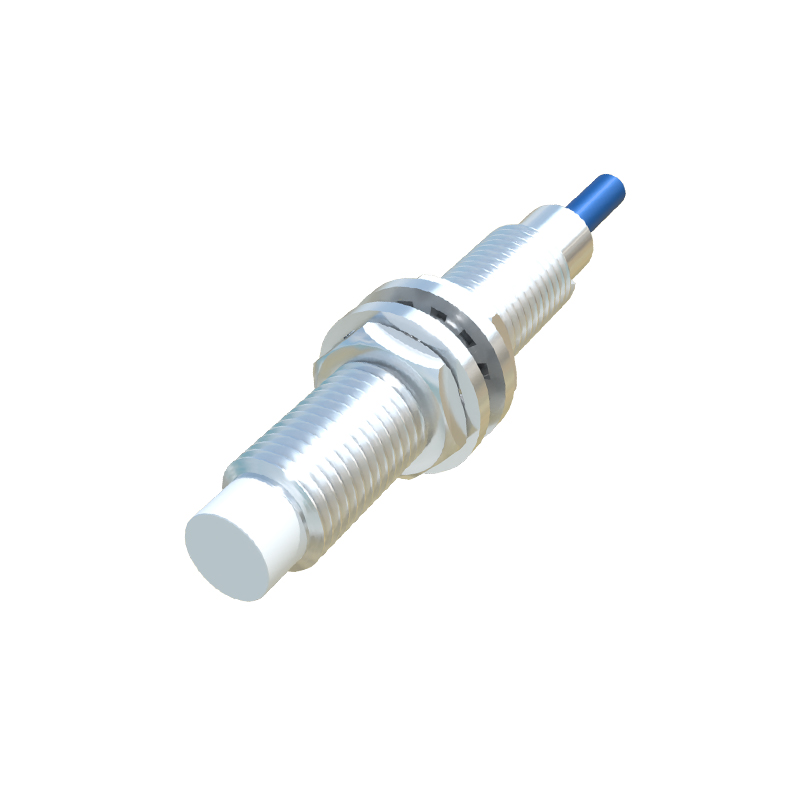
The primary sources of interference are ambient infrared light and crosstalk. Sunlight is a massive, broadband source of IR radiation. Direct or even strong indirect sunlight can easily saturate the receiver, rendering the sensor blind or causing erratic readings. Similarly, other artificial light sources like incandescent and halogen lamps emit significant IR spectra. Even some LEDs can produce interfering wavelengths. The second major issue is crosstalk, where the sensor's own emitted light reflects off internal components, lens surfaces, or dust accumulation directly onto the receiver without an external target, causing a false detection or an offset in the baseline reading.
Beyond optical noise, electrical and physical factors play a role. Electromagnetic interference (EMI) from nearby motors, solenoids, or communication lines can couple into the sensor's signal circuitry, corrupting the delicate measurement. Power supply noise is another critical concern; a noisy rail can modulate the emitter's output or be introduced into the analog front-end of the receiver. Physically, the target object's characteristics—its color, texture, and material—greatly influence performance. Dark, matte, or IR-absorbent materials reflect very little light, drastically reducing sensing range. Conversely, highly reflective or specular surfaces can cause mirror-like reflections that mislead the sensor about the true object position. Environmental contaminants like dust, fog, or oil mist can attenuate the IR beam.
Fortunately, decades of engineering have yielded effective strategies to mitigate these issues. The most common and powerful technique is modulation and synchronous detection. Instead of emitting a constant IR beam, the LED is pulsed at a specific high frequency (often in the kHz range). The receiver circuit is then tuned with a band-pass filter or synchronous demodulator to only respond to signals oscillating at that exact frequency. This elegantly rejects steady-state ambient light (like sunlight) and low-frequency noise, as they lack the modulation signature. It also helps minimize internal crosstalk through careful optical design and shielding.
Optical filtering is equally important. Placing an IR band-pass filter in front of the receiver lens blocks visible light and out-of-band IR, allowing only the wavelength emitted by the LED to pass through. This significantly improves performance under varied lighting conditions. For electrical robustness, proper PCB layout is paramount: keeping analog signal paths short, using ground planes, and separating high-current emitter driver circuits from sensitive receiver traces. Shielding the sensor housing can protect against EMI. Implementing robust power supply filtering, such as using local low-dropout regulators (LDOs) and decoupling capacitors, ensures clean power for both the emitter and receiver ICs.
Calibration and intelligent firmware further enhance immunity. Sensors can be calibrated at the factory or during system startup to establish a baseline in the specific operating environment, compensating for minor crosstalk or lens variations. Advanced algorithms can implement digital filtering, signal averaging, and threshold hysteresis to distinguish between real target movements and transient noise spikes. For critical applications, using sensors with multiple emitters or receivers arranged in specific patterns can help discriminate against false triggers caused by specular reflections.
In conclusion, infrared proximity sensors are not inherently immune to interference. Their performance is challenged by optical, electrical, and environmental noise sources. However, through a combination of modulated optical design, selective filtering, sound electrical engineering, and smart signal processing, these interferences can be effectively managed. The key for engineers is not to seek a perfectly immune sensor, but to understand the interference landscape of their specific application and select or design a sensor system that incorporates the appropriate countermeasures. A well-implemented IR proximity sensor, with its non-contact operation, fast response, and cost-effectiveness, remains a supremely reliable workhorse in countless automated systems, precisely because its vulnerabilities are so well understood and mitigated.