Integrated proximity sensors represent a significant advancement in industrial automation, offering enhanced reliability and simplified installation. These compact devices combine sensing elements, signal conditioning, and output circuitry into a single housing, eliminating the need for external amplifiers or complex wiring. Typically employing inductive, capacitive, or magnetic principles, they detect the presence or absence of metallic or non-metallic objects without physical contact.
The core advantage lies in their robust design. Encased in materials like nickel-plated brass or stainless steel, they withstand harsh environments involving dust, moisture, and temperature fluctuations. Modern variants feature embedded microprocessors that enable programmability for sensing range, hysteresis, and output delay, allowing precise adaptation to specific tasks. The output stage commonly provides switching signals via PNP/NPN transistors, analog current (4-20 mA), or IO-Link digital communication for integration into PLCs and control systems.
In automotive manufacturing, inductive integrated sensors monitor robotic weld gun positions and verify component presence on assembly lines. The capacitive type detects liquid levels in transparent containers or identifies non-metallic materials like plastics and wood in packaging machinery. Magnetic versions, often used in hydraulic cylinders, track piston movement by sensing embedded magnets.
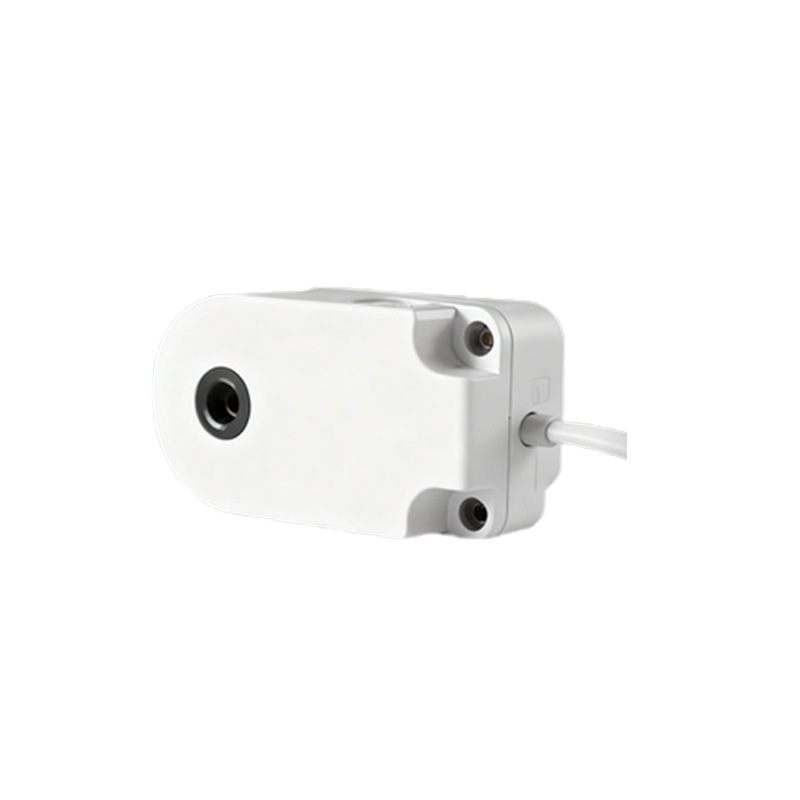
Installation and alignment are straightforward due to standardized housing shapes (e.g., cylindrical M8/M12 or rectangular). Built-in LED indicators simplify commissioning by displaying power status and switching operations. However, selecting the appropriate sensor requires careful consideration of factors like target material, required sensing distance, electrical specifications, and environmental IP ratings. For instance, an inductive sensor’s effective range reduces when detecting non-ferrous metals compared to steel.
Maintenance is minimal, but periodic checks are recommended to ensure mounting stability and cleanliness of the sensing face. Interference from adjacent metal structures or strong electromagnetic fields can cause false triggering, which can often be mitigated by adjusting the installation distance or using shielded models.
Future trends point toward miniaturization and enhanced intelligence. Sensors with integrated diagnostics can predict failures by monitoring internal parameters, supporting Industry 4.0 predictive maintenance strategies. Additionally, the adoption of IO-Link facilitates parameter cloning and remote configuration, reducing machine downtime during changeovers.
For engineers, understanding these sensors’ operational limits and integration protocols is crucial for optimizing automated systems. Their versatility continues to drive efficiency in material handling, metalworking, food processing, and beyond, solidifying their role as fundamental components in modern industrial control.