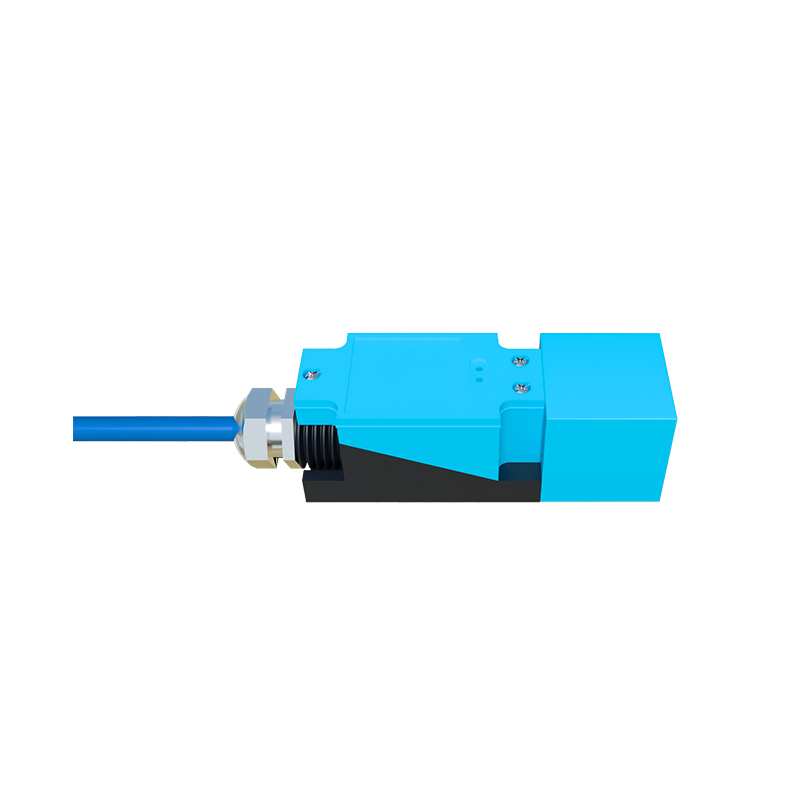
In industrial automation and control systems, proximity sensors play a pivotal role in non-contact object detection. Among the various types, inductive proximity sensors are renowned for their robustness, reliability, and immunity to environmental factors like dust and moisture. This article delves into the specifics of NPN output inductive proximity sensors, exploring their circuit design, operational principles, and practical application considerations.
Fundamentally, an inductive proximity sensor detects the presence of metallic objects. Its core component is a coil wound around a ferrite core, forming part of an LC oscillator circuit. When an AC voltage is applied, the oscillator generates a high-frequency electromagnetic field at the sensor's active face. In the absence of a target, the oscillator operates at a stable amplitude. When a conductive metal object enters this field, eddy currents are induced on the object's surface. These eddy currents draw energy from the oscillator, causing its amplitude to decrease. This amplitude change is detected by a subsequent evaluation circuit, which triggers a change in the output state of the sensor.
The output stage is where the designation "NPN" becomes critical. In an NPN output sensor, the output transistor is an NPN type. In a typical sinking configuration, the load (e.g., a PLC input, relay coil, or indicator lamp) is connected between the sensor's output wire (usually black) and the positive supply voltage (+V). The sensor's output transistor acts as a switch to the negative supply (0V or common). When the sensor detects a target, the NPN transistor saturates, effectively connecting the output line to the common (0V), thus completing the circuit and allowing current to flow into the sensor's output terminal. This is why NPN outputs are often described as "sinking" outputs. The common wire (blue) is connected to 0V, and the positive supply wire (brown) is connected to +V DC, typically ranging from 10-30V DC.
A standard three-wire NPN inductive sensor circuit is straightforward. The brown wire connects to the DC positive supply. The blue wire connects to the DC common (0V). The black wire is the switching output. For example, to interface with a PLC digital input, the black wire connects to the PLC input terminal. The PLC input module itself has an internal pull-up resistor connected to its internal +24V supply. When the sensor is off (no target), the NPN transistor is off, and the PLC input sees a high voltage (near +24V). When the sensor detects a target, the NPN transistor turns on, pulling the PLC input down to near 0V, signaling a TRUE or ON state.
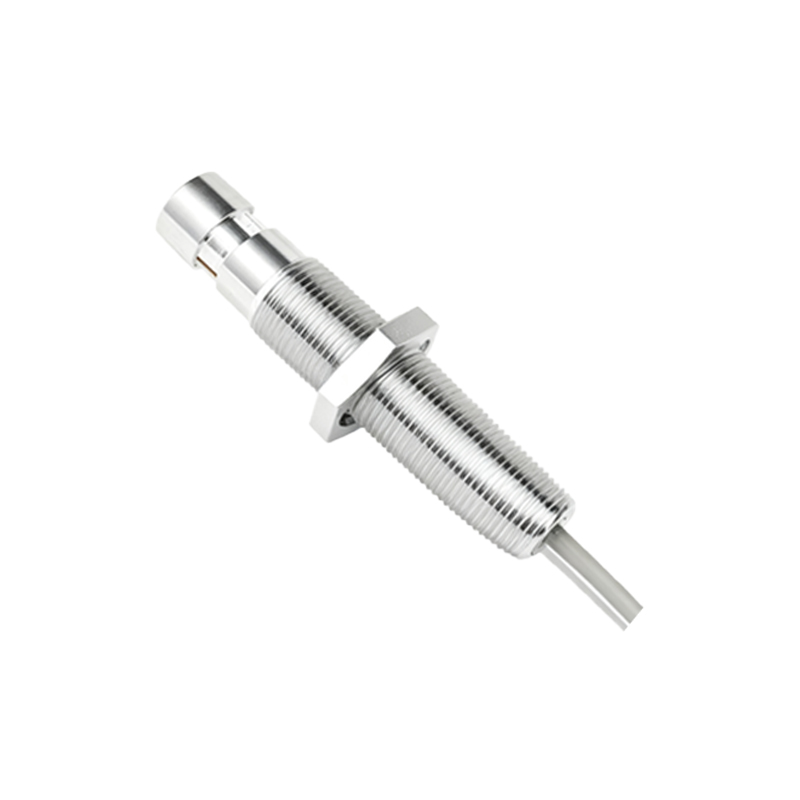
Key advantages of NPN sensors include compatibility with many PLCs from Asia and Europe that are designed for sinking inputs. They also offer a clear and stable switching signal. However, careful attention must be paid to wiring. A common mistake is incorrect common reference; all devices in the system (sensor, PLC, power supply) must share the same 0V reference point. Furthermore, for inductive loads like relay coils, a flyback diode (freewheeling diode) should be placed in parallel with the load, cathode to +V, to protect the sensor's transistor from voltage spikes generated when the inductive load is de-energized.
When designing a system, several factors must be considered. Sensing distance, as specified by the manufacturer (e.g., 5mm, 8mm), is a nominal value for mild steel. For other metals like aluminum or copper, a reduction factor must be applied. The switching frequency defines how quickly the sensor can detect objects passing by. Environmental factors such as temperature extremes, strong electromagnetic fields, or the presence of other metal in the mounting background (requiring a non-flush mountable style) can impact performance. Proper shielding and mounting are essential.
In application, NPN inductive sensors are ubiquitous. They are used for part presence detection on conveyor lines, end-of-travel limit sensing on actuators, rotary speed monitoring via a metal gear tooth, and counting metallic objects. Their solid-state design ensures long life with no mechanical wear, making them ideal for high-cycle operations.
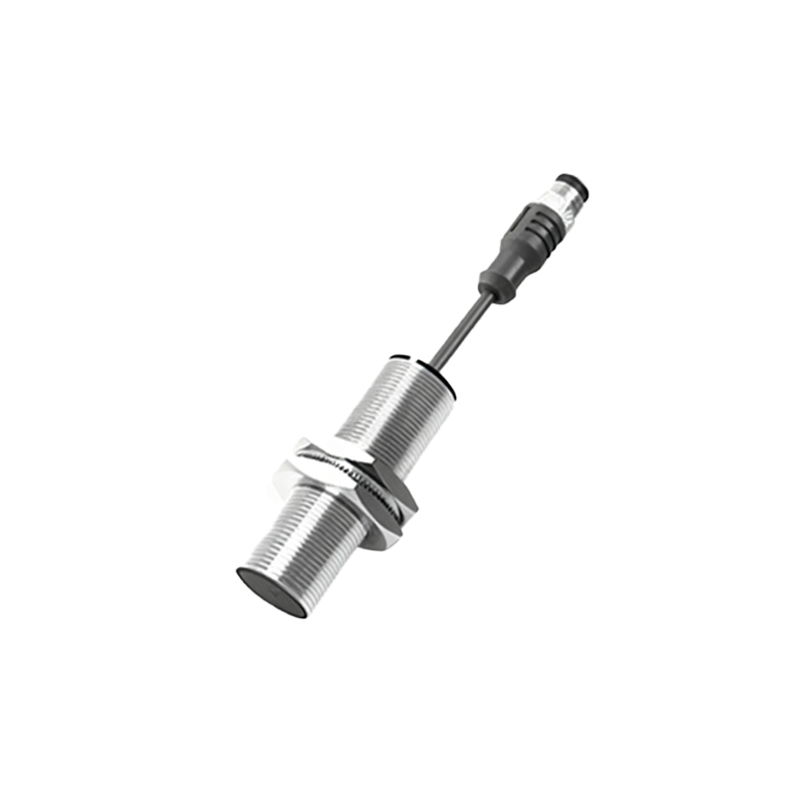
Troubleshooting typically involves checking the power supply voltage, verifying the load is correctly connected and functional, and ensuring the target material and distance are within specifications. Using a multimeter to check for voltage change at the output wire relative to common is a standard diagnostic step.
In conclusion, the NPN inductive proximity sensor is a fundamental building block in modern industrial control. Understanding its sinking output operation, proper circuit configuration, and application nuances is crucial for engineers and technicians to design reliable, efficient, and safe automated systems. Its simplicity, durability, and effectiveness in harsh environments ensure its continued dominance in metal detection applications.