In the relentless pursuit of efficiency and miniaturization within industrial automation, the evolution of sensor technology has been pivotal. Among the most significant advancements is the development of ultra-compact proximity sensors. These miniature powerhouses are redefining design possibilities and application boundaries across countless sectors. But what exactly defines their performance, and how do they stand up to the rigorous demands of modern machinery? This analysis delves into the technical merits, operational principles, and practical considerations of these diminutive yet robust devices.
At their core, ultra-compact proximity sensors are non-contact detection devices engineered into exceptionally small form factors, often with housing widths of just a few millimeters (e.g., M3, M4, M5, or 4mm x 4mm cubical designs). Despite their size, they incorporate sophisticated electronics to detect the presence or absence of a target object within their sensing range without physical contact. The primary technologies employed are inductive, capacitive, and photoelectric principles, adapted for miniaturization.
Inductive models are the workhorses for metal detection. A high-frequency oscillating electromagnetic field generated by a coil in the sensor's face is dampened by the eddy currents induced in a nearby metallic target. This damping is detected by the sensor's circuitry, triggering a solid-state output switch. The latest ultra-compact inductive sensors achieve remarkable sensing distances (Sn) relative to their size, sometimes up to 1.5mm for a 4mm-diameter barrel sensor. They boast high switching frequencies, often exceeding 2 kHz, making them ideal for high-speed counting or position verification on miniature components in packaging, assembly, and CNC machinery.
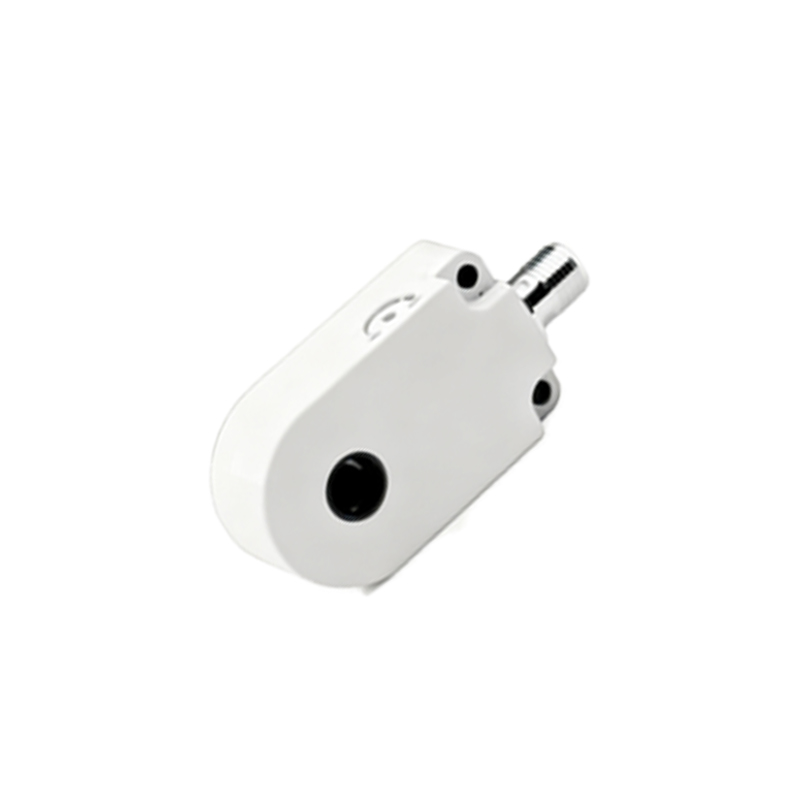
Capacitive variants operate by detecting changes in the capacitance of an electrostatic field. They can sense both metallic and non-metallic materials (plastics, glass, liquids, wood), making them versatile for level detection, material handling, and presence sensing of composite materials. Their miniaturization allows for installation in tight spaces where monitoring substance levels or detecting non-metallic parts is critical.
The performance advantages of these sensors are substantial. Their primary benefit is spatial economy. They can be installed in locations previously deemed impossible, enabling more compact machine designs. This leads directly to reduced overall system size and weight. Furthermore, their non-contact nature ensures wear-free operation, resulting in exceptional long-term reliability and minimal maintenance—a crucial factor for reducing total cost of ownership in high-cycle applications. Many models feature embedded IO-Link communication, transforming them from simple switches into intelligent data points that can transmit parameters like switching distance, temperature, and device health to a control system, facilitating predictive maintenance.
However, selecting and applying an ultra-compact proximity sensor requires careful engineering consideration. The limited sensing range is an inherent trade-off for size. Precise mechanical alignment and mounting are paramount; even a slight misalignment can cause detection failures. The sensing face is also extremely small, making it potentially susceptible to contamination from chips, coolants, or adhesives, though many offer high IP ratings (e.g., IP67, IP69K) for resilience. The choice of housing material (typically stainless steel or PBT plastic) must suit the environmental conditions, including exposure to chemicals, washdowns, or extreme temperatures.
In practice, these sensors excel in applications like robotic end-effector tool changers, miniature part detection in electronics manufacturing, wafer handling in semiconductors, precision gear tooth detection, and monitoring micro-valve positions. They are indispensable in the burgeoning field of collaborative robotics (cobots), where their small size allows for integration directly into the robot's gripper without compromising the payload or workspace.
In conclusion, ultra-compact proximity sensors are not merely smaller versions of their standard counterparts; they represent a specialized engineering solution for high-density, high-precision automation. Their value proposition lies in enabling innovative, space-constrained designs while delivering reliable, intelligent sensing performance. For engineers designing the next generation of compact machinery, smart devices, and agile production lines, mastering the capabilities and limitations of these miniature sensors is no longer optional—it is essential for achieving a competitive edge in an increasingly miniaturized and automated world.