Flush-mounted proximity sensors, also known as shielded or embeddable sensors, are widely utilized in industrial automation for precise non-contact detection of metallic objects. Unlike non-flush sensors, their sensing face is surrounded by a metal shield, allowing them to be installed flush with mounting surfaces without interference from surrounding metal. This design minimizes side detection and focuses the electromagnetic field directly ahead, making them ideal for tight spaces and applications requiring precise positioning.
The core operating principle of flush-mounted inductive proximity sensors relies on electromagnetic induction. Inside the sensor, an oscillator generates a high-frequency alternating magnetic field at the active face. When a ferrous or non-ferrous metal target enters this field, eddy currents are induced on the target's surface. These eddy currents draw energy from the oscillator, causing a reduction in oscillation amplitude. A threshold circuit monitors this amplitude change and triggers a solid-state switch output when the target reaches the specified sensing distance. The metal shielding around the coil confines the magnetic field, preventing lateral dispersion and ensuring stable detection even when mounted adjacent to other metal structures or in metal brackets.
Key performance parameters include sensing distance, which is typically shorter for flush models compared to non-flush equivalents due to the shielded design; repeat accuracy, often within micrometers; and operating frequency, indicating how quickly the sensor can detect objects per second. Flush-mounted sensors are predominantly available in DC versions (e.g., 3-wire PNP or NPN) and AC/DC variants, with outputs including normally open (NO) or normally closed (NC) configurations. Common housing materials like stainless steel or nickel-plated brass provide durability in harsh environments, with ingress protection ratings such as IP67 or IP69K ensuring resistance to dust, water, and chemicals.
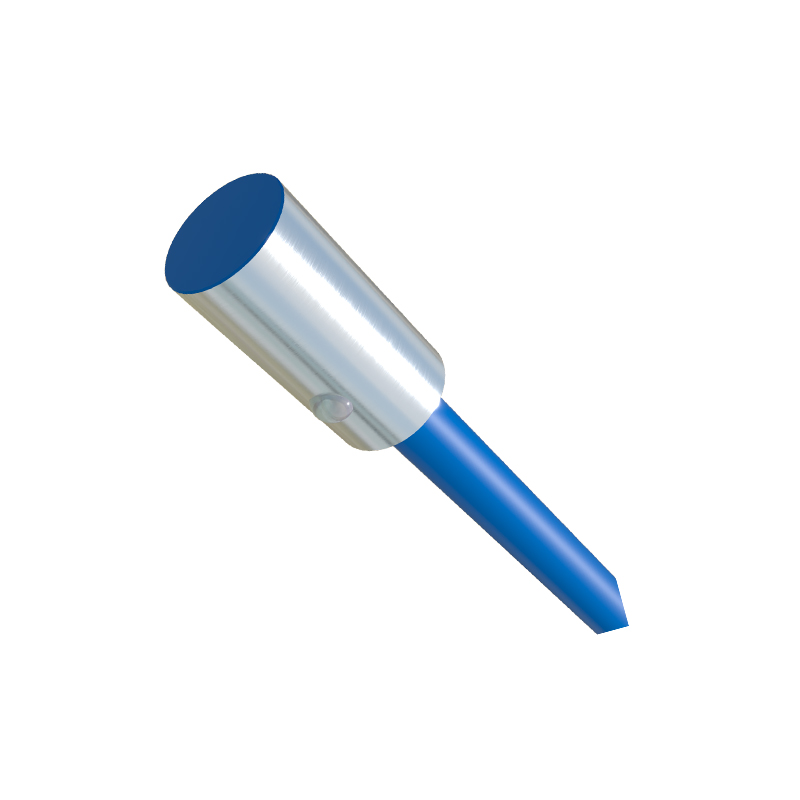
Applications span diverse industries. In automotive manufacturing, these sensors detect piston positions in cylinders or monitor robotic arm movements. Packaging machinery employs them for precise bottle cap presence verification on conveyor lines. Metalworking CNC machines use flush sensors for tool breakage detection or workpiece positioning, where space constraints preclude non-flush installations. Their immunity to ambient interference—thanks to shielding—makes them suitable for high-vibration settings like stamping presses.
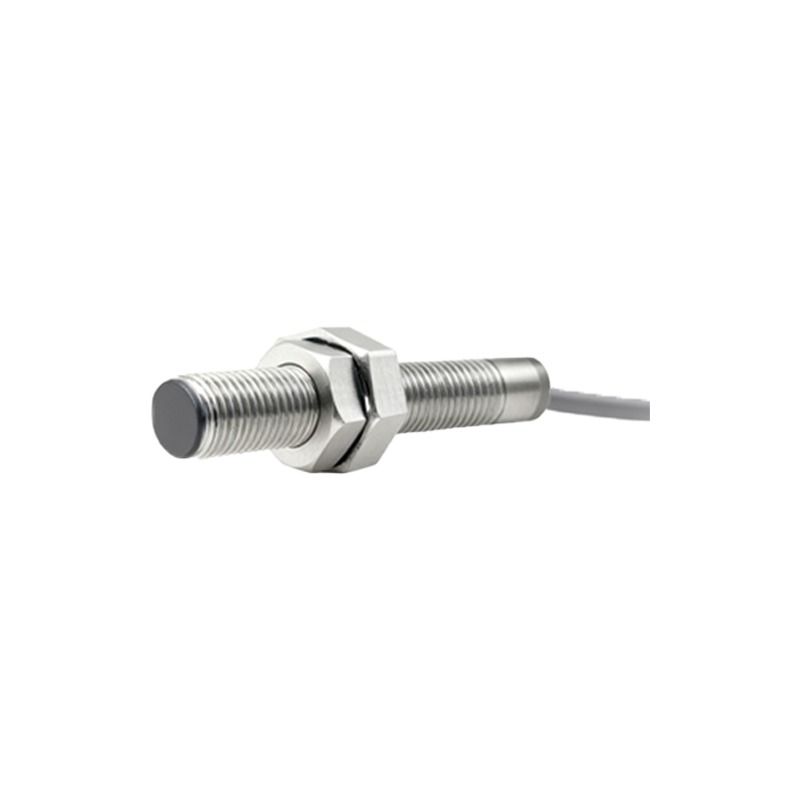
Selection considerations involve target material, size, and required sensing range. For instance, steel targets yield longer ranges than aluminum or copper. Engineers must also account for temperature limits, voltage supply compatibility, and output load capacity. Installation requires ensuring the sensor face is flush with the mounting surface, with no protruding metal nearby to avoid false triggering. Regular maintenance involves checking for accumulation of metallic debris on the sensor face, which can attenuate performance.
Advancements in flush-mounted sensor technology include analog output versions for distance proportionality, high-temperature models for foundries, and hybrid designs incorporating IO-Link for digital communication and diagnostics. These innovations enhance integration with Industry 4.0 systems, enabling predictive maintenance and real-time monitoring.
In summary, flush-mounted proximity sensors offer reliable, space-efficient detection in metal-intensive environments. Their shielded design ensures operational stability, making them a cornerstone of modern industrial automation. Understanding their principles and specifications allows engineers to optimize system design for accuracy, durability, and efficiency.