Laser sensors represent a pivotal technology in modern industrial automation, offering unparalleled precision in measurement, detection, and control tasks. Their classification is not merely academic but serves as a practical guide for engineers and system integrators to select the optimal sensor for specific operational demands. Fundamentally, laser sensors are categorized based on their operational principle, measurement function, and safety characteristics.
The primary classification stems from the underlying technology of laser emission and detection. The most prevalent types include triangulation sensors, time-of-flight (ToF) sensors, and confocal displacement sensors. Triangulation laser sensors operate by projecting a laser point onto a target surface. The reflected light is captured by a receiver at a known angle. By calculating the displacement of the reflected point on the receiver's sensor, the exact distance to the target is determined through trigonometric principles. This method excels in high-precision, short-range applications such as thickness gauging, weld seam tracking, and microscopic surface profiling.
Time-of-Flight (ToF) laser sensors, in contrast, measure the time interval between the emission of a laser pulse and the reception of its reflection. Given the constant speed of light, the sensor calculates the distance to the object. This technology is ideal for long-range measurements, often spanning several meters, and is widely deployed in applications like bulk material level monitoring, vehicle detection, and large-scale warehouse logistics automation. While offering a longer range, traditional pulse-based ToF sensors may have slightly lower resolution compared to triangulation sensors at very close distances.
A third significant category is the confocal chromatic sensor. It utilizes a white light source where different wavelengths are focused at different distances along the measurement axis. The sensor analyzes the color of the reflected light to determine the precise distance to the target. This technology is exceptionally robust against varying surface colors, angles, and materials, making it indispensable for challenging tasks like measuring transparent objects (glass, films) or highly reflective surfaces.

Beyond the measurement principle, a critical classification axis is laser safety, governed by international standards such as IEC 60825-1. Lasers are grouped into classes (Class 1, Class 1M, Class 2, Class 2M, Class 3R, Class 3B, Class 4) based on their potential to cause harm to human eyes or skin. Class 1 lasers are considered safe under all conditions of normal use, often achieved by housing a higher-class laser in an interlocked enclosure. Class 2 lasers are low-power visible lasers where the human blink reflex provides protection. Class 3B and Class 4 lasers pose significant eye hazards and require stringent safety protocols, including protective eyewear and controlled access. Most industrial laser sensors for positioning and measurement are designed to be Class 1 or Class 2 products, ensuring safe integration into factory environments without extensive safety barriers.
Furthermore, laser sensors can be classified by their output functionality. Some are purely digital (providing a simple on/off signal when a target is present or absent), while others are analog (outputting a continuous voltage or current proportional to the measured distance). Modern "smart" sensors feature integrated digital interfaces like IO-Link, Ethernet/IP, or PROFINET, providing not only measurement values but also diagnostic data, parameterization capabilities, and seamless integration into Industrial Internet of Things (IIoT) frameworks.
The application domain also informs classification. For instance, laser distance sensors, laser edge detection sensors, laser contrast sensors for label detection, and laser profile scanners (for 2D/3D contouring) each represent a specialized sub-category optimized for a distinct set of tasks. A profile scanner, essentially a laser line generator paired with a high-speed camera, falls under a broader vision-sensor category but relies fundamentally on laser technology for structured light projection.
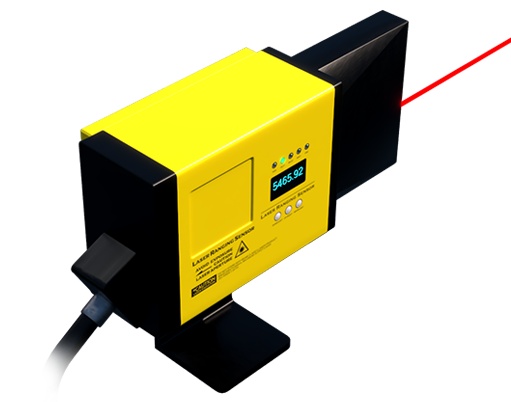
In conclusion, classifying laser sensors is a multidimensional exercise. An engineer must consider the measurement principle (triangulation, ToF, confocal) for accuracy and range, the safety class for operational compliance, and the output type for system integration. There is no single "best" class; the optimal choice is dictated by the specific requirements of the application—be it micron-level accuracy in electronics assembly or robust presence detection in a dusty foundry. Understanding this classification matrix is the first step toward leveraging the full potential of laser sensing technology to enhance productivity, quality, and safety in industrial automation.
