In the world of industrial automation, motion control, and precision engineering, accurately measuring the position or movement of an object is paramount. This is where travel sensors, also known as linear position sensors or displacement sensors, become indispensable components. These devices convert mechanical movement into an electrical signal, providing critical data for control systems, safety mechanisms, and quality assurance. Their role is foundational in ensuring machines operate as intended, with high repeatability and reliability.
Travel sensors come in various types, each based on different physical principles and suited for specific environments and requirements. One of the most common categories is the potentiometric sensor, or linear potentiometer. This sensor functions like a variable resistor. A wiper moves along a resistive element, and the change in resistance is directly proportional to the linear displacement. They are valued for their simplicity, cost-effectiveness, and ability to provide absolute position measurement without the need for a power-on reset. However, they can be susceptible to wear over time due to mechanical contact.
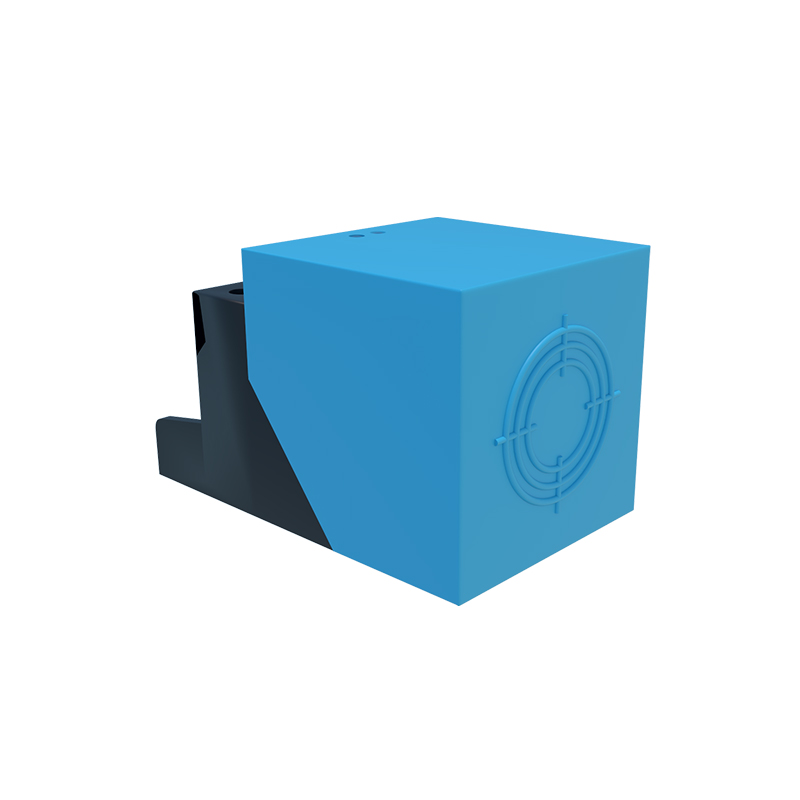
For applications demanding non-contact measurement and high durability, magnetostrictive sensors are a popular choice. They work by generating a torsional strain wave at the location of a position magnet along a waveguide. The time delay between the generation of the wave and its detection is measured to calculate the magnet's precise position. These sensors offer excellent accuracy, resolution, and long operational life, making them ideal for harsh industrial environments like hydraulic cylinder positioning in heavy machinery.
Another highly precise non-contact technology is the Linear Variable Differential Transformer (LVDT). An LVDT consists of a primary coil and two secondary coils wound on a cylindrical former. A ferromagnetic core moves inside the coil assembly, changing the inductive coupling. The differential output voltage from the secondary coils is a linear function of the core's displacement. LVDTs are renowned for their nearly infinite resolution, robustness, and ability to operate in extreme temperatures and pressures, often found in aerospace, metrology, and nuclear applications.
Optical encoders represent another significant category. A linear optical encoder uses a scale marked with fine gratings and a read head containing a light source and photodetectors. As the head moves along the scale, it interprets the alternating pattern of light and dark to determine position. They provide extremely high resolution and speed but can be sensitive to contamination like dust, oil, or coolant. Sealed versions are available for more demanding settings.

The applications of travel sensors span virtually every industry. In factory automation, they are used for robotic arm positioning, conveyor belt control, and press brake depth monitoring. In the automotive sector, they monitor throttle position, suspension travel, and gearshift selection. Mobile hydraulics in construction equipment rely on them for boom and bucket positioning. Even in medical devices, from hospital beds to MRI scanners, travel sensors ensure precise and safe movement.
Selecting the right travel sensor requires careful consideration of several key parameters. The required measuring range is the first factor—from a few millimeters to several meters. Accuracy and repeatability define how close the measurement is to the true value and how consistently it can be repeated, respectively. The environmental conditions are critical; factors like temperature extremes, presence of moisture, dust, vibrations, and exposure to chemicals will dictate the needed ingress protection (IP) rating and housing material. The output signal type must be compatible with the control system, whether it's analog (voltage or current), digital (SSI, CANopen, IO-Link), or pulse signals. Finally, mounting constraints, lifecycle cost, and required maintenance intervals play a decisive role in the selection process.
Installation is equally important for optimal performance. Proper alignment is crucial to avoid side-loading, which can cause premature wear or measurement errors. For sensors with integrated electronics, ensuring a stable power supply and protecting signal cables from electromagnetic interference (EMI) are essential steps. Regular calibration checks, as recommended by the manufacturer, help maintain long-term accuracy.
In conclusion, travel sensors are the silent workhorses of precision motion systems. From simple resistive pots to advanced magnetostrictive and optical systems, the technology offers a solution for nearly every linear measurement challenge. Understanding the operating principles, strengths, and limitations of each type empowers engineers and technicians to make informed decisions, leading to more efficient, reliable, and intelligent machinery. As industries continue to push for greater automation and data integration, the demand for robust, accurate, and smart travel sensors will only continue to grow.