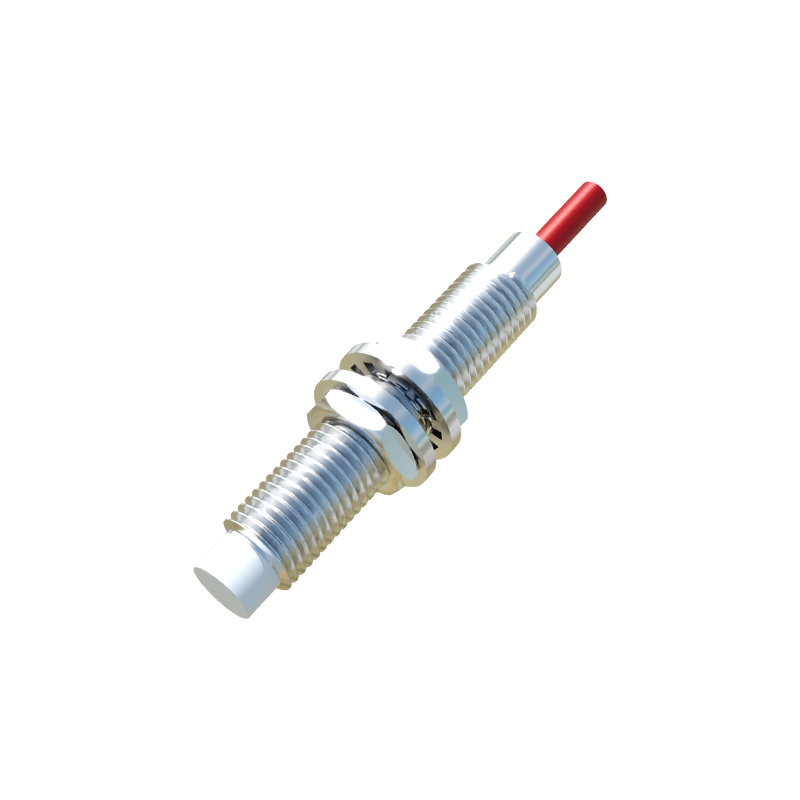
Proximity angle sensors are critical components in modern industrial automation and motion control systems, designed to detect the angular position or rotational movement of a target without physical contact. These sensors operate based on the principle of electromagnetic or capacitive coupling, depending on the specific type and application. The most common types include inductive, capacitive, and magnetic proximity angle sensors, each with distinct operational mechanisms tailored to different environmental and precision requirements.
Inductive proximity angle sensors, widely used in metal detection scenarios, function by generating an oscillating electromagnetic field from a coil within the sensor. When a metallic target approaches the sensor's sensing face, eddy currents are induced in the target, causing a change in the oscillation amplitude or frequency. This alteration is detected by the sensor's internal circuitry, which converts it into an electrical signal proportional to the angular displacement. The sensor's output can be analog (e.g., 4-20 mA or 0-10 V) or digital (e.g., PWM or serial data), providing real-time feedback on rotational position. Key advantages include high durability, resistance to contaminants like dust and oil, and suitability for harsh industrial environments. However, they are limited to metallic targets and may require calibration for specific materials to ensure accuracy.
Capacitive proximity angle sensors, on the other hand, can detect both metallic and non-metallic targets by measuring changes in capacitance. The sensor consists of two electrodes forming a capacitor; when a target enters the sensing zone, it alters the dielectric constant between the electrodes, leading to a capacitance shift. This change is processed to determine the angular position. These sensors are ideal for applications involving plastics, liquids, or other non-conductive materials, offering versatility in diverse settings such as packaging or food processing. However, they are more sensitive to environmental factors like humidity and temperature, necessitating careful installation and shielding.
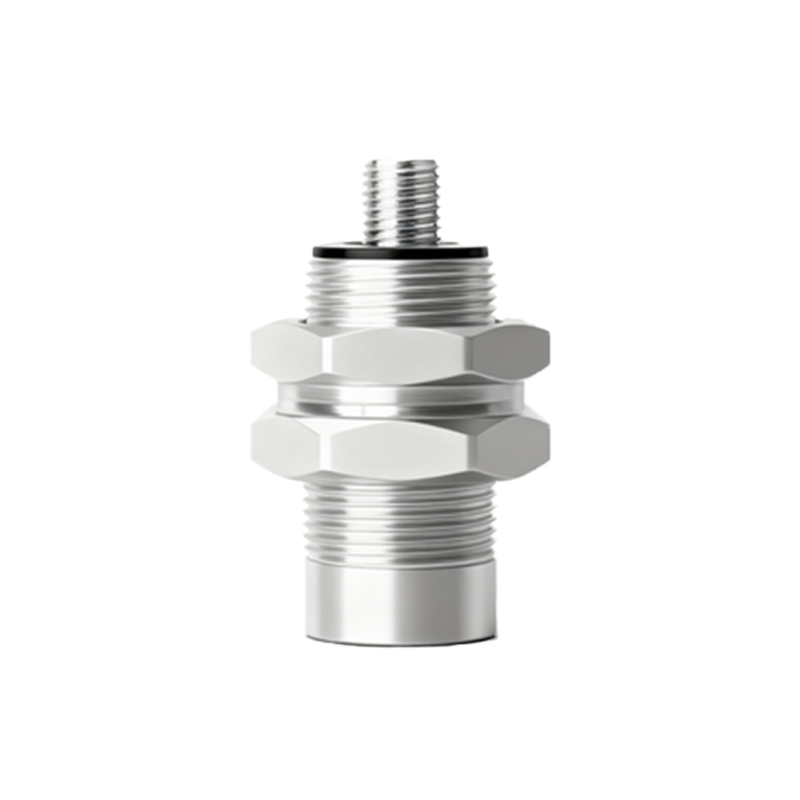
Magnetic proximity angle sensors utilize Hall effect or magnetoresistive elements to detect magnetic fields generated by a rotating magnet attached to the target shaft. As the shaft rotates, the magnetic field orientation changes, and the sensor translates this variation into an angular position signal. Hall effect sensors, for instance, produce a voltage proportional to the magnetic field strength, enabling precise measurement of rotational speed and position. These sensors are highly reliable, with minimal wear due to non-contact operation, and are commonly used in automotive systems (e.g., throttle position sensing) and robotics. They excel in high-speed applications but may be affected by external magnetic interference, requiring proper shielding and design considerations.
The working principle of proximity angle sensors hinges on their ability to convert physical angular changes into measurable electrical signals with minimal latency. Advanced models incorporate microprocessors for signal conditioning, linearization, and diagnostics, enhancing accuracy and integration with control systems like PLCs or IoT networks. Factors influencing performance include sensing range, resolution, repeatability, and environmental robustness. For instance, in CNC machinery, inductive sensors provide sub-degree resolution for tool positioning, while in renewable energy systems, magnetic sensors monitor wind turbine blade angles under extreme conditions.
Installation and maintenance are straightforward, as these sensors require no direct contact with moving parts, reducing mechanical wear and extending lifespan. Regular checks for alignment, contamination, and electrical connections ensure optimal operation. Innovations in this field include miniaturization, wireless connectivity, and smart sensors with self-calibration features, driving efficiency in Industry 4.0 applications. Overall, proximity angle sensors are indispensable for precise angular measurement, enabling automation, safety, and energy savings across industries from manufacturing to aerospace.