Proximity sensors are indispensable components in modern industrial automation, providing non-contact detection of objects within a specific range without any physical interaction. Their ability to operate reliably in harsh environments, offer high switching speeds, and ensure long service life makes them a cornerstone of countless automated systems. This article delves into the core operating principles of the primary types of proximity sensors, explaining the underlying technology that enables their critical functionality.
The most common type is the inductive proximity sensor. It is designed to detect metallic objects, primarily ferrous metals like iron and steel, though some models can also sense non-ferrous metals like aluminum, copper, or brass with reduced sensing range. The heart of an inductive sensor is a coil wound around a ferrite core, which is part of an oscillator circuit. When an alternating current is passed through this coil, it generates an oscillating electromagnetic field at the sensor's active face. When a metallic target enters this field, eddy currents are induced on the surface of the target. These eddy currents draw energy from the oscillator, causing a reduction in the amplitude of oscillation. An evaluation circuit within the sensor monitors this amplitude change. Once the amplitude drops below a predetermined threshold—indicating the presence of a metal object within the nominal sensing distance—the sensor's output state switches, typically from "off" to "on." This switching can control a relay, PLC input, or other load. Key specifications include the sensing range, which is typically a few millimeters to several centimeters, and factors like target material, size, and shape can influence the effective range.
Another widely used category is the capacitive proximity sensor. While similar in appearance to inductive models, capacitive sensors can detect a much broader range of materials, including metals, plastics, glass, wood, liquids, and granular substances. Their operation is based on capacitance change. The sensor face acts as one plate of a capacitor, with the target object acting as the other plate, and the air gap serving as the dielectric. The internal circuitry forms an oscillator that is initially inactive. As a target approaches the sensor face, the capacitance between the sensor and the target increases. When this capacitance reaches a specific threshold, it causes the oscillator to begin oscillating. This oscillation is then processed by a trigger circuit, which subsequently changes the output state of the sensor. A sensitivity adjustment potentiometer is often provided to tune the sensor for different materials, preventing false triggers from background objects or container walls. This makes them ideal for applications like level detection of liquids or powders through non-metallic tank walls, or detecting non-metallic objects on conveyor belts.
For applications requiring longer sensing distances or detection of any object regardless of color or material, photoelectric sensors are the preferred choice. They operate by emitting a beam of light (visible red, infrared, or laser) from a transmitter and detecting its presence or absence with a receiver. There are three main configurations. The through-beam (or opposed) type has separate transmitter and receiver units positioned opposite each other; an object is detected when it interrupts the light beam. The retro-reflective type uses a single unit that houses both emitter and receiver, along with a reflector; detection occurs when the object breaks the reflected beam. The diffuse (or proximity) type also uses a single unit, but it detects the light reflected directly off the target object itself. The sensing logic can be configured for light-on or dark-on operation. Photoelectric sensors excel in long-range detection, up to several meters, and are versatile but can be affected by environmental factors like dust, fog, or ambient light.
Ultrasonic proximity sensors utilize sound waves beyond the human hearing range. They contain a transducer that emits high-frequency ultrasonic pulses (typically 40-400 kHz) and then listens for the echo. By measuring the time interval between the emitted pulse and the received echo, the sensor's internal microcontroller can calculate the distance to the target object using the known speed of sound. This time-of-flight principle allows for precise distance measurement and presence detection, independent of the object's material, color, or transparency. They are highly effective for detecting liquid levels, transparent films, or irregularly shaped objects, and can operate in environments with dust or steam where photoelectric sensors might fail. However, they can be influenced by temperature variations (which affect the speed of sound) and soft, sound-absorbing materials.
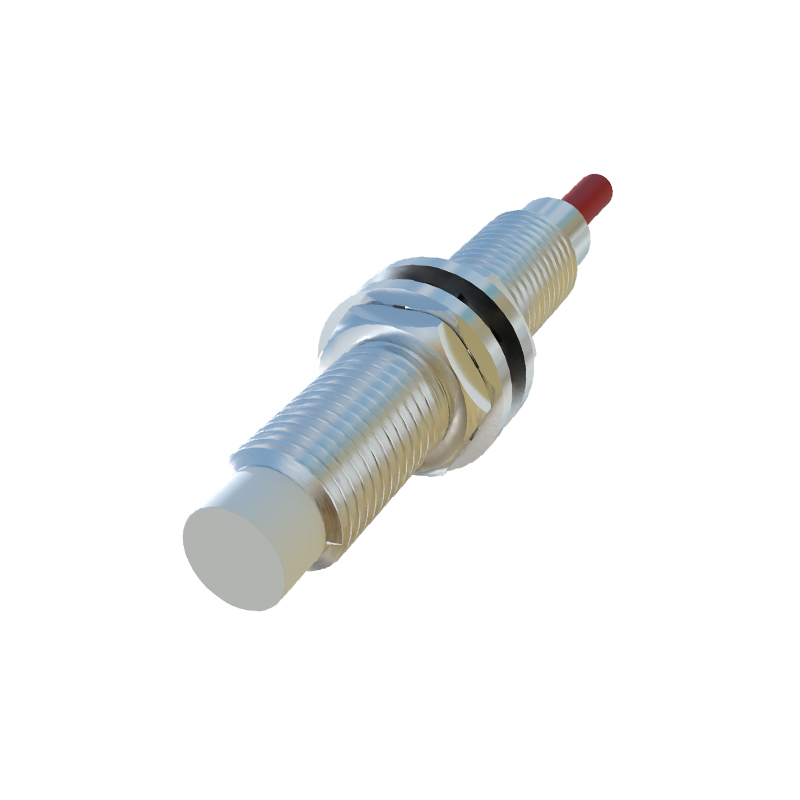
Magnetic proximity sensors, or reed switches, are simple and cost-effective devices used to detect the presence of a permanent magnet. They consist of two ferromagnetic, flexible reeds sealed within a glass tube filled with inert gas. When a magnet approaches, the reeds become magnetically polarized, attract each other, and make contact, closing the circuit. They are extremely reliable for low-power applications like door/window position sensing or in cylinder position feedback.
In conclusion, the selection of a proximity sensor depends entirely on the application requirements: target material
