In the realm of industrial automation, proximity sensors are indispensable components for non-contact detection, and among them, 3-wire capacitive proximity sensors stand out for their versatility and reliability. These sensors operate on the principle of capacitance change, detecting both metallic and non-metallic objects—such as plastics, liquids, or granular materials—by sensing variations in an electrostatic field. Unlike inductive sensors that are limited to metals, capacitive sensors offer broader application potential, making them essential in diverse sectors like packaging, food processing, and material handling.
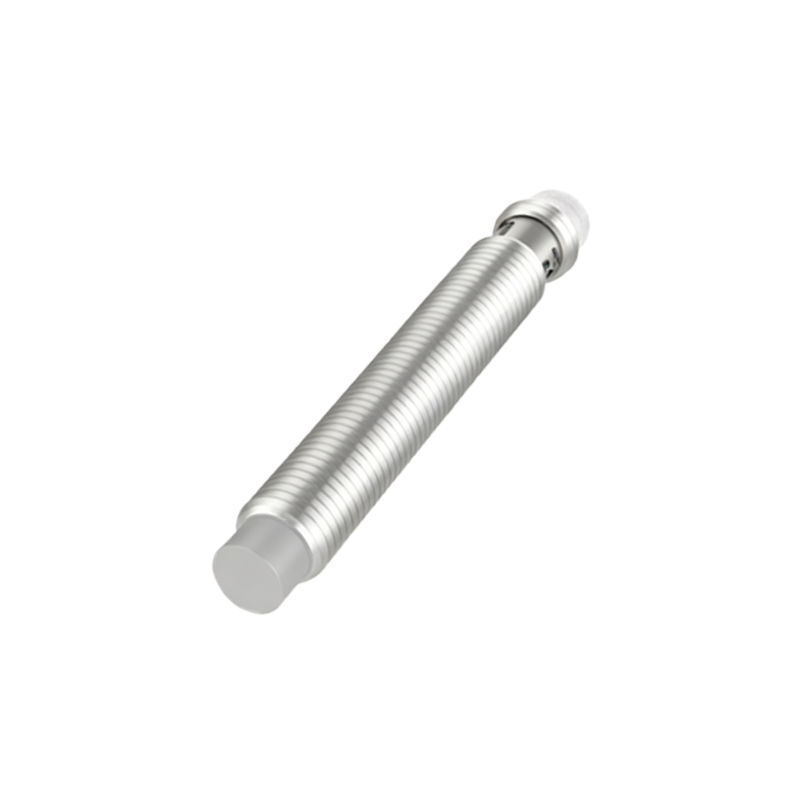
A typical 3-wire capacitive proximity sensor consists of three distinct wires: brown for positive supply voltage (usually 10-30V DC), blue for negative or ground, and black for the output signal. This wiring configuration simplifies installation and integration into control systems, as it provides a clear separation between power and signal lines. The sensor's sensing element, often a metallic plate or electrode, generates an oscillating electromagnetic field. When an object enters this field, it alters the capacitance, causing a change in oscillation amplitude. This change is processed by an internal circuit, which triggers the output to switch states—either normally open (NO) or normally closed (NC)—depending on the design. The output can be sourcing (PNP) or sinking (NPN), with PNP being common in many regions for providing a positive voltage when activated.
The advantages of 3-wire capacitive sensors are manifold. They offer high sensitivity, adjustable via potentiometers or teach-in functions to fine-tune detection ranges and ignore background interference. Their robust construction, often with IP67 or higher ratings, ensures durability in harsh environments involving dust, moisture, or temperature fluctuations. Additionally, these sensors provide fast response times, enabling real-time monitoring in high-speed production lines. For instance, in bottling plants, they accurately detect liquid levels in non-metallic containers, while in woodworking, they sense wood or composite materials without physical contact, reducing wear and tear.
However, challenges exist, such as susceptibility to environmental factors like humidity or conductive contaminants, which can cause false triggers. To mitigate this, modern sensors incorporate compensation algorithms and shielding techniques. Installation best practices include maintaining adequate clearance from metal surfaces and avoiding direct exposure to aggressive chemicals. Regular calibration and maintenance are recommended to ensure long-term accuracy.
Looking ahead, advancements in smart sensor technology are enhancing 3-wire capacitive models with features like IO-Link communication for predictive maintenance and data logging. As Industry 4.0 evolves, these sensors will play a pivotal role in enabling smarter, more efficient automation systems. In summary, 3-wire capacitive proximity sensors are a cornerstone of modern industrial sensing, offering flexibility and precision that drive operational excellence across various applications.