Inductive proximity sensors are non-contact electronic devices designed to detect the presence or absence of metallic objects without physical contact. Widely utilized in industrial automation, manufacturing, and robotics, these sensors operate based on the principle of electromagnetic induction. At the core of an inductive proximity sensor lies an oscillator circuit that generates a high-frequency alternating magnetic field via a coil wound around a ferrite core. When a metallic object enters this magnetic field, eddy currents are induced on the surface of the target. These eddy currents create their own opposing magnetic field, which interacts with the sensor's original field. This interaction results in a change in the oscillation amplitude or frequency within the sensor's circuit.
The sensor's detection circuit continuously monitors these oscillations. Upon detecting a sufficient change—typically when a metal object reaches a predefined distance known as the sensing range—the sensor triggers an output signal. This output can be in the form of a digital switch (e.g., NPN or PNP transistor outputs) or an analog signal, depending on the sensor type. The sensing range varies based on factors such as the sensor's size, coil design, and the target material's properties. Ferrous metals like iron and steel generally offer longer detection distances compared to non-ferrous metals such as aluminum or copper, due to their higher magnetic permeability.
Key components of an inductive proximity sensor include the oscillator, demodulator, Schmitt trigger, and output switching circuit. The oscillator generates the electromagnetic field, while the demodulator converts oscillation changes into a DC voltage. The Schmitt trigger ensures stable switching by providing hysteresis, preventing output chatter when the target is near the detection threshold. Finally, the output circuit activates, controlling external devices like PLCs, relays, or indicators.
These sensors are prized for their robustness, reliability, and ability to operate in harsh environments. They are resistant to dust, moisture, and vibrations, making them ideal for applications in automotive assembly lines, conveyor systems, machine tools, and packaging machinery. Additionally, inductive proximity sensors require minimal maintenance, as the absence of moving parts reduces wear and tear. When selecting a sensor, engineers must consider parameters such as sensing distance, response time, housing material (e.g., stainless steel or plastic), and environmental conditions like temperature and electromagnetic interference.
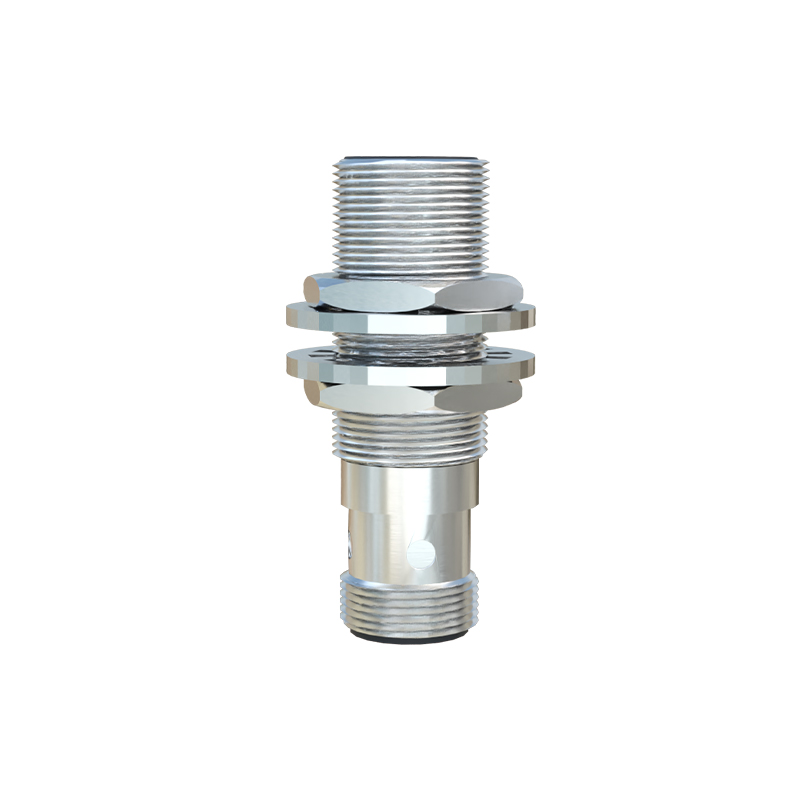
In summary, inductive proximity sensors provide an efficient solution for metallic object detection, enhancing automation precision and safety. Their working principle leverages electromagnetic phenomena to deliver consistent performance, solidifying their role as indispensable components in modern industrial systems.