Fiber optic photoelectric proximity sensors represent a sophisticated class of non-contact detection devices widely utilized in industrial automation, manufacturing, and harsh environments where traditional sensors may falter. These sensors operate on the fundamental principles of light transmission, reflection, and reception, leveraging optical fibers as the medium for guiding light to and from the target object. Understanding their operational mechanics, components, and advantages is crucial for engineers and technicians aiming to optimize sensing applications.
At the core of a fiber optic photoelectric sensor lies the interplay between a light source, optical fibers, and a photodetector. The system typically comprises three main parts: an amplifier unit containing the emitter and receiver electronics, and one or two optical fiber cables that serve as light transmission paths. The emitter side generates a beam of light—often from an LED or laser diode—which is directed into the transmitting fiber. This light travels through the fiber via total internal reflection, emerging at the sensor tip positioned near the detection area. When the light encounters an object within its sensing range, it reflects off the target's surface. A portion of this reflected light is captured by the receiving fiber (in a bifurcated or separate configuration) and guided back to the photodetector in the amplifier. The photodetector converts the light intensity into an electrical signal, which is then processed by the amplifier's circuitry to determine the presence or absence of the object, and in some advanced models, to gauge distance or detect specific colors.
There are several sensing modes employed by fiber optic photoelectric sensors, each suited to different applications. The diffuse reflective mode is common for proximity detection, where the sensor emits light and detects what is reflected directly from the target. In this mode, the optical fibers are often bundled together, with some fibers dedicated to transmission and others to reception. The sensing range depends on factors like target reflectivity, fiber quality, and light source power. For longer ranges or precise positioning, through-beam mode uses separate fibers for emission and reception, aligning them opposite each other so the object interrupts the light beam. This mode offers high accuracy and is less affected by target color or surface finish. Additionally, retro-reflective mode employs a reflector to bounce light back to the receiver, with the object breaking the beam, providing a balance between range and installation flexibility.
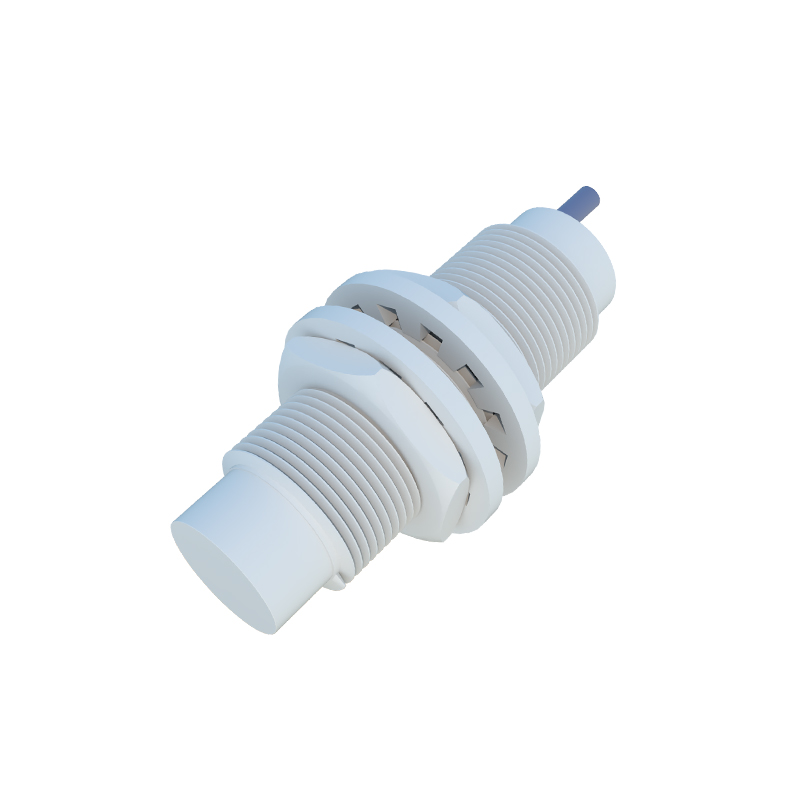
The choice of optical fiber material—typically glass or plastic—impacts performance. Glass fibers offer superior temperature resistance, minimal signal loss over distance, and durability in corrosive settings, making them ideal for extreme conditions. Plastic fibers are more flexible, cost-effective, and easier to cut and install, suitable for general-purpose applications within moderate temperature ranges. The fiber's core diameter and numerical aperture also influence light-gathering ability and sensing distance.
Key advantages of fiber optic photoelectric sensors include immunity to electromagnetic interference (EMI), since the fibers are non-metallic and transmit light rather than electrical signals. This makes them invaluable in environments with high electrical noise, such as near motors or welding equipment. They are also inherently safe in explosive or flammable atmospheres, as no electrical spark risk exists at the sensing point. Their small sensing tips allow access to confined spaces, and they can detect minute objects or operate in vacuum and high-pressure systems. Moreover, they exhibit fast response times, often in microseconds, enabling high-speed automation processes.
However, designers must consider limitations. Sensing performance can be affected by environmental factors like dust, fog, or ambient light, though using modulated light sources helps mitigate interference. Target properties such as color, transparency, and surface texture may require sensitivity adjustments. Regular maintenance, like cleaning fiber ends, ensures consistent operation.
In practice, these sensors are deployed across diverse sectors. In automotive assembly, they detect parts on fast-moving conveyors. In food processing, they verify packaging without contamination risk. In semiconductor manufacturing, they position wafers in cleanrooms. Advanced versions incorporate analog outputs for distance measurement or color sensors for sorting tasks.
Future trends point toward miniaturization, enhanced smart features like IO-Link communication for diagnostics, and integration with IoT systems for predictive maintenance. As industries embrace Industry 4.0, fiber optic photoelectric sensors will continue evolving, offering greater precision and connectivity.
In summary, fiber optic photoelectric proximity sensors are pivotal in modern automation, combining optical engineering with practical design. Their ability to deliver reliable, non-contact sensing in challenging conditions underscores their importance, and a thorough grasp of their principles empowers engineers to harness their full potential effectively.