In the realm of industrial automation, proximity sensors are the silent sentinels, providing critical non-contact detection of objects. Selecting the right sensor is paramount for system reliability, efficiency, and cost-effectiveness. This decision hinges significantly on two interconnected factors: the brand and the specific model. While brands establish a foundation of quality, support, and technological philosophy, the model defines the precise technical capabilities for a given application. Understanding the distinction and interplay between these elements is essential for any engineer or procurement specialist.
Firstly, the brand represents a holistic promise. Major global players like Sick, Omron, Pepperl+Fuchs, Balluff, and IFM Electronic have built reputations over decades. These brands are synonymous with specific strengths. For instance, Sick is often lauded for its innovative laser-based sensors and robust outdoor capabilities. Omron is renowned for its extensive catalog and reliability in high-speed assembly applications. Pepperl+Fuchs is a leader in intrinsic safety and hazardous area solutions. Balluff excels in ruggedized designs and sophisticated industrial networking integration, while IFM is recognized for user-friendly setup and diagnostic features. Choosing a brand often aligns with corporate standards, existing infrastructure compatibility, and the level of technical support required. A strong brand typically ensures consistent manufacturing quality, global availability, and comprehensive documentation.
However, the brand alone is insufficient. The real engineering work begins with model selection. Within any leading brand's portfolio, you will find a vast array of models differentiated by core technical specifications. These are the critical differentiators:
1. Sensing Technology: This is the primary split. Inductive models detect metallic objects and are immune to environmental contaminants like dust or oil. Capacitive models can detect non-metallic materials (plastics, liquids, wood) but are more sensitive to environmental changes. Ultrasonic models use sound waves for longer-range detection and can handle challenging surfaces. Photoelectric models (through-beam, retro-reflective, diffuse) offer the longest ranges and are versatile for various materials but can be affected by ambient light and target color/reflectivity. A brand may offer all types, but its expertise might lie more in one area.
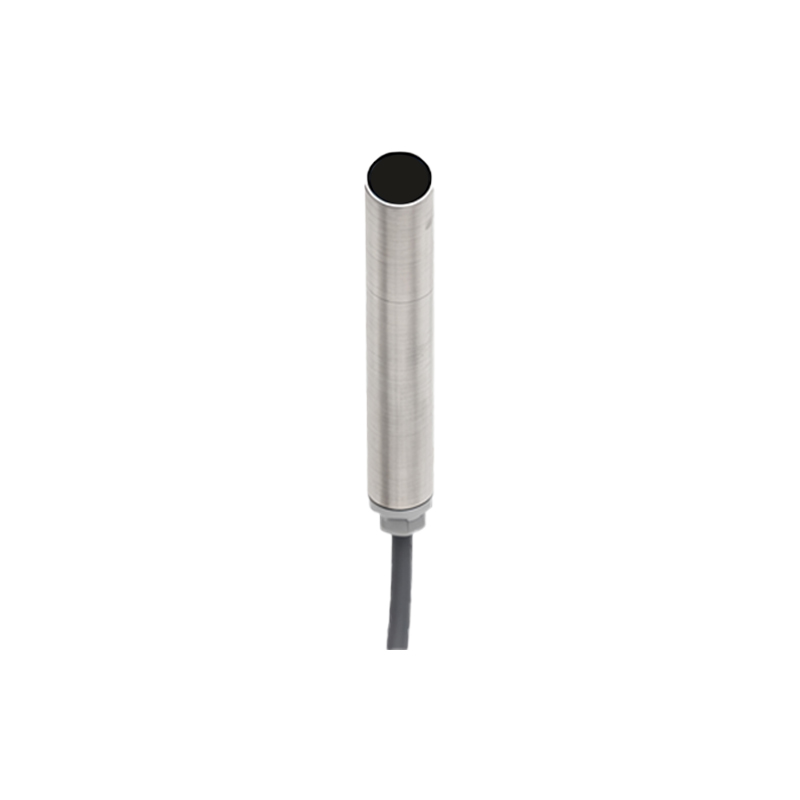
2. Form Factor and Housing: Models vary from tiny cylindrical barrels (e.g., M8, M12, M18, M30 threaded housings) to rectangular block styles or specialized slot sensors. The housing material (stainless steel, nickel-plated brass, PBT plastic) dictates environmental resilience against chemicals, washdowns (IP67, IP69K ratings), and mechanical impact.
3. Output Configuration: This includes PNP vs. NPN transistor outputs, NO (Normally Open) vs. NC (Normally Closed) switching logic, and analog (4-20mA, 0-10V) vs. digital IO-Link models. IO-Link capable sensors, offered by most top brands, provide advanced diagnostics, parameterization, and process data, representing a significant functional leap over standard discrete sensors.
4. Performance Specifications: Key model-specific parameters include sensing distance (rated and practical), repeat accuracy, response frequency (switching speed), and hysteresis. A high-speed packaging line demands a model with a 5kHz response, while a slow-moving conveyor does not. Similarly, a precision assembly robot requires a sensor with minimal repeatability error.
5. Special Features: Many models incorporate unique features. These include teach-in functionality for easy calibration, built-in temperature compensation, synchronization options to prevent mutual interference in dense installations, and specific approvals for food & beverage (FDA, EHEDG) or automotive industry standards.
For example, selecting a sensor for detecting filled glass bottles on a high-speed bottling line would lead you to consider capacitive or photoelectric models. Within the Pepperl+Fuchs brand, you might compare the UC5000 series (ultra-compact capacitive) against the ML100 series (background suppression photoelectric). The final model choice depends on the exact bottle material, required stand-off distance, required speed, and the cleanliness of the environment.
Conversely, for detecting a metal piston position in a hydraulic cylinder, an inductive sensor is the only choice. Here, you might evaluate the Balluff BES inductive series against the IFM IM series. The decision may come down to the specific housing size needed, the required switching distance (which must account for the cylinder's metal wall), and whether an extended temperature range model is necessary.
In conclusion, the brand provides the ecosystem—reliability, support, and a broad technological direction. The model delivers the precise technical solution. An effective selection process starts by defining the application's non-negotiable technical requirements (target material, distance