In the intricate world of industrial automation, where precision and reliability are non-negotiable, proximity ultrasonic sensors stand as silent, indispensable sentinels. These advanced devices, operating on the principle of ultrasonic wave emission and echo reception, have revolutionized non-contact detection and measurement across countless applications. Unlike optical or inductive sensors, ultrasonic variants are largely immune to environmental challenges such as dust, smoke, ambient light, and target color or material composition, making them exceptionally versatile.
The core technology hinges on piezoelectric transducers. The sensor emits high-frequency sound waves, typically between 40 kHz and 400 kHz, well beyond the range of human hearing. These waves travel through the air until they encounter an object. Upon striking the object, the waves are reflected back to the sensor as an echo. An integrated electronic circuit precisely calculates the time interval between emission and reception. Since the speed of sound in air is a known constant (approximately 343 m/s at 20°C), this time-of-flight measurement is converted into an accurate distance reading. This fundamental principle enables functions ranging from simple presence detection to precise continuous level monitoring and complex object profiling.
Modern proximity ultrasonic sensors are marvels of miniaturization and intelligence. Key performance parameters include sensing range, which can vary from a few centimeters to over ten meters; response time, critical for high-speed applications; and beam angle, which defines the detection field's width. Advanced models feature sophisticated algorithms for temperature compensation, as the speed of sound varies with air temperature. They also incorporate noise rejection capabilities to filter out ultrasonic interference from machinery, ensuring stable operation in harsh industrial environments.
The application spectrum is vast and continually expanding. In material handling and packaging, these sensors reliably detect transparent films, glass bottles, and irregularly shaped objects on high-speed conveyors, ensuring smooth logistics flow. In the automotive industry, they are pivotal for robotic guidance, part positioning, and assembly verification. For liquid and bulk solid level control in tanks and silos, ultrasonic sensors provide a robust, maintenance-free alternative to float switches or pressure transducers. Furthermore, they are increasingly deployed in AGVs (Automated Guided Vehicles) for collision avoidance and in smart infrastructure for parking space detection and people counting.
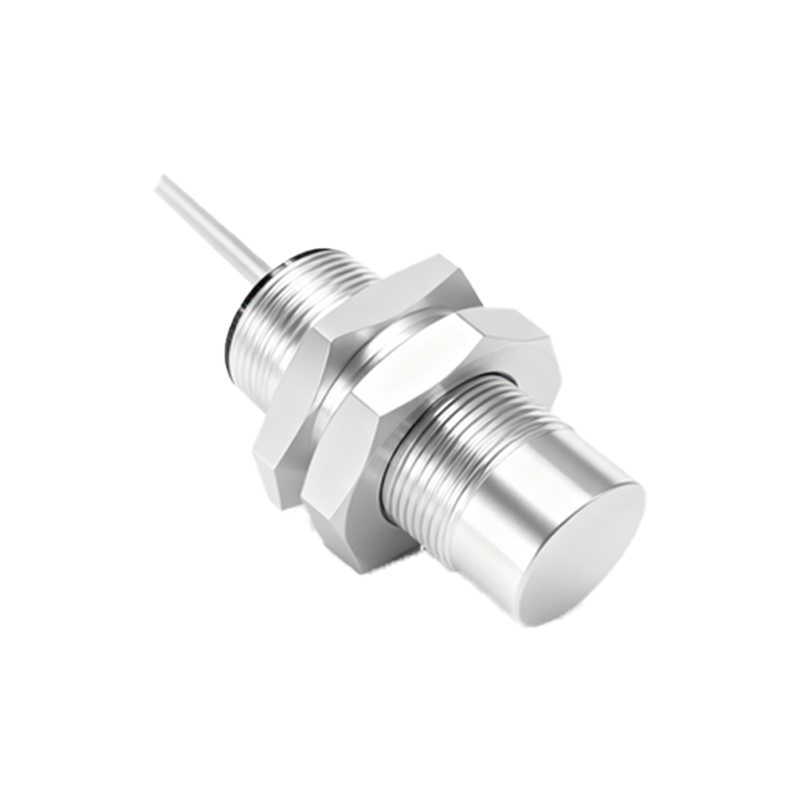
Selecting the optimal ultrasonic sensor requires careful consideration of the application's specific demands. Engineers must evaluate the required sensing distance, the size and surface characteristics of the target, environmental conditions (temperature extremes, humidity, airborne particulates), and the necessary output type (analog 4-20mA/0-10V, discrete NPN/PNP, or digital IO-Link). IO-Link communication, in particular, is becoming a standard feature, enabling parameterization, real-time diagnostics, and seamless integration into Industry 4.0 and IIoT frameworks. This allows for predictive maintenance, reducing downtime and operational costs.
Despite their robustness, ultrasonic sensors have limitations. Very soft materials that absorb sound, extreme turbulence, or vacuums can affect performance. However, ongoing R&D focuses on enhancing resolution, reducing blind zones, and improving resistance to acoustic noise. The integration of AI for echo pattern recognition is on the horizon, promising even smarter sensors capable of distinguishing between object types.
In conclusion, proximity ultrasonic sensors are fundamental components that bridge the physical and digital worlds in automated systems. Their ability to provide reliable, non-contact data under challenging conditions makes them a cornerstone of modern industrial engineering. As factories become smarter and more connected, the role of these "invisible guardians" will only grow in significance, driving efficiency, safety, and innovation forward.