Proximity sensors are ubiquitous in modern automation and consumer electronics, silently performing critical detection tasks without physical contact. Understanding their working principle is fundamental to selecting and applying the right sensor for a given task. At its core, a proximity sensor detects the presence or absence of an object within a specified range, emitting a signal when the target enters its field. The absence of mechanical contact makes these sensors highly reliable, durable, and fast.
The underlying principle varies significantly based on the technology employed. The most common types include inductive, capacitive, ultrasonic, and photoelectric sensors. Each operates on a distinct physical phenomenon, making them suitable for different materials and environments.
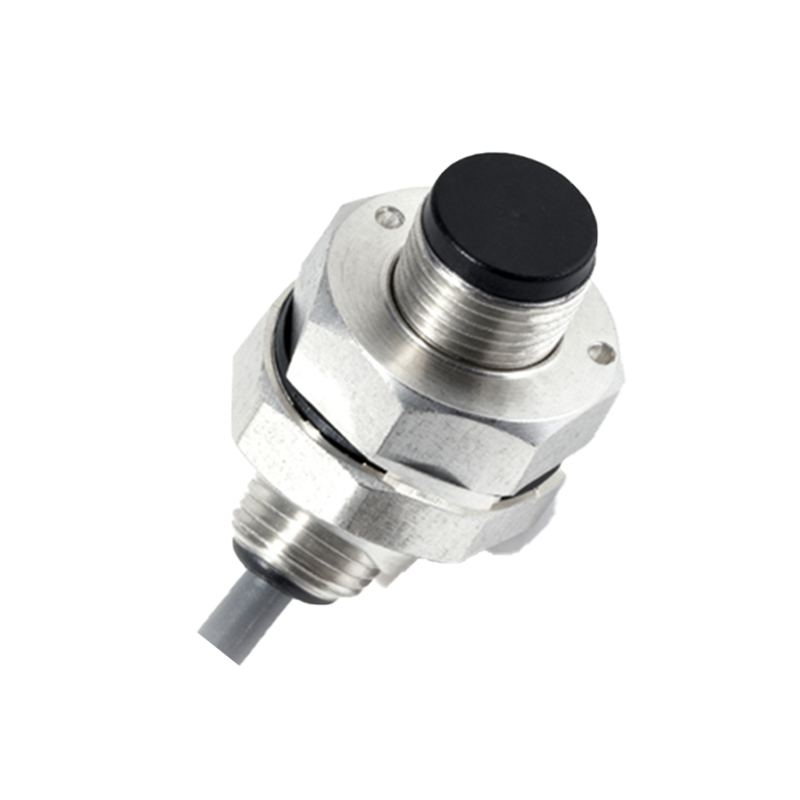
Inductive proximity sensors are the workhorses of industrial automation for detecting metallic objects. They generate an oscillating electromagnetic field from a coil wound around a ferrite core at the sensor's face. When a conductive metal object enters this alternating field, eddy currents are induced on the object's surface. These currents draw energy from the sensor's oscillator circuit, causing a reduction in the oscillation amplitude. An internal circuit monitors this amplitude change. Once the drop reaches a predetermined threshold, the sensor's output state switches, signaling the object's presence. The sensing range depends on the actuator material's conductivity and the sensor's size. Ferrous metals like steel typically yield the longest range, while non-ferrous metals like aluminum or copper have a shorter effective range. These sensors are immune to non-metallic substances like dust, oil, or water, making them ideal for harsh industrial settings.
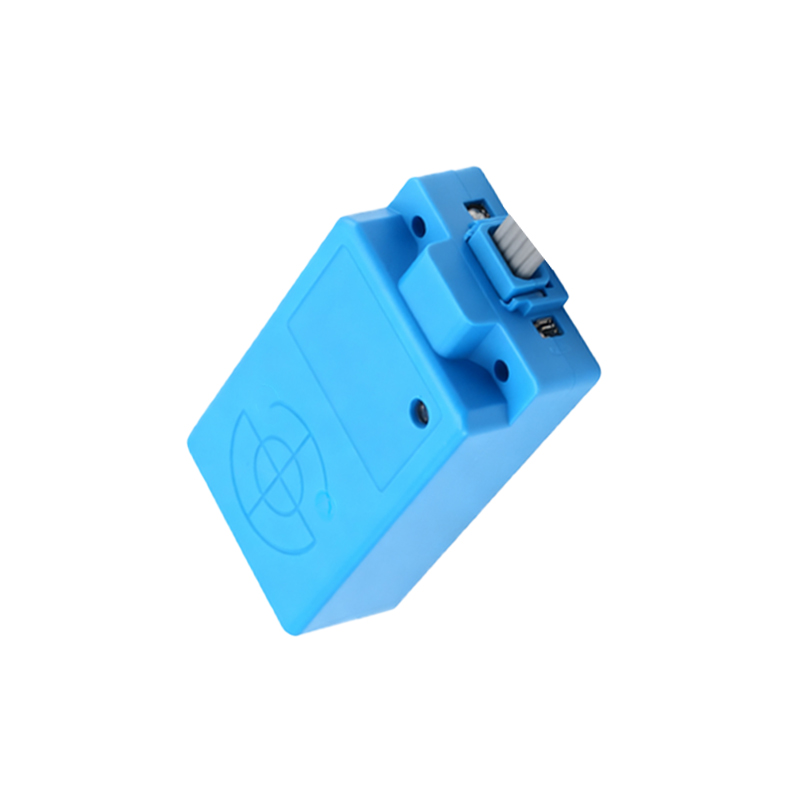
In contrast, capacitive proximity sensors can detect both metallic and non-metallic materials, including liquids, powders, plastics, and wood. They function similarly to an open capacitor. The sensor's active surface acts as one plate of a capacitor, with the target object acting as the other plate. An oscillator circuit charges this capacitive system. The capacitance increases when any object with a dielectric constant different from air enters the sensing field. This change in capacitance alters the oscillator's amplitude. The subsequent evaluation circuit detects this change and triggers an output switch. The sensing distance is influenced by the target's size, material, and dielectric constant. A key application is liquid level detection through a container wall. However, they can be sensitive to environmental changes like humidity or condensation.
Photoelectric sensors use light to detect objects. An emitter sends out a beam of light (often infrared, visible red, or laser), and a receiver detects it. In the proximity (diffuse) mode, the sensor contains both emitter and receiver. It detects the target by measuring the amount of light reflected back from the object's surface. The output triggers when the reflected intensity exceeds a set threshold. These sensors offer longer ranges than inductive or capacitive types and can detect virtually any material, but their performance can be affected by color, reflectivity, surface finish, and ambient light interference.
Ultrasonic sensors operate on a principle akin to sonar. They emit high-frequency sound waves (typically beyond human hearing) and evaluate the echo reflected from a target. A piezoelectric transducer generates the pulse and later acts as a receiver. The sensor calculates the time interval between sending the signal and receiving the echo to determine the distance to the object. This time-of-flight measurement makes them excellent for precise distance measurement and detecting objects regardless of color, transparency, or material, though they can be influenced by temperature, wind, and soft, sound-absorbing surfaces.
The output from these sensors is typically a switched signal. Common output types include NPN (sinking), PNP (sourcing) transistor outputs, or analog outputs (4-20 mA, 0-10V) that provide a signal proportional to the distance. The choice depends on the control system's requirements.
Key performance parameters include nominal sensing distance, repeat accuracy, hysteresis, and switching frequency. Hysteresis, a built-in difference between the switch-on and switch-off points, prevents output chatter when an object is at the exact sensing limit. Switching frequency defines how quickly the sensor can detect objects passing by.
Applications are vast. Inductive sensors count metal parts on conveyors, control robotic arms, and sense valve positions. Capacitive sensors monitor fill levels of liquids or granules, detect transparent films, and serve as touch switches. Photoelectric sensors are used in packaging machinery, object counting, and safety light curtains. Ultrasonic sensors manage pallet stacking, control liquid levels in tanks, and enable parking assist systems in vehicles.
Selecting the correct proximity sensor requires analyzing the target material, required sensing distance, environmental conditions (temperature, contaminants), electrical requirements, and physical mounting constraints. A clear grasp of the working principle behind each technology is the first and most crucial step toward a successful and reliable automation solution.