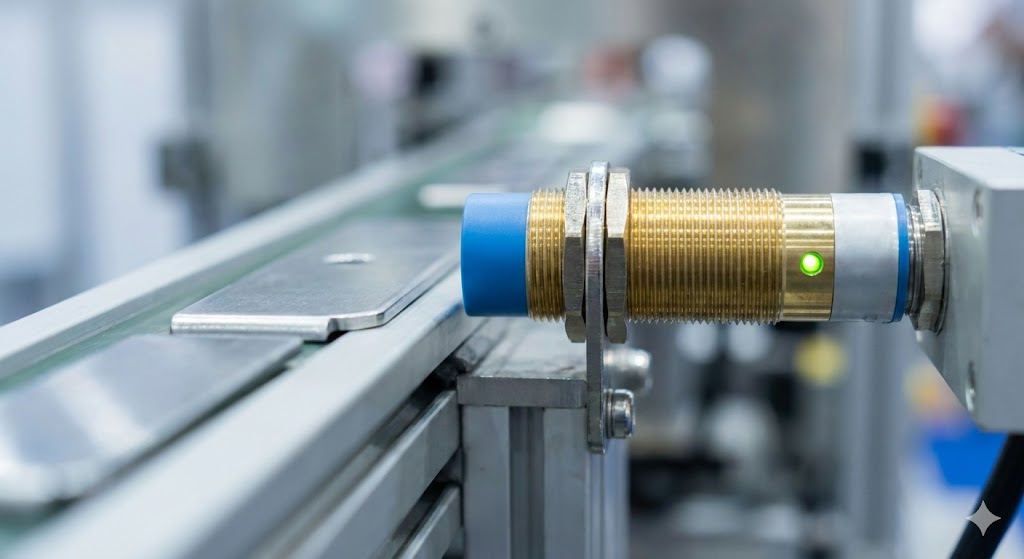
In the realm of automation, robotics, and smart systems, the ability to detect the presence, absence, or distance of an object without physical contact is paramount. Among the various technologies enabling this capability, the ultrasonic proximity sensor stands out for its reliability, versatility, and cost-effectiveness. This article delves into the working principles, key applications, and critical factors for selecting the right ultrasonic sensor for your project.
At its core, an ultrasonic proximity sensor operates on a principle similar to sonar used by bats and dolphins. It emits high-frequency sound waves, typically in the range of 40 kHz to 400 kHz, which are inaudible to the human ear. These sound waves travel through the air until they encounter an object. Upon hitting the object, the waves are reflected back towards the sensor. A receiver within the sensor detects this echo. By precisely measuring the time interval between the emission of the sound pulse and the reception of its echo, the sensor can calculate the distance to the object using a simple formula: Distance = (Speed of Sound × Time of Flight) / 2. The division by two accounts for the round-trip journey of the sound wave.
This time-of-flight (ToF) measurement technique grants ultrasonic sensors several distinct advantages. First, they are largely unaffected by the color, transparency, or surface texture of the target object. Whether detecting a clear glass bottle, a matte black box, or a liquid surface, the sensor performs consistently, as long as the object is sufficiently sound-reflective. Second, they are relatively immune to ambient light conditions, dust, smoke, or fog, making them suitable for challenging industrial environments where optical sensors might fail. Their sensing range can be quite substantial, from a few centimeters up to several meters, depending on the model.
The applications of ultrasonic proximity sensors are vast and cross-industry. In manufacturing and packaging, they are used for precise object detection on conveyor belts, level monitoring in silos or tanks, and loop control in winding processes. The automotive industry integrates them into parking assistance systems and blind-spot detection. In the world of robotics, they serve as essential "eyes" for obstacle avoidance and navigation. Consumer electronics utilize them in smart appliances like touchless faucets and automatic soap dispensers. Furthermore, they are a cornerstone of many smart city applications, such as monitoring parking space occupancy or controlling street lighting based on pedestrian presence.
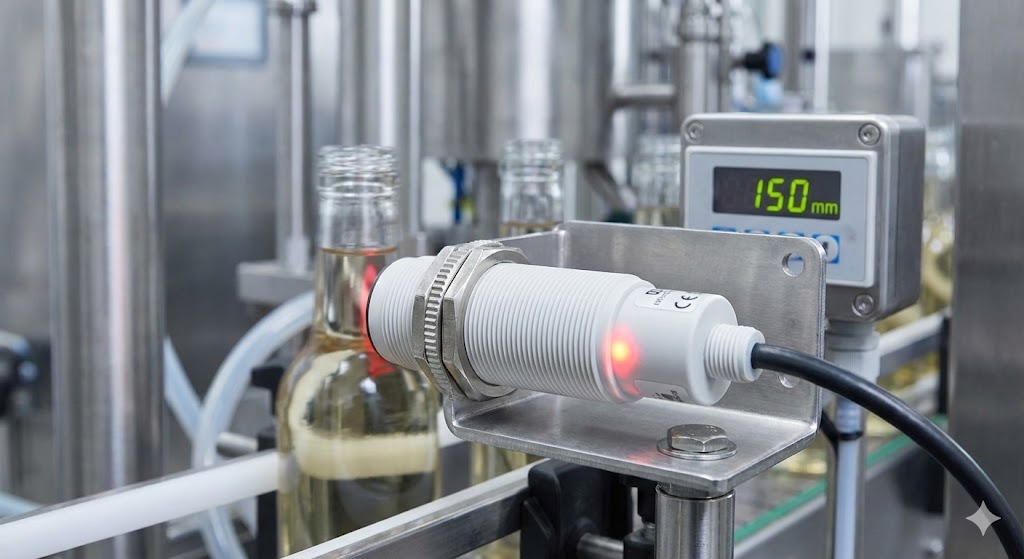
When selecting an ultrasonic sensor for a specific task, several parameters must be carefully considered. The sensing range is the most obvious; ensure the sensor's minimum and maximum distances cover your application needs. The beam angle determines the width of the detection cone. A narrow beam is ideal for precise detection of small objects, while a wide beam is better for area monitoring. Output type is crucial for integration: analog outputs (e.g., 4-20 mA, 0-10 V) provide continuous distance data, while discrete outputs (e.g., NPN/PNP) offer simple on/off switching at a set threshold. Response time indicates how quickly the sensor can take a new measurement, which is critical for high-speed processes.
Environmental factors also play a significant role. Operating temperature ranges must be compatible with the installation environment. While resistant to many interferences, extremely noisy environments with loud sounds in the sensor's frequency band can cause false readings. The target material itself matters; soft, sound-absorbing materials like foam or fabric may not reflect enough sound for reliable detection. Finally, the physical housing of the sensor is chosen based on the required ingress protection (IP rating) against dust and water.

In conclusion, ultrasonic proximity sensors offer a robust and adaptable solution for non-contact detection and ranging. Their ability to function reliably under diverse conditions, coupled with their straightforward operating principle, makes them an indispensable component in modern automated systems. By understanding their capabilities and carefully matching specifications like range, beam angle, and output to the application's demands, engineers and designers can effectively harness this technology to create smarter, safer, and more efficient machines and environments.