In the world of industrial automation, logistics, and smart systems, the ability to accurately detect the presence of an object and count its passages is fundamental. This is where proximity counting sensors come into play. These specialized devices are the unsung heroes behind efficient production lines, automated warehouses, and numerous everyday applications where reliability and precision are non-negotiable.
At its core, a proximity counting sensor is a device that detects the presence or absence of an object within a specific range without physical contact and, integrated with a counting circuit or software, tallies each detection event. The "proximity" aspect refers to the non-contact detection method, which is crucial for preventing wear and tear, maintaining hygiene, or handling delicate items. The "counting" function transforms a simple detection event into quantifiable data, enabling process control and monitoring.
The technology behind these sensors varies, primarily based on the type of proximity detection employed. The most common types include Inductive, Capacitive, and Photoelectric sensors, each with distinct operating principles and ideal use cases.
Inductive proximity sensors are the workhorses in metal detection. They generate an electromagnetic field. When a metallic object enters this field, it induces eddy currents within the metal, which in turn cause a change in the sensor's own oscillation amplitude. The sensor's circuitry detects this change and triggers a switching signal. These sensors are incredibly robust, resistant to dirt, oil, and water, making them perfect for harsh industrial environments like automotive manufacturing or metal machining. Counting tasks could involve tracking metal components on a conveyor or monitoring the output of a stamping press.
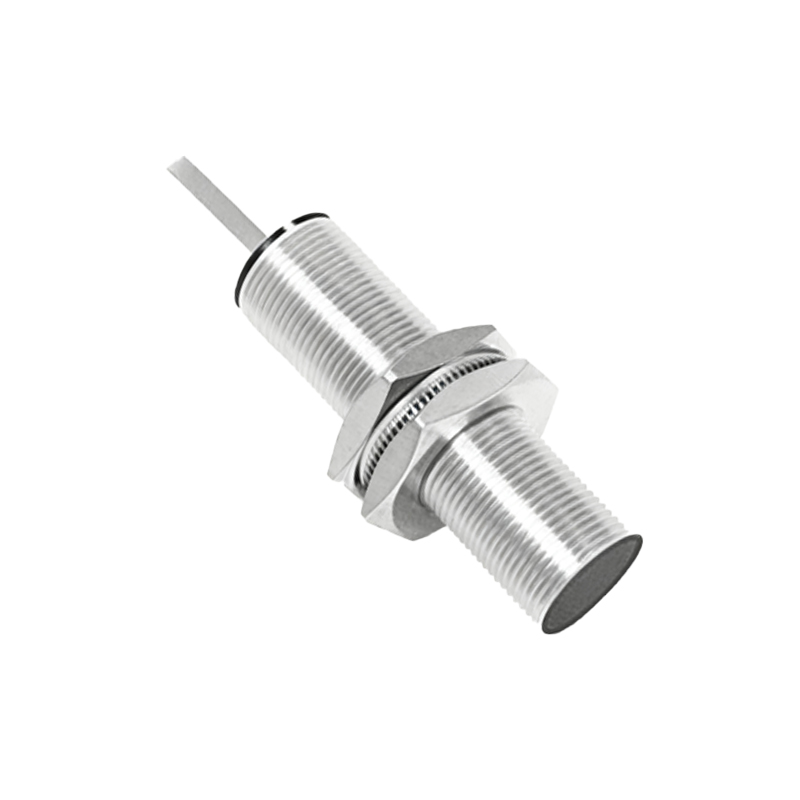
Capacitive proximity sensors, on the other hand, can detect both metallic and non-metallic materials—liquids, plastics, wood, or granules. They function by generating an electrostatic field. Any object that enters this field alters the capacitance of the sensor's circuit, triggering an output. This makes them versatile for applications in food and beverage processing (counting bottles, detecting fill levels), packaging, or woodworking. A capacitive sensor could count cardboard boxes on a line or monitor the level of a liquid in a tank by counting the "absence" events as the level drops.
Photoelectric sensors operate on a beam of light, typically infrared. The most common setup for counting is the through-beam type, where a separate emitter and receiver are aligned. An object passing between them breaks the beam, causing a detection. Diffuse reflective models use a single unit that emits light and detects the reflection from the target object. These sensors offer the longest detection ranges and are excellent for counting fast-moving, small, or non-metallic items. You'll find them counting products on high-speed bottling lines, parcels on sorting belts, or people passing through an entrance (as part of a safety or occupancy system).
The counting functionality itself is often not a standalone feature of the basic sensor. It is typically achieved by connecting the sensor's digital output signal (a simple ON/OFF pulse) to a counter device. This can be a dedicated electronic counter, a programmable logic controller (PLC), or a software application running on a computer or embedded system. Each time the sensor detects an object, it sends a brief pulse. The counter registers this pulse and increments its total. Modern smart sensors may have this counting logic and a digital display integrated directly into the sensor housing, simplifying installation.
The applications of proximity counting sensors are vast and critical. In manufacturing, they provide real-time production data, count finished goods, and monitor component feed rates to prevent machine jams. In automotive assembly, they ensure the correct number of parts, like bolts or gears, are present. In logistics and warehousing, they track inventory by counting boxes moving on conveyors through portals. In parking garages, they count vehicles entering and exiting. Even in agriculture, they can count fruits on sorting lines or monitor the flow of grain.
Selecting the right sensor requires careful consideration. Key factors include the material of the target object (metal, plastic, liquid), the required sensing distance, the operating environment (temperature, presence of contaminants), the speed of the objects to be counted, and the needed output interface. For instance, a wet, dusty environment would rule out optical sensors without proper protection (rated IP67 or higher), while counting plastic vials would necessitate a capacitive or photoelectric solution over an inductive one.
In conclusion, proximity counting sensors are a vital fusion of sensing technology and data acquisition. They bridge the physical world of objects with the digital world of information and control. By providing accurate, reliable, and non-contact counting, they form the backbone of automated efficiency, quality control, and operational intelligence across countless industries, ensuring processes run smoothly and data flows continuously.