In the world of automation, safety, and smart devices, the ability to detect the presence or absence of an object without physical contact is fundamental. This capability is provided by proximity sensors, a diverse family of electronic devices that have become ubiquitous in industrial and consumer applications. Their core function is to sense when an object enters their detection field and convert this event into an electrical signal, triggering a predefined action.
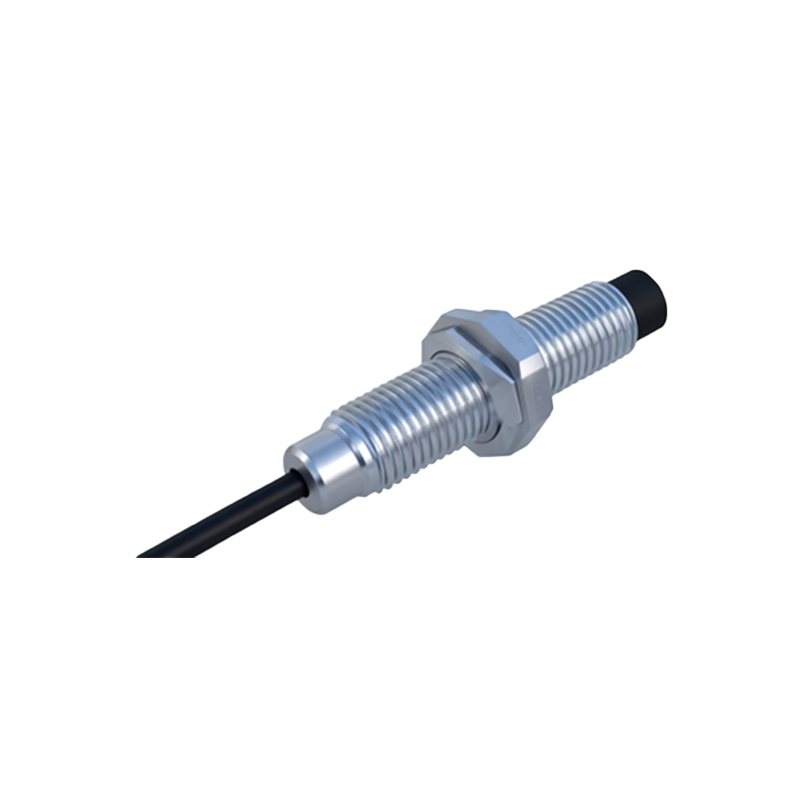
The principle of operation varies significantly between different types of proximity sensors, each suited to specific materials, environments, and detection ranges. Inductive proximity sensors are among the most common in industrial settings. They generate an electromagnetic field and detect changes caused by metallic objects entering that field. Robust, reliable, and unaffected by dust or oil, they are ideal for counting metal parts, determining position limits on machinery, or confirming the closure of a metal door. However, their limitation is clear: they only detect metals, primarily ferrous ones like steel and iron.
For non-metallic objects, capacitive proximity sensors are the tool of choice. These sensors can detect almost any material—plastics, wood, liquids, powders, and even human hands—by measuring changes in capacitance. When an object enters the sensing area, it alters the sensor's electrostatic field, triggering detection. This makes them perfect for level detection in tanks (liquid or granular), material handling, and touch-sensitive interfaces. Their sensitivity can often be adjusted, which is useful but requires careful tuning to avoid false triggers from environmental humidity or unintended objects.
Another widely used category is photoelectric sensors. These operate by emitting a beam of light (visible, infrared, or laser) and detecting its reflection or interruption. They offer the longest sensing ranges among standard proximity sensors. There are three main configurations: through-beam (separate emitter and receiver), retro-reflective (bounces light off a reflector), and diffuse (reflects light directly off the target object). Photoelectric sensors excel at detecting small objects, seeing through transparent materials, and working in clean environments. However, their performance can be compromised by ambient light, dust, fog, or dirt on the lens.
For applications requiring extreme precision in distance measurement, ultrasonic sensors use sound waves. They emit high-frequency ultrasonic pulses and calculate distance by measuring the time it takes for the echo to return. Unlike optical sensors, they are largely unaffected by color, transparency, or ambient light, making them excellent for detecting clear glass, liquid levels in challenging conditions, or objects in dusty environments. Their downside can be a slower response time and potential interference from soft materials that absorb sound.
The selection of the right proximity sensor is critical for system reliability. Key factors include the target material, required sensing distance, environmental conditions (temperature, presence of contaminants), response speed, output type (digital or analog), and electrical requirements. For instance, a packaging line detecting cardboard boxes would use a capacitive or diffuse photoelectric sensor, while a CNC machine tool checking for a metal fixture would employ an inductive sensor.
Beyond factories, proximity sensors are integral to daily life. They enable touchless faucets and soap dispensers, automatic doors in supermarkets, screen blanking in smartphones when held to the ear, and obstacle detection in robots and vehicles. In advanced automotive systems, they form the basis of parking assist features.
In summary, proximity sensors are the silent sentinels of modern technology. From ensuring worker safety by monitoring guard doors to enabling the convenience of hands-free devices, their role is indispensable. Understanding their distinct technologies—inductive, capacitive, photoelectric, and ultrasonic—allows engineers and designers to implement robust, efficient, and intelligent sensing solutions across countless applications. As technology evolves, these sensors continue to become smaller, smarter, and more integrated, further expanding the boundaries of what can be automatically detected and controlled.