In the world of industrial automation, robotics, and precision machinery, the ability to detect the presence, absence, or position of an object without physical contact is paramount. Among the various non-contact sensing technologies, the differential proximity sensor stands out for its unique capability to measure subtle changes in distance or detect minute differences in target characteristics. Unlike standard proximity sensors that provide a simple on/off signal based on a preset threshold, differential sensors output a signal proportional to the difference between two measured values or states. This fundamental principle unlocks a higher level of precision and functionality for demanding applications.
At its core, a differential proximity sensor typically involves two sensing elements or operates in a comparative mode. The most common implementation utilizes two inductive or capacitive sensing coils placed in close proximity. Instead of each coil producing an independent switch signal, their outputs are compared electronically. The sensor's final output is derived from the difference between the signals from these two points. For instance, in an inductive differential sensor, when a metallic target affects both coils equally—such as when it is centered or far away—the differential output is near zero. However, if the target moves closer to one coil than the other, it creates an imbalance. This imbalance generates a proportional analog voltage or current output, indicating not just presence, but the direction and magnitude of displacement.
This operational principle confers several key advantages. First and foremost is high sensitivity to positional change. Differential sensors excel at detecting edge guidance, runout (eccentricity), vibration, or tiny variations in thickness. They can effectively ignore common-mode interference, such as temperature drift or gradual changes in material properties that affect both sensing elements similarly, thereby enhancing long-term stability and accuracy. Furthermore, they are exceptionally good at discriminating between target and background. In a noisy environment with surrounding metal or varying conditions, the differential measurement can cancel out the background "noise," focusing only on the specific differential change caused by the target.
The applications for differential proximity sensors are diverse and critical in precision-dependent industries. A primary use is in position and displacement control within servo systems. They provide the continuous feedback needed for ultra-precise positioning of slides, spindles, or tools. In the automotive sector, they are employed for real-time monitoring of crankshaft or camshaft position and detecting minute axial play in bearings. The manufacturing of thin materials, such as paper, plastic films, or metal foils, relies on these sensors for thickness gauging. By placing sensors on opposite sides of the material, the system can measure thickness variations with remarkable accuracy by calculating the differential distance to each surface.
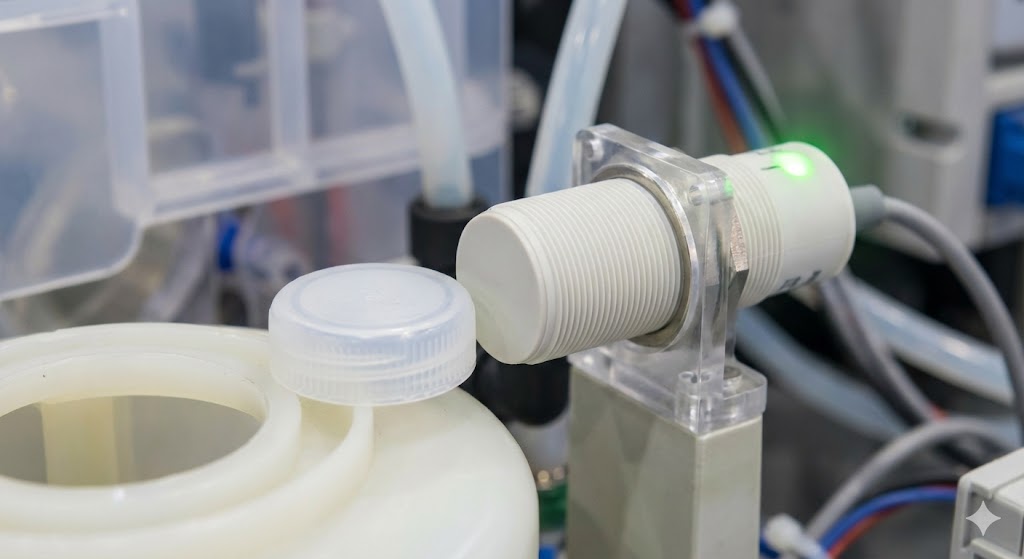
Another significant application is in vibration analysis and condition monitoring. Mounted on machinery, a differential sensor can detect subtle changes in the vibration signature of a rotating shaft or bearing, providing early warning of misalignment, imbalance, or wear long before failure occurs. They are also integral to assembly verification, where they can confirm the precise insertion of a pin, the presence of a specific component feature, or the correct orientation of a part by sensing asymmetrical profiles.
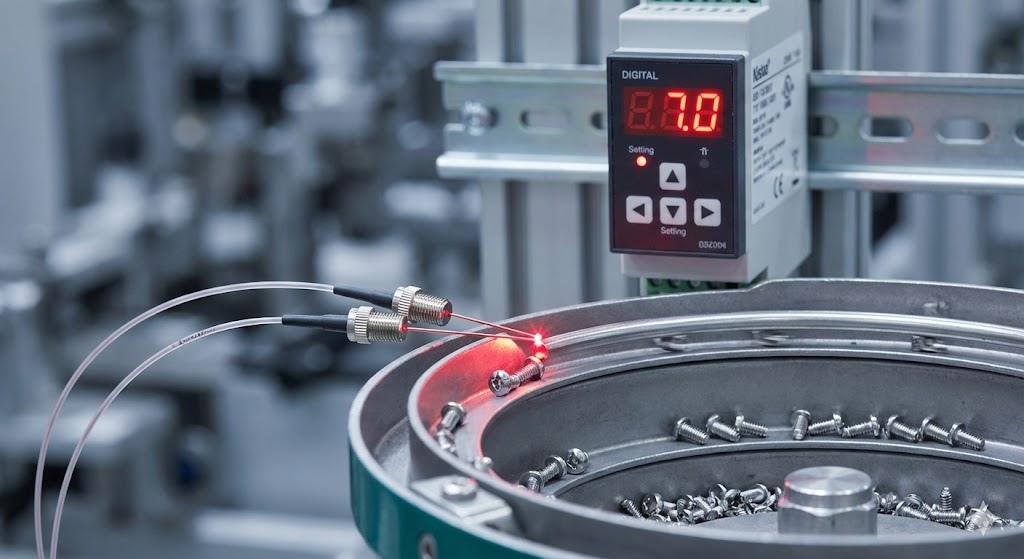
Selecting the right differential proximity sensor requires careful consideration of several parameters. The sensing technology is the first choice: inductive types for metallic targets and capacitive types for non-metallic materials, liquids, or detection through certain barriers. Measurement range is typically smaller than that of standard sensors, often in the sub-millimeter to a few millimeters scale, prioritizing precision over distance. The output signal is crucial; most provide analog outputs like 0-10V or 4-20mA, but some digital or IO-Link versions offer easier integration and diagnostics. Resolution and repeatability define the smallest detectable change and the consistency of measurement, respectively—key specs for high-precision tasks. Environmental factors such as temperature rating, ingress protection (IP rating), and resistance to electromagnetic interference must align with the operating conditions. Finally, the mechanical form factor—threaded barrel, rectangular block, or specialized shape—must suit the mounting constraints of the application.
Installation and calibration are critical steps to harness the full potential of a differential sensor. Proper alignment relative to the target is essential, as any angular misalignment can introduce measurement error. The sensor should be mounted rigidly to avoid vibration-induced noise. Initial calibration, often involving setting a "zero" point at a known reference position, ensures the output scale accurately reflects the physical displacement. Many modern sensors feature built-in diagnostics and teach-in functions to simplify this process.
In conclusion, differential proximity sensors represent a sophisticated tier of sensing technology designed for applications where nuance matters. By measuring the difference between two points, they provide a layer of information and immunity to interference that standard sensors cannot match. From ensuring the flawless thickness of consumer electronics components to safeguarding the health of massive industrial turbines, their role is