Time-of-flight (TOF) sensors are rapidly becoming a cornerstone technology in modern electronics, enabling devices to perceive depth and distance with remarkable accuracy. Unlike traditional 2D cameras that capture color and light intensity, a TOF sensor measures the time it takes for light to travel from the sensor to an object and back. This simple principle unlocks a world of three-dimensional sensing, powering applications from smartphone photography to industrial automation.
At its core, a TOF system consists of a light source, typically an infrared laser or LED, and a specialized sensor. The system emits a modulated light signal—often pulses or a continuous wave—towards a scene. Each photon of this light bounces off objects in its path and returns to the sensor. The sensor's sophisticated circuitry doesn't just capture the light; it precisely measures the phase shift or the delay between the emitted and reflected signals. Since the speed of light is a known constant, the sensor can calculate the distance to the object using the formula: Distance = (Speed of Light × Time Delay) / 2. This process happens millions of times per second, generating a detailed depth map, or point cloud, of the entire scene.
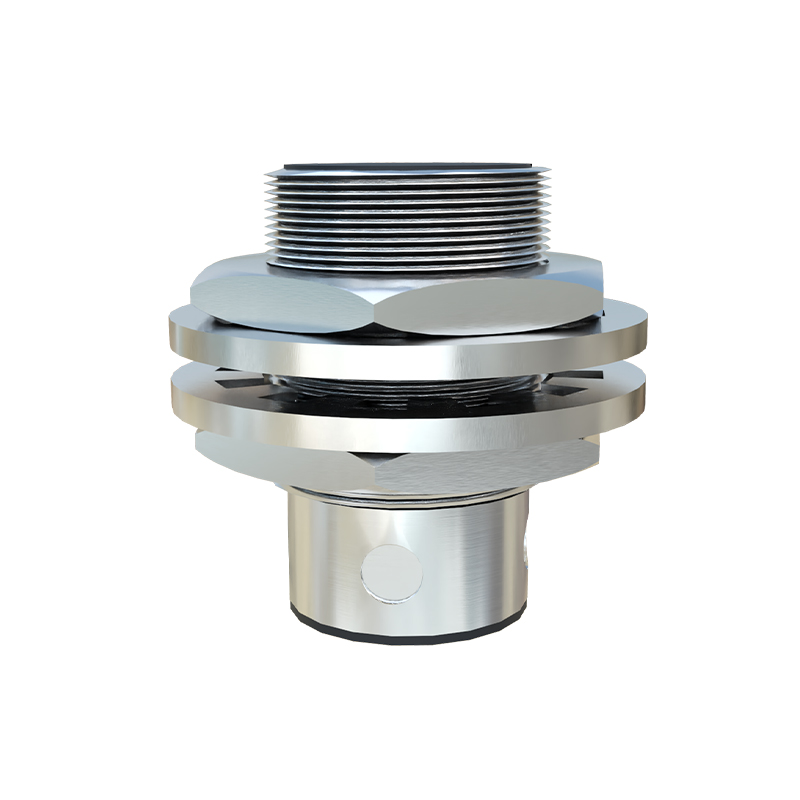
There are two primary types of TOF sensors: direct and indirect. Direct Time-of-Flight (dTOF) sensors measure the exact round-trip time of a short light pulse. They are exceptionally accurate over very long ranges and are the technology behind LiDAR systems used in autonomous vehicles. Indirect Time-of-Flight (iTOF) sensors, more common in consumer electronics, work by emitting a continuous modulated light wave. They measure the phase difference between the outgoing and incoming waves to calculate distance. iTOF sensors are excellent for shorter ranges and offer a good balance of performance, cost, and power efficiency.
The advantages of TOF sensors are numerous. They provide real-time depth information, are largely unaffected by ambient light conditions when properly calibrated, and can operate accurately in complete darkness since they use their own active illumination. Furthermore, the depth data is computationally simpler to process than stereo vision systems, which require complex algorithms to match points between two camera images.
The applications for this technology are vast and growing. In the consumer space, TOF sensors are the hidden force behind smartphone features like portrait mode bokeh effects, faster and more secure facial recognition, and augmented reality (AR) experiences that realistically interact with the physical world. In robotics, they provide essential navigation and obstacle avoidance capabilities, allowing robots to understand and move through dynamic environments safely.
Beyond these, TOF sensors are revolutionizing industries. In automotive, they are critical components for advanced driver-assistance systems (ADAS), enabling features like adaptive cruise control and emergency braking. In logistics and manufacturing, TOF cameras mounted on robots facilitate precise bin picking, package dimensioning, and quality control on assembly lines. Even in healthcare, TOF technology is being explored for patient monitoring, touchless interfaces in sterile environments, and advanced surgical guidance systems.
However, implementing TOF sensing is not without challenges. Multi-path interference, where light reflects off multiple surfaces before returning, can cause measurement errors. Highly reflective or absorbent surfaces can also distort readings. Manufacturers continuously work on advanced signal processing techniques and multi-frequency modulation to overcome these limitations. System integration, power consumption, and cost remain key considerations for widespread adoption in all market segments.
Looking ahead, the future of TOF sensors is intertwined with advancements in complementary fields. The development of more powerful and efficient vertical-cavity surface-emitting lasers (VCSELs) as light sources will enhance performance. Improvements in CMOS sensor technology will increase resolution and frame rates while reducing noise. Furthermore, the fusion of TOF data with inputs from RGB cameras, inertial measurement units (IMUs), and radar will be crucial for creating robust perception systems for autonomous machines and the metaverse.
In conclusion, TOF sensors represent a fundamental shift from passive 2D imaging to active 3D perception. By precisely measuring the journey of light, they give machines a profound understanding of spatial relationships. As the technology matures, becomes smaller, and more cost-effective, its integration into our devices and environments will deepen, quietly enabling a smarter, more interactive, and automated world. From the phone in your pocket to the car on the road, TOF sensors are helping machines see the world not just as a flat picture, but as a space to navigate, measure, and interact with.