Distance measurement is a fundamental requirement across numerous industries, from robotics and automation to consumer electronics and automotive safety systems. Two of the most prevalent technologies for non-contact distance sensing are infrared (IR) and laser-based sensors. While they share a common goal, their underlying principles, performance characteristics, and ideal applications differ significantly. Understanding these differences is crucial for engineers, designers, and hobbyists to select the optimal sensor for their specific project needs.
Infrared distance sensors typically operate on the principle of triangulation or intensity measurement. A common type emits a beam of infrared light from an LED. This light reflects off the target object and is focused onto a position-sensitive detector (PSD) or a simple photodiode. The angle or intensity of the reflected light changes with distance, allowing the sensor's internal circuitry to calculate the range. These sensors are generally cost-effective, compact, and consume relatively low power. They perform well for short to medium-range applications, typically from a few centimeters up to several meters, depending on the model. However, their accuracy and reliability can be influenced by ambient light conditions, the color and reflectivity of the target surface, and environmental factors like dust or fog. A black, non-reflective surface may absorb too much IR light, leading to poor or failed readings.
Laser distance sensors, most commonly using Laser Diode (LD) or Vertical-Cavity Surface-Emitting Laser (VCSEL) sources, often employ a time-of-flight (ToF) or phase-shift measurement principle. The sensor emits a highly focused laser pulse towards the target. A precise timer measures the time it takes for the pulse to reflect back to a receiver. Since the speed of light is constant, the distance can be calculated with high accuracy. This method allows for much longer measurement ranges, from centimeters to hundreds of meters. The key advantages of laser sensors include superior accuracy, precision, and a very small, well-defined measurement spot. They are far less susceptible to target color and ambient light interference compared to basic IR sensors. However, these benefits come at a higher cost, increased power consumption, and greater complexity. Safety is also a consideration, as higher-power laser classes require careful handling to prevent eye damage.
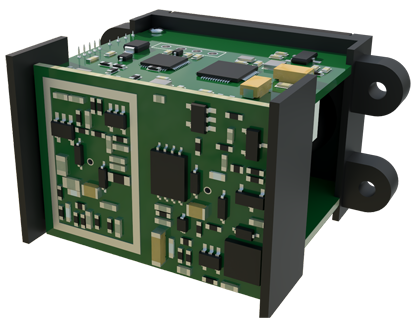
The choice between IR and laser hinges on the application's specific demands. For cost-sensitive, short-range applications where moderate accuracy is sufficient—such as obstacle avoidance in small robots, liquid level detection, or proximity sensing in appliances—infrared sensors are an excellent choice. Their simplicity and robustness in controlled environments make them widely popular.
Conversely, laser sensors are indispensable in scenarios demanding high precision and long range. They are the technology of choice for industrial automation tasks like precise positioning, bin picking, and warehouse logistics where robots need to locate items accurately. In construction, handheld laser distance meters have largely replaced tape measures. Advanced driver-assistance systems (ADAS) like adaptive cruise control increasingly rely on LiDAR (Light Detection and Ranging), a sophisticated form of laser scanning, to create detailed 3D maps of the vehicle's surroundings.
A hybrid and increasingly common category is the infrared ToF sensor. These devices use an infrared light source (often a VCSEL) but apply the time-of-flight principle, blending the cost and eye-safety advantages of IR with the measurement robustness of laser ToF. They are ubiquitous in modern smartphones for facial recognition, depth sensing, and in gaming sensors like Microsoft's Kinect.
In summary, the infrared versus laser debate is not about which technology is universally better, but about which is more appropriate for the task. Infrared sensors offer a practical, economical solution for straightforward, short-range detection. Laser sensors provide a high-performance, precise tool for demanding industrial, commercial, and scientific applications. As technology advances, the lines may continue to blur, but the core trade-offs between cost, complexity, range, and accuracy will remain central to the sensor selection process for the foreseeable future.