In the demanding landscape of modern industrial automation, proximity switch sensors are indispensable components for non-contact detection of metallic and, in some cases, non-metallic objects. Among the various configurations available, the three-wire DC proximity sensor stands out for its reliability and straightforward integration. However, when operational environments involve elevated temperatures—common in foundries, glass manufacturing, plastic molding, and near engines or furnaces—standard sensors fail prematurely. This necessitates the specialized category of high-temperature resistant three-wire proximity sensors, engineered to deliver consistent performance under thermal stress.
The fundamental challenge in high-temperature applications is the degradation of electronic components and materials. Standard sensors are typically rated for an ambient temperature range of -25°C to +70°C. Exceeding these limits can lead to insulation breakdown, solder joint failure, oscillator drift, and permanent damage to the semiconductor circuitry, resulting in erratic switching, reduced sensing distance, or complete sensor failure. High-temperature variants are specifically designed to withstand ambient temperatures often ranging from -40°C up to +150°C or even 200°C for short periods, with certain specialized models pushing these boundaries further.
The design of a robust high-temperature three-wire proximity sensor revolves around several critical engineering choices. Firstly, the sensing face and housing are constructed from advanced, thermally stable materials such as high-grade PPS (Polyphenylene Sulfide), PEEK (Polyether Ether Ketone), or ceramic compounds. These materials maintain their structural integrity and dielectric properties at elevated temperatures. Secondly, the internal electronics, including the oscillator, amplifier, and output switching circuit, utilize components with high-temperature ratings. Special attention is paid to the thermal management of the ASIC (Application-Specific Integrated Circuit) and the use of high-temperature stable capacitors and resistors.
The three-wire DC design itself contributes to reliability. It requires a DC power supply (commonly 10-30V DC) and provides either a PNP (sourcing) or NPN (sinking) transistor output. The third wire is the signal line. This configuration is less susceptible to electrical noise compared to two-wire AC/DC sensors and offers stable switching characteristics. In high-temperature models, the output transistor is specifically selected for its ability to handle load current while operating at a high junction temperature. The electrical connections and cable or connector entry points are sealed with high-temperature epoxy or specialized grommets to prevent ingress of contaminants, which is often a concurrent challenge in hot environments.
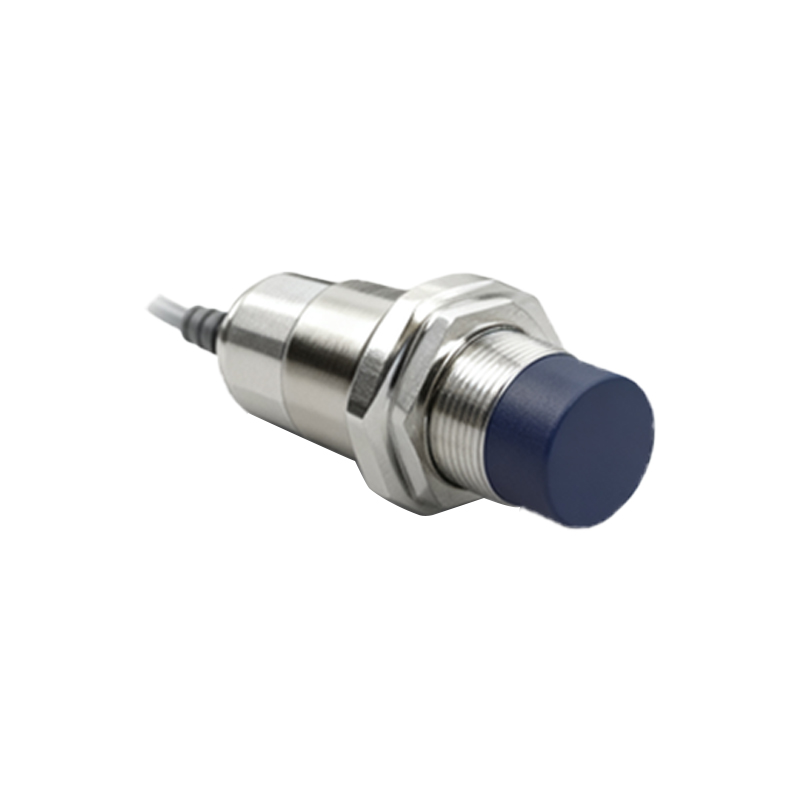
Selection criteria for these sensors extend beyond just the maximum ambient temperature rating. Engineers must consider the sensor's housing style (e.g., cylindrical barrel, rectangular), sensing distance (which can decrease slightly at extreme temperatures), IP (Ingress Protection) rating for dust and moisture, and the target material. Inductive sensors, the most common type for metal detection, are predominantly used in these harsh settings. The choice between PNP and NPN output is dictated by the control system's PLC (Programmable Logic Controller) or input card configuration. Furthermore, it is crucial to examine the sensor's datasheet for derating curves, which illustrate how the maximum switching current or sensing distance may decrease as ambient temperature increases.
Installation and maintenance practices are paramount for ensuring longevity. Even a high-temperature sensor will fail if installed improperly. Key recommendations include ensuring adequate air circulation around the sensor body to promote heat dissipation, avoiding direct exposure to radiant heat sources when possible by using thermal barriers or shields, and securing cables away from hot surfaces. Regular inspection for physical damage, carbon buildup, or degradation of the cable insulation is essential. Using factory-supplied high-temperature rated cables is non-negotiable, as standard PVC cables can melt or become brittle.
The applications for high-temperature three-wire proximity sensors are vast and critical. In die-casting and metal forging, they monitor the position of molten metal ladles, ejector pins, and die halves. In the glass industry, they detect bottles and molds on annealing lehrs. Within automotive manufacturing, they are employed near painting oven conveyors and engine test stands. In plastic injection molding, they verify mold closure and part ejection in hot molds. Their robustness ensures minimal downtime, enhances safety by providing reliable machine status, and protects expensive machinery from damage due to faulty detection.
In conclusion, the specification of a high-temperature resistant three-wire proximity sensor is a deliberate engineering decision for harsh thermal environments. It represents a fusion of advanced materials science, electronic design, and practical application knowledge. By understanding the design principles, carefully selecting based on comprehensive datasheet parameters, and adhering to strict installation guidelines, maintenance engineers and system designers can achieve unparalleled reliability in the most punishing industrial settings, safeguarding both productivity and capital investment.