In the complex landscape of modern industrial automation, the demand for reliable, long-distance proximity sensing has grown exponentially. Standard off-the-shelf sensors often fall short when faced with unique environmental challenges, specific detection ranges, or integration requirements within sophisticated machinery. This is where a customized approach to long-distance proximity sensor design becomes not just beneficial, but essential for operational efficiency, safety, and cost-effectiveness.
The core principle of a long-distance proximity sensor, typically inductive, capacitive, or ultrasonic, remains the non-contact detection of an object's presence. However, standard models are engineered for general-purpose use. Customization allows engineers to tailor every aspect of the sensor to the application's precise needs. The primary driver for customization is the required sensing range. While standard inductive sensors may reliably detect metals up to 60mm, applications in material handling, forestry, or large-scale assembly may require consistent detection at distances of several hundred millimeters or even meters. This necessitates a careful redesign of the sensor's coil geometry, oscillator circuit, and signal processing algorithms to achieve a stable and linear output over the extended range without succumbing to electromagnetic interference or temperature drift.
Environmental factors constitute another critical area for customization. Industrial settings can be harsh, involving extreme temperatures, high pressure washdowns, corrosive chemicals, or pervasive dust and particulates. A custom housing material, such as stainless steel 316L or specialized polymers, can be specified. Similarly, the sealing integrity, measured by an IP (Ingress Protection) or NEMA rating, can be engineered to IP69K standards for environments requiring frequent high-temperature, high-pressure cleaning. The internal electronics can be potted with epoxy or other compounds to withstand severe vibration and shock, common in mining or heavy vehicle applications.
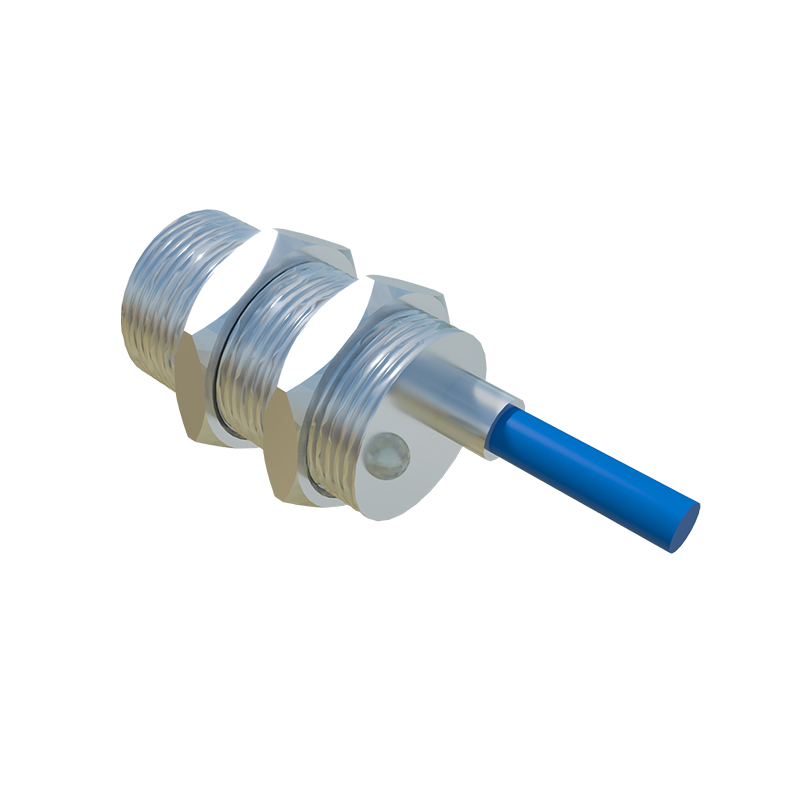
Electrical and output characteristics are equally customizable. The operating voltage range can be adjusted to match existing plant infrastructure, whether it's 10-30V DC, 24-240V AC/DC, or other specific ranges. The output type—PNP, NPN, analog (4-20mA, 0-10V), or IO-Link digital communication—can be selected to interface seamlessly with the host PLC or controller. For smart factory applications, integrating IO-Link capability into a custom long-distance sensor provides valuable diagnostic data, such as operating hours, temperature warnings, and signal strength, enabling predictive maintenance.
Mechanical integration is often a decisive factor. The sensor's form factor—its size, shape, and mounting style—may need to fit into a confined space or a specific mounting bracket on legacy equipment. Custom designs can feature elongated housings, right-angle heads, or specialized mounting threads. The sensing face material and orientation can also be modified. For instance, in applications detecting non-metallic materials like wood, paper, or liquids at a distance, a capacitive sensor variant would be customized with a larger active surface area and tuned to the specific dielectric constant of the target material.
The development process for a customized long-distance proximity sensor is collaborative. It begins with a detailed application analysis: defining the target material, required sensing distance, environmental conditions, response time, and output needs. Prototyping and rigorous testing in simulated or real-world conditions follow to validate performance. This phase is crucial for fine-tuning sensitivity and ensuring immunity to neighboring metal objects or electrical noise. Finally, production involves quality control procedures tailored to the custom specifications, ensuring each unit delivers consistent, reliable performance.
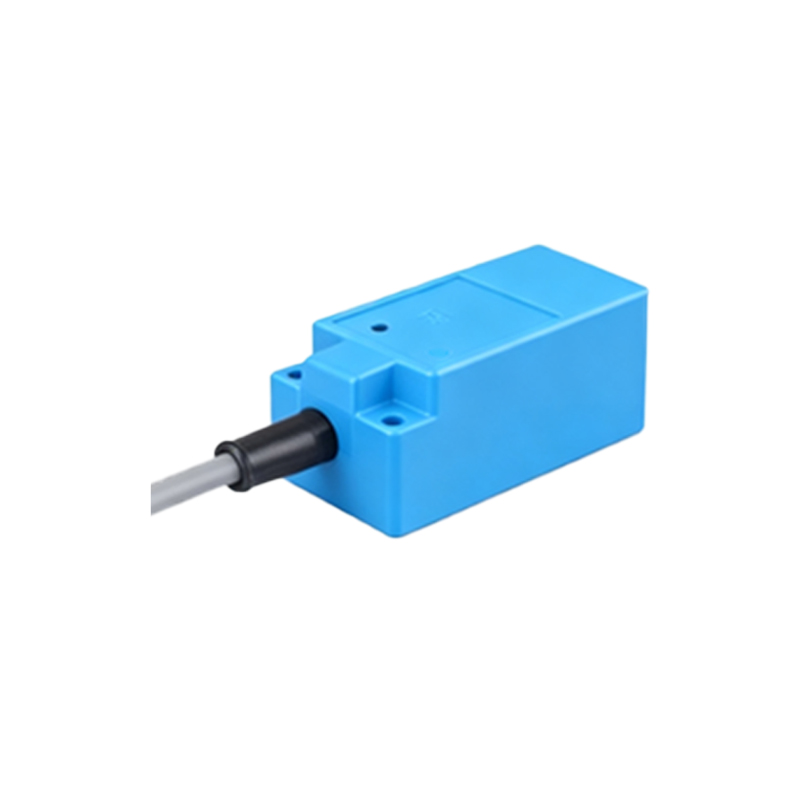
Ultimately, investing in a customized long-distance proximity sensor solution addresses the limitations of standard products. It optimizes system performance by reducing false triggers and missed detections, enhances durability in challenging environments, and simplifies integration. For engineers and plant managers, this translates into increased machine uptime, reduced maintenance costs, and greater overall process reliability. By partnering with a sensor manufacturer possessing deep application engineering expertise, industries can unlock precise, robust sensing solutions that are perfectly aligned with their unique operational demands, driving innovation and productivity on the factory floor and beyond.