In the realm of industrial automation and control systems, proximity switch sensors are indispensable components for non-contact detection. Among the various specifications and model codes, the designation "M1" frequently appears, prompting questions about its specific meaning. This article delves into the technical interpretation of "M1" in the context of proximity sensors, clarifying common industry usage and its practical implications for selection and application.
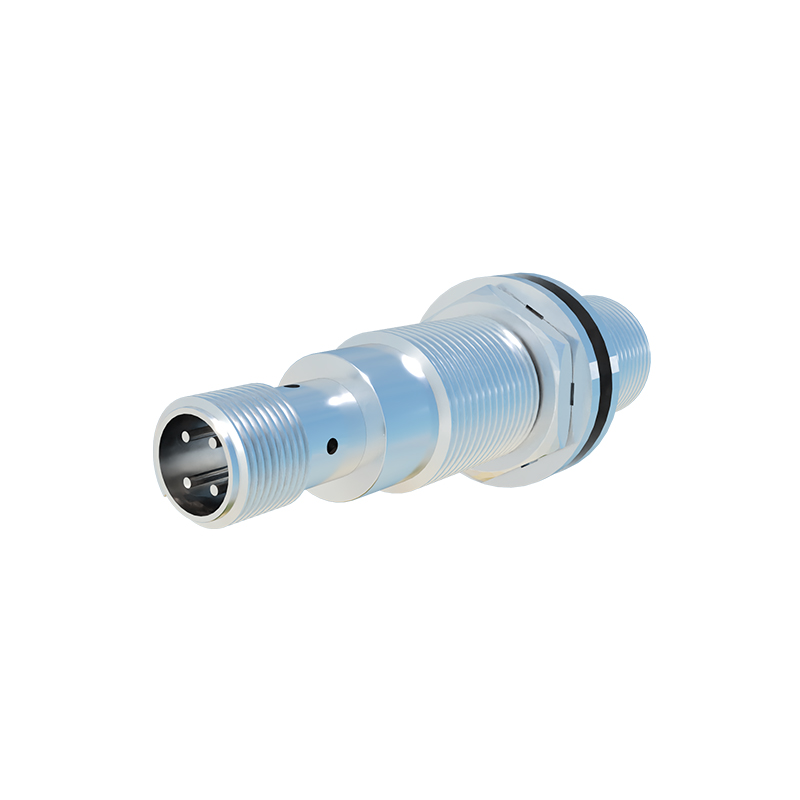
Primarily, the "M1" marking on a proximity sensor is not a universal standard defined by a single international body like IEC or ISO. Instead, its meaning is largely manufacturer-specific and must be interpreted within the context of the particular brand's product coding system. However, through prevalent industry practice, "M1" most commonly refers to the Mounting Style or Mounting Type of the sensor. Specifically, it often denotes a standard cylindrical housing with metric threads, such as M8, M12, M18, or M30. The "M" stands for "Metric," and the subsequent number can sometimes relate to a specific thread size or a series within that manufacturer's lineup. For instance, a sensor labeled as part of an "M1 series" might indicate a family of sensors with an M12 threaded barrel.
Beyond mounting, "M1" can occasionally represent other characteristics depending on the manufacturer. It might indicate a specific Sensing Distance. Some manufacturers use alphanumeric codes where "M" could stand for "Medium" range, and "1" specifies a particular distance, like 1mm, 2mm, or 5mm, though this is less common and always detailed in the datasheet. Another possible interpretation links to the Output Configuration. In some coding systems, "M" might signify a certain output type (e.g., NPN or PNP transistor output), with the number "1" specifying a normally-open (NO) or normally-closed (NC) contact logic. For example, M1 could mean an NPN normally-open output, while M2 might indicate an NPN normally-closed output.

The electrical output is a critical factor. Many proximity sensors with an "M1" designation are likely to feature a 3-wire DC configuration. This is the most common setup in modern industrial settings, providing either a sinking (NPN) or sourcing (PNP) transistor output. The "1" in this context might differentiate it from a 2-wire AC/DC version (which might be coded differently) or a 4-20mA analog output variant. It is paramount to consult the manufacturer's technical documentation to confirm the exact output type, voltage range, and current capacity.
Understanding the "M1" code is crucial for correct Sensor Selection and Integration. If it denotes an M12 threaded barrel, it ensures compatibility with standard M12 mounting nuts and holes in machine fixtures. Misinterpretation can lead to procurement errors, installation difficulties, or even mechanical damage. For electrical integration, knowing whether "M1" corresponds to an NPN or PNP output is essential for proper wiring to the PLC (Programmable Logic Controller) or other control devices. Incorrect matching can result in circuit malfunction or damage.
Therefore, the definitive guide to deciphering "M1" is always the Manufacturer's Datasheet and Catalog. Reputable brands like Siemens, Omron, Pepperl+Fuchs, Turck, and Schneider Electric provide detailed product nomenclature keys. A typical product code might look like "IM12-04BPS-M1." Here, "IM12" could indicate an inductive sensor with an M12 body, "04BPS" might specify sensing distance and output, and the suffix "-M1" would be defined in the manufacturer's key, perhaps meaning "M12x1 connector, PNP NO output." Never assume the meaning across different brands.

In application, whether for object detection on a conveyor, position sensing on a robotic arm, or counting parts in an assembly line, the correct interpretation of model codes like "M1" ensures reliability. It affects the sensor's mechanical fit, environmental sealing (IP rating often relates to housing type), electrical interface, and ultimately, the stability of the entire control loop. Engineers and technicians must prioritize verifying these specifications from official sources over relying on generic assumptions.
In conclusion, while "M1" in proximity sensors commonly points to a metric-threaded cylindrical mounting style, its precise definition is not monolithic. It serves as a vital piece of a larger product identification puzzle, potentially encompassing details on housing, thread size, sensing range, and output logic. The cornerstone of effective automation design lies in meticulous attention to such manufacturer-specific codifications, ensuring seamless hardware selection and system interoperability.