In the realm of industrial automation and control systems, the reliable detection of metallic objects is a fundamental requirement. Among the various technologies available, metal sensing proximity switch sensors, often designated with model codes like CNTD, stand out for their robustness, non-contact operation, and versatility. This article delves into the operational principles, key characteristics, typical applications, and critical selection criteria for these indispensable electronic components.
At its core, a metal sensing proximity switch, such as those in a CNTD series, is an inductive proximity sensor. It operates on the principle of electromagnetic induction. The sensor contains an oscillator circuit that generates a high-frequency alternating magnetic field from its sensing face. When a metallic object enters this active field, eddy currents are induced on the surface of the target. These eddy currents draw energy from the oscillator, causing a reduction in its oscillation amplitude. An internal evaluation circuit detects this change and triggers a solid-state output switch, typically providing a clean, bounce-free signal to a programmable logic controller (PLC) or other control unit. This entire process occurs without any physical contact, eliminating mechanical wear and ensuring a long operational life.
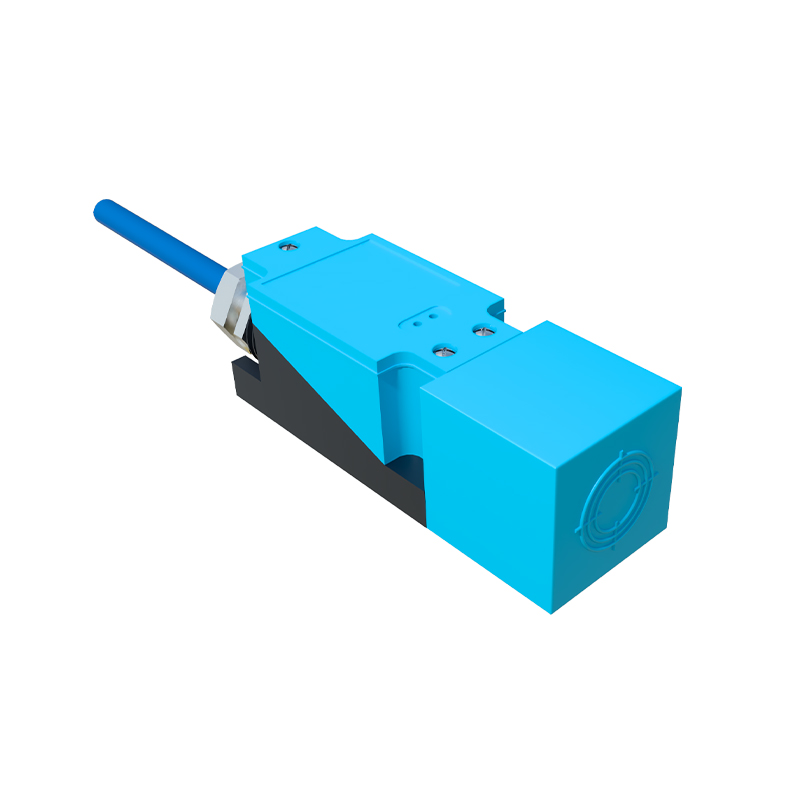
Key performance parameters define the suitability of a CNTD-type sensor for specific tasks. The sensing distance, or nominal range, is a primary specification, indicating the standard distance at which a standard target (usually a square of mild steel) can be reliably detected. It is crucial to note that this range is affected by the target material; for instance, the sensing distance for stainless steel or aluminum is often reduced compared to mild steel. Another vital characteristic is the switching frequency, which denotes how many on/off cycles the sensor can perform per second, a critical factor in high-speed applications. Environmental ratings, particularly the Ingress Protection (IP) code (e.g., IP67), are essential for ensuring reliability in harsh conditions involving dust, coolants, or washdowns. The output configuration, whether NPN (sinking) or PNP (sourcing), and the output type (normally open or normally closed) must be compatible with the control system's input module.
The applications for metal inductive proximity sensors like the CNTD series are vast and span across numerous industries. In automotive manufacturing, they are used for part presence verification on assembly lines, robotic arm positioning, and end-of-travel detection. In material handling and packaging, these sensors count metallic products, detect the position of pallets on conveyors, and monitor fill levels in metal containers. Machine tooling relies on them for tool breakage detection, spindle positioning, and workpiece clamping confirmation. Their inherent resistance to contaminants makes them ideal for use in metalworking, where cutting fluids and metal chips are prevalent.
Selecting the right sensor requires careful consideration of several factors beyond just the sensing range. First, identify the target material and its approximate size, as this directly impacts the effective sensing distance. The installation environment is paramount; sensors for washdown areas in food processing require high IP ratings (e.g., IP69K) and often stainless-steel housings. Electrical compatibility is non-negotiable; the sensor's operating voltage (commonly 10-30V DC) and output type must match the control system. Physical constraints, such as available space, may dictate the choice of a cylindrical, rectangular, or ring-shaped housing. For specialized needs, factors like weld-field immunity (for environments near resistance welding), high-temperature tolerance, or extended sensing ranges might necessitate specific sensor variants.
In conclusion, metal sensing inductive proximity switch sensors, exemplified by series like CNTD, are critical enablers of modern industrial automation. Their non-contact, wear-free detection of ferrous and non-ferrous metals provides reliability and precision in countless control and safety functions. A thorough understanding of their operating principle, coupled with a systematic approach to selection based on target properties, environmental conditions, and electrical requirements, ensures optimal performance and longevity in any application. As technology advances, these sensors continue to evolve, offering smarter diagnostics, longer ranges, and greater resilience, solidifying their role as a cornerstone of efficient and safe industrial operations.