In the realm of industrial automation and precision measurement, the advent of 100-meter laser sensors marks a significant technological leap. These advanced devices, often based on time-of-flight (ToF) or phase-shift measurement principles, have transcended the limitations of traditional short-range sensors, opening new frontiers for applications demanding accuracy over vast distances. Unlike conventional proximity sensors confined to a few meters, 100-meter laser sensors project a highly collimated beam capable of delivering reliable data at extreme ranges, fundamentally changing how industries monitor, control, and optimize large-scale processes.
The core technology enabling this capability is sophisticated laser diode emission and high-sensitivity photodetector reception. The sensor emits a pulsed or modulated laser beam towards a target. By precisely calculating the time delay or phase difference between the emitted and reflected signals, the sensor determines the distance with remarkable accuracy, often within millimeter-level precision even at 100 meters. This performance is contingent upon several factors, including target reflectivity, environmental conditions (like ambient light and atmospheric interference), and the sensor's own signal processing algorithms. Modern units incorporate advanced filters and compensation mechanisms to mitigate these effects, ensuring stable operation in challenging industrial environments.
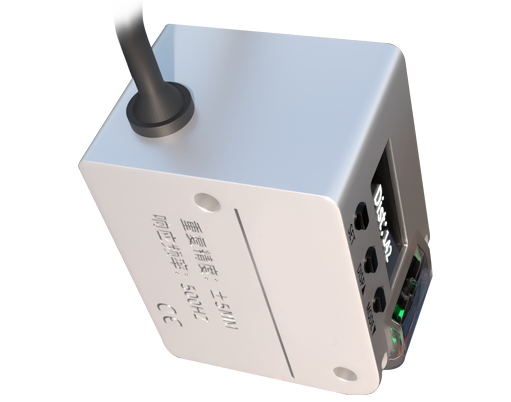
The applications for 100-meter laser sensors are diverse and transformative. In logistics and warehousing, they are indispensable for inventory management in high-bay storage systems, accurately gauging stock levels on shelves dozens of meters high. The construction and civil engineering sector utilizes them for monitoring structural deformations, crane positioning, and large-scale alignment tasks on bridges, dams, and skyscrapers. In the agricultural domain, these sensors facilitate terrain mapping and guidance for autonomous machinery across extensive fields. Furthermore, they play a critical role in port automation for container positioning and in mining for volume measurement of stockpiles, where safety and efficiency are paramount.

Selecting the appropriate 100-meter laser sensor requires careful consideration of key specifications. Range, obviously, is primary, but one must also evaluate the linearity, resolution, and repeatability of measurements. The response time or sampling rate is crucial for dynamic applications like tracking moving objects. The laser class (typically Class 1 or Class 2 for eye safety), ingress protection (IP) rating for dust and water resistance, and the robustness of the housing are vital for enduring harsh plant floors or outdoor sites. Communication interfaces—such as analog outputs (4-20 mA, 0-10 V), Ethernet, PROFINET, or IO-Link—determine seamless integration into existing control systems like PLCs.
The integration of these long-range sensors into the Industrial Internet of Things (IIoT) framework amplifies their value. By providing continuous, precise distance data to cloud platforms, they enable predictive maintenance, real-time process optimization, and comprehensive data analytics. For instance, monitoring the sag of power transmission lines over kilometers or the fill level of silos in a chemical plant becomes a streamlined, data-driven operation.
However, deployment is not without challenges. Maintaining a clear line of sight over 100 meters can be problematic in cluttered facilities. Highly absorptive or transparent targets may return weak signals. Regular lens cleaning and proper alignment are essential maintenance routines. Despite these considerations, the benefits—enhanced safety through remote monitoring, reduced downtime via precise automation, and significant gains in operational efficiency—far outweigh the hurdles.
In conclusion, 100-meter laser sensors represent a pinnacle of non-contact measurement technology. They empower industries to achieve unprecedented levels of control and insight over large-scale assets and processes. As laser technology, signal processing, and connectivity continue to advance, these sensors will undoubtedly become even more accurate, robust, and integral to the smart factories and infrastructures of the future, solidifying their role as a cornerstone of modern industrial innovation.