The TLQ5M is a high-performance inductive proximity sensor designed for demanding industrial environments. Engineered with precision and durability in mind, this sensor offers reliable non-contact detection of metallic objects. Its robust construction ensures stable operation in conditions involving vibration, temperature fluctuations, and potential exposure to industrial contaminants.
At the core of the TLQ5M's functionality is its advanced oscillation circuit and coil system. When a metallic target enters its sensing field, it induces eddy currents that dampen the oscillation amplitude. This change is detected by the sensor's circuitry, triggering a solid-state output signal. The TLQ5M typically features a shielded design, allowing for flush mounting in metal without a reduction in its nominal sensing distance. This characteristic is crucial for space-constrained installations.
Key technical specifications define its operational envelope. The sensing distance is standardized, often at 5mm for mild steel, with factors applied for other metals like stainless steel or aluminum. It operates on a wide DC voltage range, commonly 10-30V DC, ensuring compatibility with standard industrial control systems. The output configuration is typically NPN normally open (NO) or PNP, providing flexibility for different PLC input card requirements. Its switching frequency is sufficiently high for fast-moving production lines, while its housing, usually crafted from nickel-plated brass or stainless steel, offers an IP67 or higher protection rating against dust and temporary immersion.
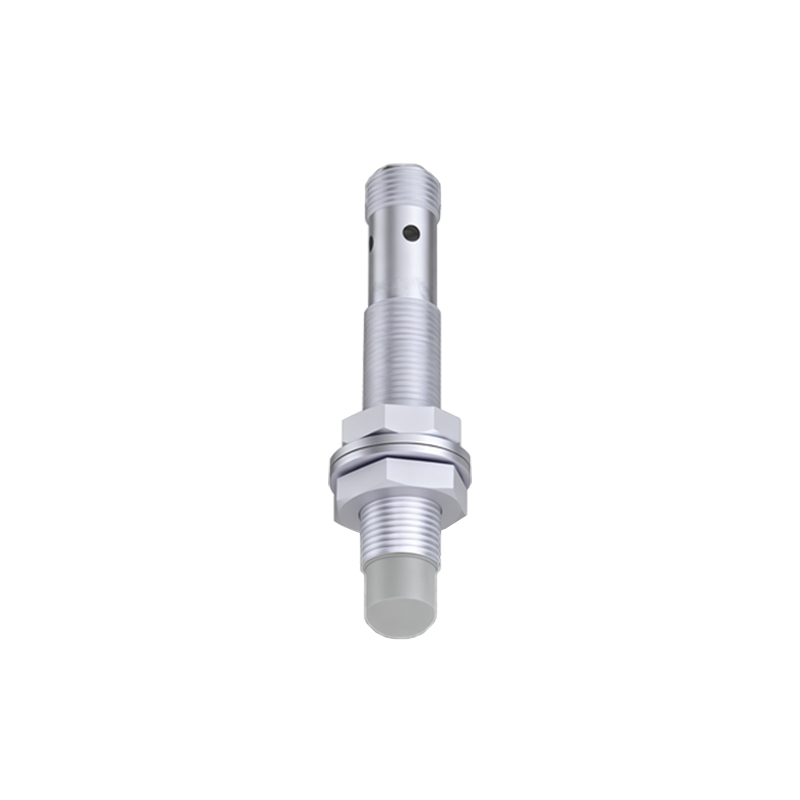
Installation and wiring follow straightforward industrial practices. The sensor is often supplied with a pre-wired cable or a quick-disconnect connector system for easy maintenance. Proper alignment with the target object is essential for optimal performance. Engineers must consider the sensor's hysteresis—the difference between the switch-on and switch-off points—to prevent chattering in control applications. Additionally, ensuring adequate clearance from surrounding metals, as per the manufacturer's datasheet, prevents false triggering.
The TLQ5M finds extensive application across automation sectors. In automotive assembly lines, it precisely detects the presence of engine blocks or chassis components. On packaging machinery, it monitors the position of metallic foils or caps. Within material handling, it acts as a limit sensor for conveyor systems or verifies the position of robotic grippers. Its reliability makes it suitable for safety-interlock systems where detecting a guard's position is paramount.
When selecting the TLQ5M for a project, engineers must evaluate the target material, size, and required sensing distance. Environmental factors such as ambient temperature, presence of cutting fluids, or welding fields necessitate careful model selection, potentially requiring specialized variants with extended temperature ranges or weld-field immunity. Regular maintenance involves checking for physical damage, buildup of metallic swarf, and verifying the output signal integrity.
In summary, the TLQ5M proximity sensor represents a robust and versatile solution for industrial object detection. Its consistent performance, coupled with a design that withstands harsh conditions, makes it a trusted component in factory automation, contributing to enhanced efficiency, safety, and process reliability. Understanding its specifications and correct application principles is key to leveraging its full potential in any control system.