In the realm of industrial automation and control systems, proximity sensors play a pivotal role in enabling non-contact detection of objects. Among the various classifications, the concept of a "10-level proximity sensor" refers to a sophisticated device capable of discerning ten distinct states or distance ranges, rather than a simple binary on/off output. This advanced functionality is crucial for applications requiring precise positioning, graded feedback, or multi-stage process control.
Traditional inductive, capacitive, or photoelectric proximity sensors typically provide a digital signal—detecting the presence or absence of a target within a specified sensing range. However, a 10-level sensor incorporates analog or specialized digital processing to differentiate between multiple proximity thresholds. For instance, it can output a signal corresponding to how close an object is, segmented into ten discrete levels. This is often achieved through technologies like analog output (e.g., 0-10V or 4-20mA), where the voltage or current magnitude correlates linearly with distance, divided into ten interpretable segments. Alternatively, some sensors use serial communication protocols (e.g., IO-Link) to transmit precise distance data, which can then be categorized into ten levels by a programmable logic controller (PLC).
The core principle involves continuous measurement of physical changes—such as magnetic field variation in inductive sensors, dielectric constant changes in capacitive types, or light intensity modulation in photoelectric versions—and converting this into a quantifiable scale. Advanced signal conditioning circuits and microprocessors filter noise and linearize the response, ensuring reliable differentiation between each level. Calibration is critical; during setup, the sensor is taught the minimum and maximum detection distances, and the interval is subdivided into ten equal or application-specific unequal zones.
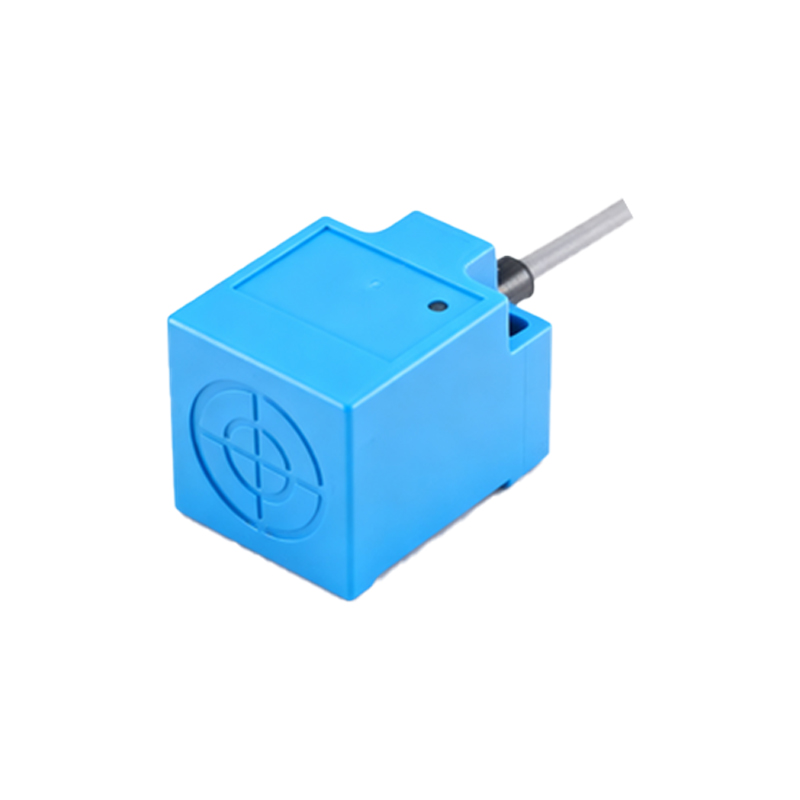
Applications for 10-level proximity sensors are extensive across industries. In automotive assembly lines, they can monitor the progressive positioning of robotic arms or verify multi-stage part insertion. In packaging machinery, such sensors gauge material roll diameters, triggering alerts at different depletion stages. They are also employed in hydraulic systems to monitor piston rod positions or in conveyor systems to manage object spacing in ten distinct proximity bands. This granular feedback allows for predictive maintenance, reducing downtime by alerting operators to trends before a failure occurs.
Selecting a 10-level proximity sensor requires careful consideration of several factors. The sensing technology must match the target material; inductive sensors are ideal for metals, capacitive for non-metals, and photoelectric for varied surfaces. Environmental conditions like temperature, humidity, and exposure to chemicals or washdowns dictate the housing material (e.g., stainless steel or PBT plastic) and ingress protection (IP) rating. Output type is another key decision: analog outputs offer simplicity, while IO-Link enables rich data exchange and parameterization. Additionally, the sensing range, response time, and mounting style (flush or non-flush) must align with the mechanical constraints of the application.
Installation and integration follow best practices to ensure accuracy. Sensors should be mounted securely to minimize vibration effects, with adequate clearance from other metal objects to prevent interference. Wiring must adhere to electromagnetic compatibility (EMC) guidelines, using shielded cables in electrically noisy environments. Configuration typically involves teaching the sensor via push buttons or software, setting the thresholds for each level. Regular verification against known distance references maintains long-term precision.
The advantages of using a 10-level proximity sensor over conventional binary sensors are significant. They provide enhanced process control, enabling more complex automation sequences without additional sensor points. This reduces hardware costs and wiring complexity. The detailed feedback supports data-driven decision-making in Industry 4.0 setups, facilitating integration with supervisory control and data acquisition (SCADA) systems. However, challenges include higher initial cost, increased configuration effort, and potential need for specialized knowledge to interpret the multi-level signals effectively.
Future trends point toward smarter, more integrated sensors. With the rise of the Industrial Internet of Things (IIoT), 10-level proximity sensors are evolving to include embedded diagnostics, self-monitoring capabilities, and wireless connectivity. These advancements will further simplify deployment and enhance their role in adaptive, efficient manufacturing ecosystems.
In summary, a 10-level proximity sensor represents a leap from basic detection to nuanced measurement, offering ten discernible states for refined industrial control. By understanding its operating principles, applications, and selection criteria, engineers can leverage this technology to optimize automation processes, improve quality, and drive operational efficiency.